Tata Motors Q2 FY27: The Numbers Behind the Comeback
Q2 FY27 Results Snapshot
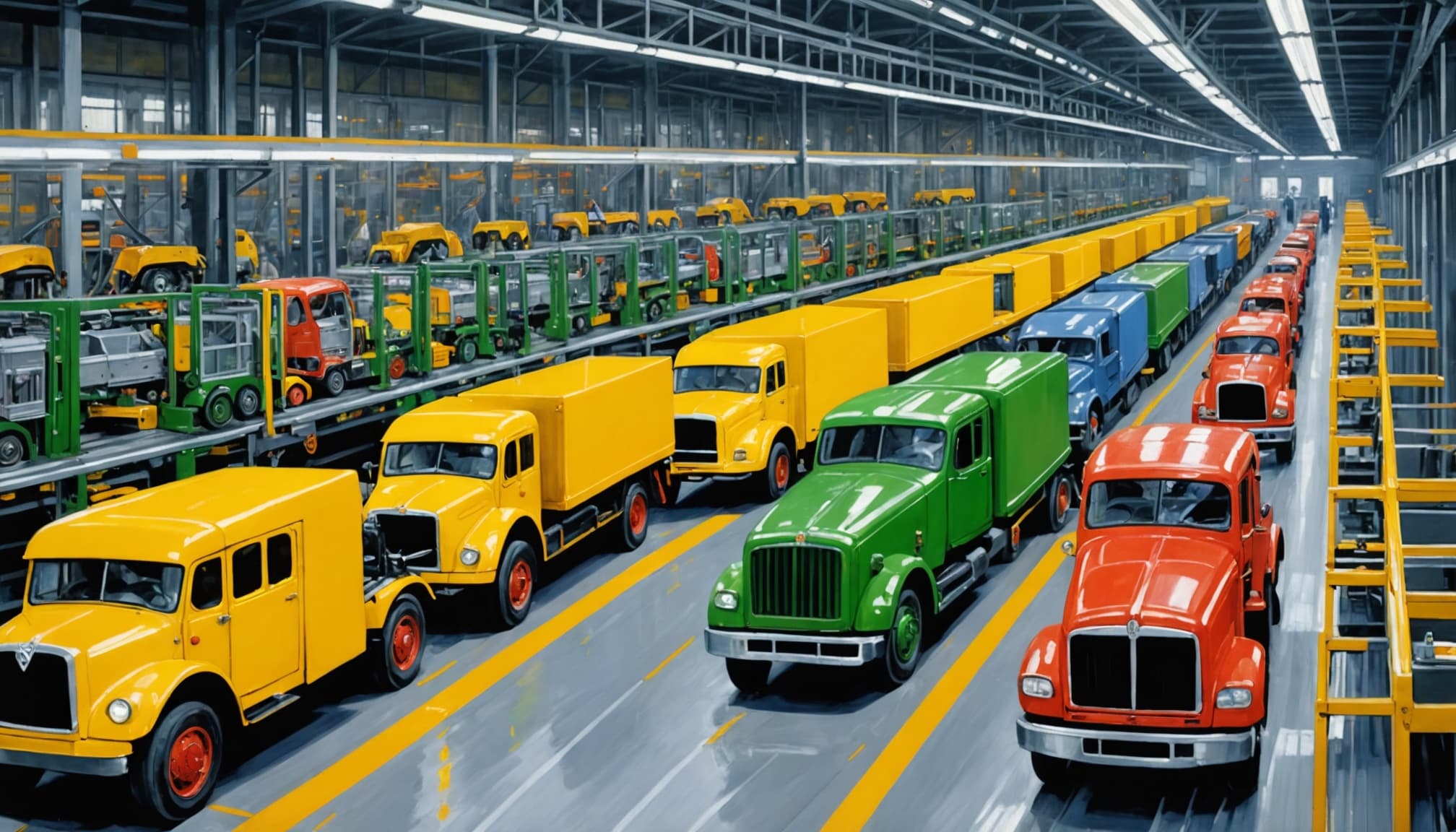
Tata Motors delivered a dramatic turnaround in the second quarter of financial year 2026-27. The commercial vehicle business swung to a consolidated net profit of ₹1,257 crore, compared with a loss of ₹867 crore in the same quarter last year. This wasn't just a recovery, it was a complete reversal of fortune.
Revenue from operations jumped 36% year-on-year to ₹25,338 crore on a consolidated basis. On a standalone level, which includes the Tata Cummins joint operations, revenue surged 42% to ₹23,930 crore. The standalone net profit came in even stronger at ₹2,138 crore, against a loss of ₹1,021 crore a year earlier.
How Much Did CV Demand Actually Drive Profit?
Here's where the story gets interesting. The ₹1,257 crore consolidated profit wasn't purely from selling more trucks and buses. A significant chunk came from lower mark-to-market losses on investments in Tata Capital. The standalone business, which reflects the core commercial vehicle operations, tells a clearer story of operational performance.
Standalone profit before tax before exceptional items rose 51% to ₹2,660 crore. The company's own PBT bridge reveals exactly what moved the needle. Volume and product mix contributed ₹1,159 crore, while net realisation, which is essentially pricing power, added another ₹1,017 crore. That's over ₹2,100 crore of positive impact from selling more vehicles and getting better prices for them. Investor Presentation
But it wasn't all smooth sailing. Variable costs, mainly commodities like steel and rubber, took away ₹1,416 crore. So while demand did the heavy lifting, rising input costs ate up a substantial portion of those gains. The net result was still impressive, but it shows how fragile margins can be in this business. Investor Presentation
The Volume Story: Trucks Are Back
The numbers on the ground tell a story of robust demand. Total wholesale volumes grew 42% to 135,100 units during the quarter. Domestic sales increased 30%, but the real surprise was exports, which skyrocketed 177% year-on-year.
Girish Wagh, managing director and chief executive, pointed to improved fleet utilisation, stronger goods movement, and higher industrial and mining activity as key drivers. Essentially, the economy was moving more stuff, and Tata's trucks were doing the moving.
The company also tightened its grip on the Indian commercial vehicle market. Its market share stood at 36.2% in the first half of FY27, up from 35.1% in the previous fiscal year. In a competitive market, gaining over a percentage point of market share is no small feat.
Margins Under Pressure: The Cost Challenge
Despite the strong volume growth, margins felt the heat. Standalone EBITDA (earnings before interest, taxes, depreciation, and amortisation) margin came in at 11.7%, down 90 basis points from a year earlier. On a consolidated basis, the EBITDA margin was 10.9%, contracting 40 basis points.
The culprit? Rising commodity costs. Steel and rubber prices have been climbing, putting pressure on every manufacturer in the space. What's remarkable is that Tata Motors managed to hold margins steady sequentially despite these headwinds.
How They Protected Their Margins
The company didn't just sit back and watch costs eat into profits. They fought back with a three-pronged strategy: cost management, operational efficiencies, and calibrated pricing actions.
On the pricing front, Tata Motors had already implemented a 2.5% net price increase in July. They raised prices again on October 1, and management has indicated they're considering further increases for the fourth quarter. This is classic defensive playbook, pass on the cost inflation to customers rather than absorb it. Transcript
The company also benefited from operating leverage. When you sell 42% more vehicles, your fixed costs get spread over a larger base, naturally improving efficiency. It's basic math, but executing it well requires tight operational control. Investor Presentation
The Cash Flow Machine
One number that often gets overlooked but is incredibly important is free cash flow. Tata Motors generated ₹4,606 crore in free cash flow during the quarter. This is real cash that the business generated after accounting for capital expenditures.
This strong cash generation took the company's net cash position to ₹11,300 crore on a standalone basis and ₹15,900 crore on a consolidated level. In an industry that's capital intensive, having a strong cash balance provides enormous flexibility. It means the company can invest in growth, weather downturns, or even make acquisitions without scrambling for funding.
The Iveco Acquisition: A Game Changer in Waiting
While the Q2 results were impressive, the bigger story on the horizon is the Iveco acquisition. Tata Motors is in the final stages of acquiring Iveco Group in a deal valued at approximately €3.82 billion. The tender offer acceptance period runs until October 26, 2026, with settlement planned for October 30. Other +1
This isn't just any acquisition. It's transformative. The combined entity would have annual revenues of around €22 billion and sell over 540,000 vehicles per year. More importantly, it would give Tata Motors immediate access to European and Latin American markets, reducing its dependence on the Indian commercial vehicle cycle.
Synergies and Integration Challenges
The deal promises significant synergies. Tata Motors expects to achieve annual free cash flow synergies equivalent to 0.5% of combined revenue starting from 2028. The companies plan to combine research and development efforts, particularly in electric and hydrogen powertrains, potentially saving substantial amounts of money.
There's also the technology angle. Iveco is a leader in zero-emission transport, and this acquisition could fast-track Tata's push towards sustainable mobility globally. The combined entity would also benefit from procurement leverage through shared platforms. Other
But integration is never straightforward. The deal requires 95% shareholder acceptance, which drops to 80% if shareholders adopt a back-end resolution. As of October 22, only 35% of shares had been tendered. While Exor, Iveco's largest shareholder, has committed to tendering 27.06% of shares, the final acceptance level remains a key risk to watch. Other +2
What This Means for Future Profitability
Management has set ambitious targets post-Iveco. They're targeting a return on capital employed (ROCE) of 30-35% and double-digit EBITDA margins through the cycle. These are aggressive targets that assume successful integration and realization of synergies. Other
The funding structure is also worth noting. Tata Motors has secured a €3.8 billion bridge loan from Morgan Stanley and MUFG, which will be repaid over four years. The company hasn't finalized the refinancing mix between equity and debt, which will be an important factor in determining the post-acquisition leverage profile. Transcript
The Stock Market Puzzle: Why Did Shares Fall?
Here's the thing that might surprise you. Despite these strong results, Tata Motors shares fell 4.41% on October 23, closing at ₹396 on the BSE. But here's the crucial detail, the results were announced after market hours on Friday. The stock fell before investors even saw the numbers.
The decline happened on heavy volume, with over 8.1 million shares traded, about 74% higher than the previous day [stock_agent]. Over the week, the stock was down nearly 6% from the October 16 close [stock_agent].
I couldn't find a specific trigger for Friday's decline in the sources I accessed. Sometimes stocks move for reasons that aren't immediately apparent in company-specific news. It could be broader market sentiment, profit booking after a run-up, or anticipation of the results.
What Happens Next?
The real test will come on Monday, October 26, when the market reopens and gets to properly digest these results. Investors will likely focus on three things: margin sustainability given commodity pressures, the outlook for the second half, and the Iveco acceptance outcome.
Management has already signaled that growth in the second half might moderate due to last year's high base. They expect the industry to end FY27 with double-digit growth, with Tata Motors likely to outperform. But moderating growth combined with rising costs could keep investors cautious.
The Bigger Picture
Stepping back, Tata Motors' Q2 performance shows a commercial vehicle business that's firing on all cylinders. Strong demand, pricing power, and operational discipline have driven a remarkable turnaround. The cash generation is particularly impressive and gives the company significant strategic flexibility.
The Iveco acquisition, if it completes successfully, could transform Tata Motors from an Indian commercial vehicle champion into a global player. But the integration challenges and the current low acceptance rate remind us that big deals come with big risks.
For now, the core business is doing what it needs to do. The trucks are selling, the cash is flowing, and the company is positioning itself for the next phase of growth. Whether the market rewards this story on Monday remains to be seen, but the fundamentals suggest this turnaround has legs.