The Price Hike Dilemma: Balancing Margins and Market Share
This move comes as the company grapples with severe commodity headwinds—steel, aluminum, and copper inflation are impacting 5–6% of revenue, with management warning of further pressure ahead. The strategy is calibrated: ICE vehicles see an average hike of around 0.5%, while EVs face increases up to 1.5%, reflecting the relative competitive positioning in each segment. In the ICE space, where Tata trails Maruti Suzuki and Hyundai, pricing power is constrained. In EVs, where Tata commands roughly 40% market share, it has more room to maneuver. Transcripts
The critical question is demand elasticity. Contrary to concerns about an 11% sales decline, official data shows Tata Motors actually dispatched 62,611 passenger vehicles in July 2026—a robust 58% year-on-year increase. Domestic sales reached 62,611 units, with EV sales surging 114% to 15,217 units. This strong performance suggests the price hikes have not materially dampened demand. The company’s ability to sustain these increases will depend on maintaining this momentum, particularly as competitors like Mahindra (up 125% YoY in EVs) and MG Motor intensify the battle for market share.
Q1 FY27 Profit Plunge: The Cost of Absorption
TMPV’s Q1 FY27 results laid bare the margin pressure. Revenue grew 9.3% year-on-year to ₹95,799 crore, but net profit crashed 80.25% to ₹775 crore. EBITDA margin contracted 210 basis points to 6.60%, while PAT margin collapsed to 0.90%. This deterioration is the direct result of Tata’s strategic decision to absorb a significant portion of rising input costs rather than pass them fully to consumers.
The trade-off is clear. By absorbing costs, Tata protects its market share and customer relationships during inflationary periods. The company currently holds 12.38% market share (January 2026) and has ambitions to reach 20% by 2030. However, this strategy comes at the expense of near-term profitability. The 80% profit decline is the price of preserving competitive positioning. Looking ahead to Q2 FY27, margins are likely to remain under pressure despite a 2.5% net price hike implemented in July. Management has signaled that commodity headwinds will persist, and the full benefit of price increases will take time to flow through. Transcripts
Sanand Flooding: A Test of Operational Resilience
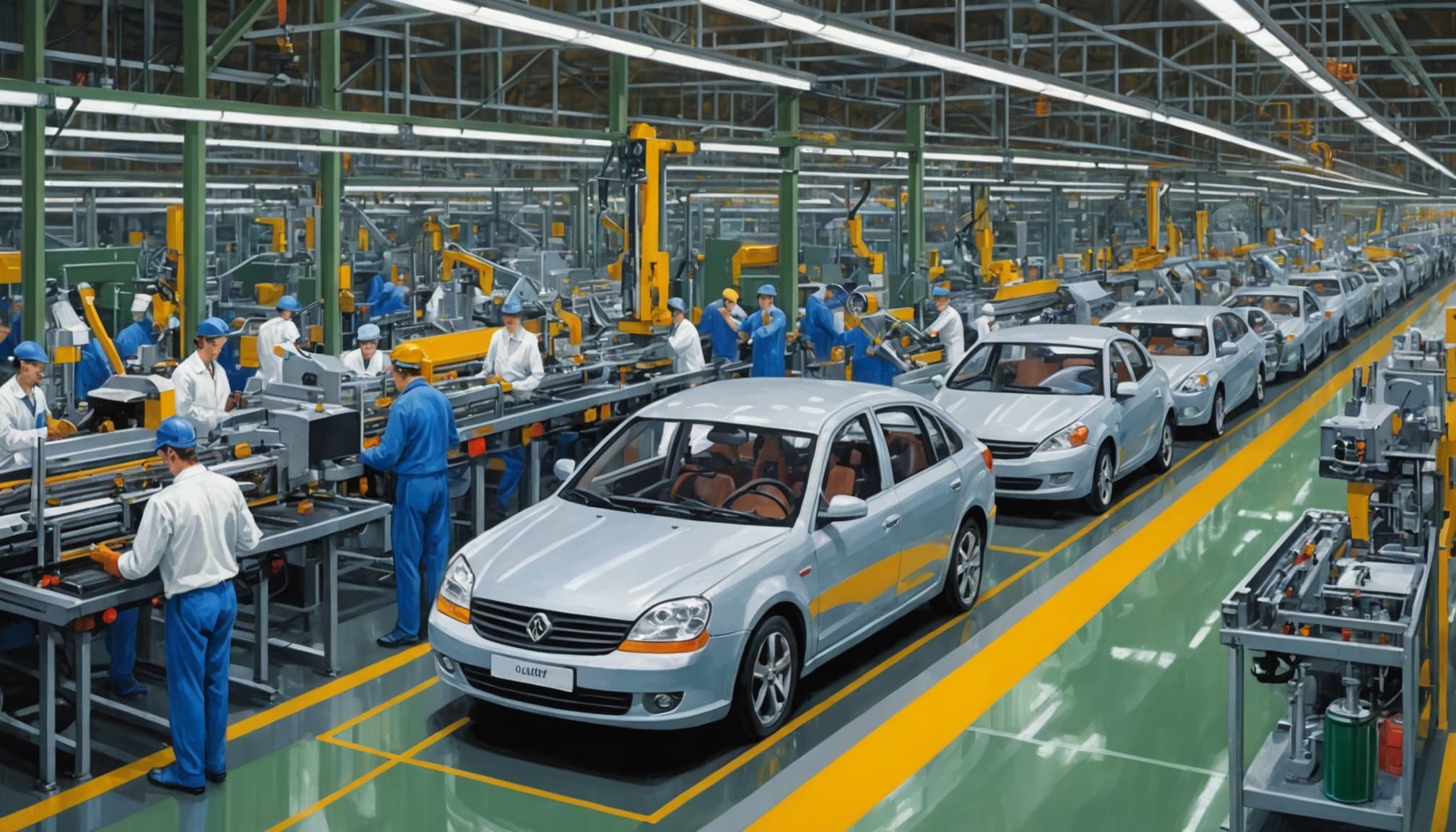
In late July 2026, unprecedented monsoon flooding disrupted Tata’s Sanand manufacturing facility in Gujarat—a critical hub producing Tiago, Tigor, Nexon, and Sierra models. The causal chain was straightforward: heavy rains flooded the plant and surrounding supplier facilities, halting production for approximately five days. Management estimated the damage at ₹35–40 crore, with insurance claims expected to cover up to ₹30 crore, limiting net exposure to ₹5–10 crore. Transcripts
The financial impact is indeed immaterial—less than 0.02% of Tata Motors’ ₹1.76 lakh crore market cap. But the operational implications were significant. The Sanand plant produces high-volume models like Nexon and the newly launched Sierra. Any prolonged shutdown could have created delivery backlogs and pressured margins just as the company entered the crucial festive season. Tata’s response demonstrated operational resilience: within three weeks, normal operations were restored at both the plant and affected supplier facilities. This swift recovery removed the overhang on Q2 FY27 dispatch numbers and protected delivery timelines for key models. Transcripts
EV vs ICE: Divergent Margin Trajectories
The pricing strategy reveals a fundamental divergence in how Tata manages its ICE and EV businesses. ICE vehicles face inflationary cost pressures due to increasingly stringent emission regulations and embedded technology requirements. In contrast, EVs are experiencing deflationary cost trends, driven by strong cost reduction programs and battery technology improvements. Management has articulated a compelling thesis: over time, EVs will achieve complete price parity with ICE vehicles while delivering stronger profitability. Transcripts
Current data supports this view.
Tata’s EV leadership—with over 250,000 cumulative sales and 40%+ market share—provides significant economies of scale in battery procurement and localized assembly. The company’s Gen-2 EV platform and local semiconductor partnerships should further improve cost competitiveness. However, competition is intensifying. Mahindra’s born-EV SUV portfolio and MG Motor’s Battery-as-a-Service model are eroding Tata’s historical dominance. The company’s response includes expanding its portfolio from ₹7 lakh to ₹30 lakh price points and launching new models like Sierra.ev and Avinya. Transcripts
Brokerage Caution and the Road Ahead
Brokerages remain divided on Tata Motors’ prospects. CLSA maintains an ‘outperform’ rating with a target of ₹453, bullish on JLR’s growth and EV launches.
The domestic PV business faces its own challenges—commodity inflation, competitive intensity, and the need to balance volume growth with margin protection.
The near-term narrative will be defined by margin rehabilitation rather than pure revenue growth. Investors should watch for operating margin stabilization in both JLR and the domestic PV segment, cash flow generation, and the cadence of new product launches. The successful implementation of price hikes, combined with operational resilience demonstrated through the Sanand recovery, provides potential catalysts for sentiment improvement. But the path to margin recovery is fraught with risks—persistent commodity inflation, JLR turnaround execution, and macroeconomic uncertainties.
The Strategic Calculus
Tata Motors is playing a long game. The decision to absorb cost increases and implement moderate price hikes reflects a strategic choice to prioritize market share and customer relationships over short-term profitability. With 12.38% market share and a 20% target by 2030, the company is building for the future. The strong 58% YoY growth in July 2026, led by models like Punch (+98%) and Nexon (+36%), suggests the strategy is gaining traction.
However, the 80% profit plunge in Q1 FY27 is a stark reminder of the costs involved. The coming quarters will test whether management’s margin recovery initiatives—accelerated cost reduction, operating leverage from volume growth, and mix improvement toward higher-margin EVs and premium SUVs—can deliver results. For investors, the key is to look beyond the headline numbers and focus on the quality of the earnings trajectory, the durability of PV margins, and the resilience of JLR’s cost structure. The stock’s next leg will depend on these factors, not just quarterly volume beats.