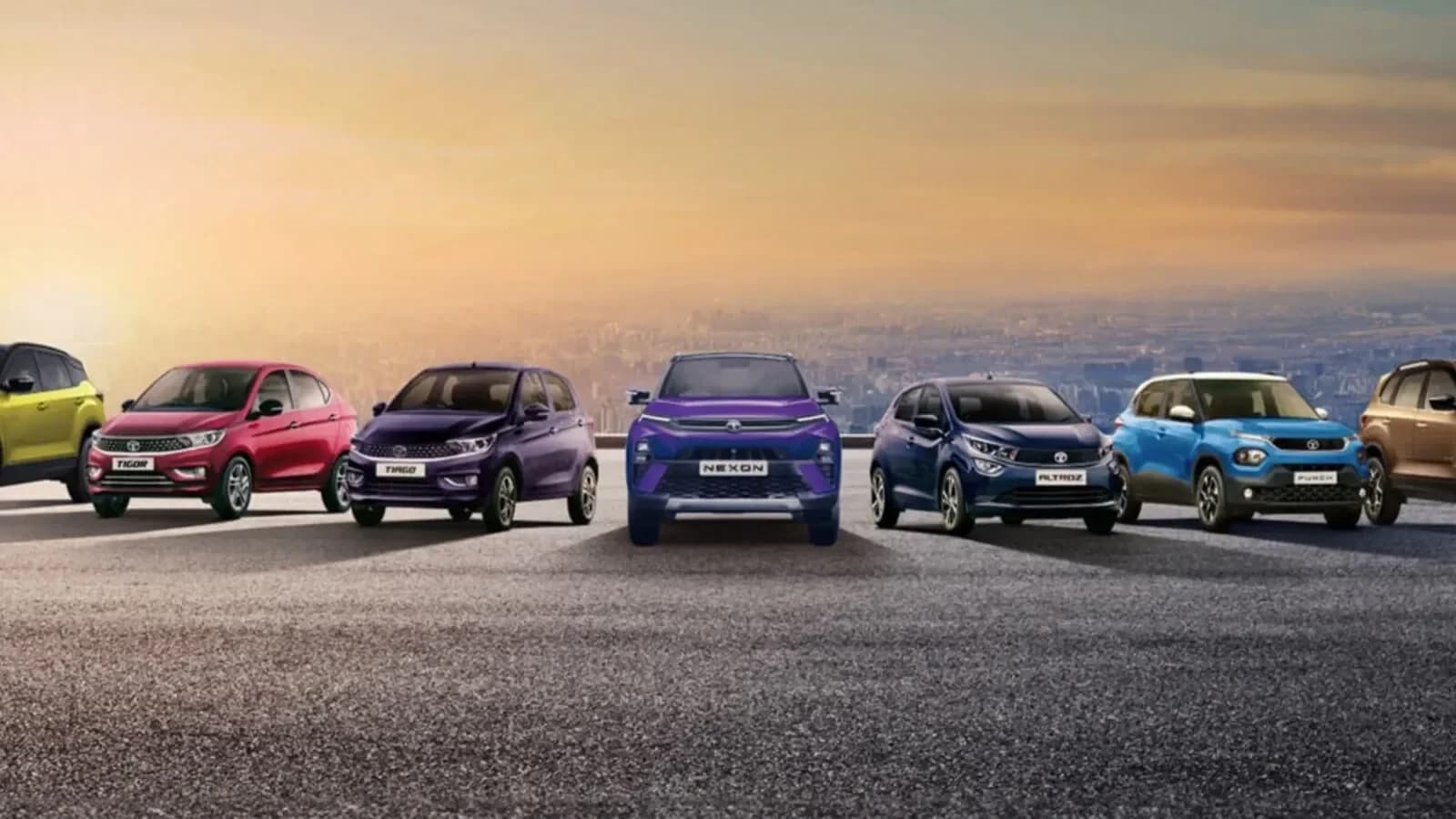
Tata Motors Passenger Vehicles is navigating a challenging inflationary landscape. The company recently announced a price increase of up to 1.5% across its passenger vehicle portfolio, effective July 1, 2026. This follows a 0.5% weighted average increase on ICE vehicles implemented just three months earlier on April 1. Together, these actions represent a cumulative weighted average increase of approximately 2.0% for the fiscal year. The move comes as the automaker faces significant input cost pressures, with commodity inflation alone impacting 5-6% of revenue in FY26.
The Divergent Cost Dynamics: ICE vs. EV
The cost inflation story differs dramatically between Tata's internal combustion engine and electric vehicle portfolios. ICE vehicles face structurally inflationary pressures driven by emission regulations and traditional commodities. Aluminum and copper prices are significantly higher than the previous year, while steel costs remain elevated due to safeguard duties. These commodity headwinds, combined with adverse pricing and continued high industry discounting, caused ICE EBITDA margins to decline to 6.4% in Q2 FY26, down nearly 2% year-on-year.
In contrast, EV costs are following a deflationary trajectory. Battery costs are trending downward significantly, and cost reduction programs in the EV segment have delivered results "much higher than in ICE vehicles over the past 3-4 years," according to management. This fundamental divergence is creating a structural margin advantage for EVs over time. The company achieved EBITDA breakeven with PLI incentives in Q1 FY26, and EV profitability has improved year-on-year even without these government benefits. With PLI accrual of Rs. 125 crore in Q2 FY26 and Rs. 350 crore received in cash during the quarter, the EV business is demonstrating improving unit economics despite broader cost pressures. Transcripts +2
Strategic Pricing and Competitive Alignment
The 1.5% price increase applies uniformly across both ICE and EV portfolios, but its adequacy varies by segment. For ICE models facing 5-6% commodity inflation plus regulatory costs, the 1.5% increase is necessary but insufficient. Even with 2% internal cost reduction, approximately 1.5-2.5% of cost increases remain absorbed by the company. For EVs, however, the price increase may be more than adequate. With battery costs deflating and PLI benefits providing support, the 1.5% hike could accelerate margin expansion in the EV segment. This differential impact explains why management remains confident in achieving double-digit EBITDA margins in the ICE portfolio over time, while EV profitability is already showing positive momentum. Transcripts +3
The competitive context for Tata's pricing action is important.
Maruti Suzuki announced hikes of up to Rs. 30,000 across its model portfolio in June 2026. JSW MG Motor raised prices by up to 2%, while BMW, Mercedes-Benz, and Audi implemented increases of around 2%. This industry-wide alignment reduces Tata's competitive disadvantage and suggests that price increases are becoming a standard response to sustained cost inflation. Tata's 1.5% increase is strategically calibrated—comparable to luxury OEMs but higher than its own April increase, reflecting escalating cost pressures.
Timing Signals Structural Inflation
The timing of the July 1 increase, coming just three months after the April 1 hike, signals management's assessment that inflationary pressures are structural rather than transitory. Commodity costs of 5-6% of revenue, with 3.5-4% expected in Q4 FY26 alone, indicate sustained challenges. The company absorbed significant costs in FY25 without price increases due to weak consumer sentiment and GST rate reductions, but the continued escalation has made periodic adjustments necessary. Management expected "some price increases in H2 FY26 supported by strong festive period demand", and the July 1 timing aligns with this outlook while providing advance notice to customers. Transcripts +3
From a financial impact perspective, the cumulative 2.0% price increase is projected to contribute approximately Rs. 1,600 crore annually to revenue. For H2 FY26, this translates to roughly Rs. 700 crore in incremental revenue, adding 1.5 percentage points to growth. On the margin front, the price increases should drive EBITDA margin expansion of 150-200 basis points. However, after accounting for commodity inflation of 5-6% and internal cost reduction of 2%, the net margin impact remains slightly negative at approximately 50 basis points. This explains why management projects EBITDA margins of 6.5-7.3% for the remainder of FY26, with H2 averaging around 7.0%.
Long-Term Strategy and Capital Allocation
Looking beyond the current fiscal year, sustained input cost inflation will likely require ongoing periodic price adjustments. Management has outlined a long-term view where ICE costs remain inflationary due to regulations, while EV costs continue deflating. This divergence will influence capital allocation priorities, with increased emphasis on cost reduction programs targeting 2.5-3% of revenue, EV investments, and supply chain localization. The company is also focusing on premium mix enhancement through launches like Sierra, which received over 70,000 bookings on Day 1, Harrier EV, and Safari EV to improve average selling prices and margins. Transcripts +1
For customers, Tata's approach of absorbing significant costs while implementing measured increases demonstrates a customer-centric strategy.
This balanced approach, combined with strong product momentum—EV monthly run rates reached 9,000 units in Q4 FY26, ramping beyond 10,000—should support demand despite price increases. The varying increases across models and variants reflect segment-specific competitive dynamics, with minimal increases in price-sensitive entry segments and higher adjustments possible in premium segments where feature differentiation drives purchase decisions. Transcripts +2
Monitoring and Adaptive Response
Tata Motors has implemented comprehensive feedback mechanisms to monitor customer response, including AI-powered sentiment analytics across 42+ platforms, a unified customer data platform with 60 million personas, and dealer-level sentiment tracking. This enables real-time adjustment of pricing strategy if demand weakens more than expected. With estimated price elasticity of -0.8 to -1.2 for its portfolio, the 1.5% price hike is expected to have a moderate impact on sales volumes, potentially reducing growth by 1.2-1.8% from baseline projections. However, strong demand momentum, new product launches, and competitive industry alignment should mitigate this impact.
The path forward requires Tata Motors to balance margin protection with market competitiveness while leveraging its EV cost advantages for long-term profitability. Achieving double-digit ICE margins will likely require additional price increases of 1-1.5% or significant mix improvement from new launches. Meanwhile, the EV segment's deflationary cost curve and PLI benefits position it as a key driver of future margin expansion. As the company navigates this inflationary environment, its ability to execute cost reduction programs, manage pricing strategically, and accelerate the EV mix will determine its trajectory toward sustained profitability.