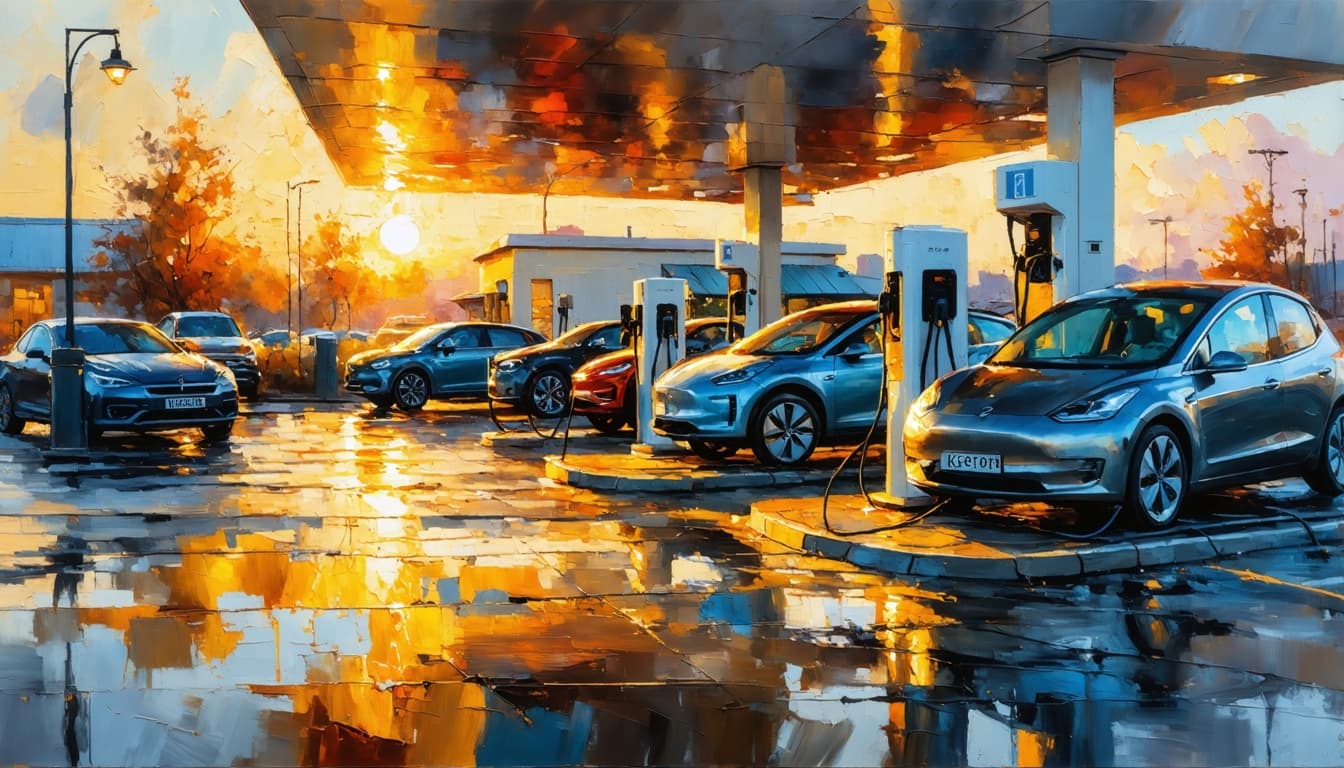
Since May 15, 2026, petrol and diesel prices have risen by Rs 7.5 per litre through multiple hikes, triggering a dramatic shift in consumer behavior. This shock has been the primary accelerant for Tata Motors' EV bookings, which have surged 2-2.5 times over the past two months. For a typical consumer filling 100 litres monthly, this translates to an additional Rs 750 in monthly fuel expenses. For entry-level buyers highly sensitive to running costs, this creates immediate urgency to switch to lower-cost alternatives like EVs.
The timing has been particularly potent. The fuel price increases coincided with Tata Motors' Punch.ev facelift launch in February 2026, creating a perfect storm of product freshness and economic necessity. While fuel prices are not the sole driver—new model launches, improved charging infrastructure, and geopolitical uncertainty from the West Asia crisis all contribute—they serve as the catalyst converting latent EV interest into immediate booking decisions. Management noted that bookings jumped 25-30% immediately after the crisis began, with the momentum intensifying further in recent weeks as fuel prices continued climbing. Transcripts
The Sub-Rs 15 Lakh Sweet Spot
Tata Motors is experiencing its strongest demand growth in models priced below Rs 15 lakh, and this is no accident. Buyers in this segment are disproportionately sensitive to monthly running expenses, making them the first to respond to fuel price shocks. The Tiago.ev and Punch.ev, priced between Rs 4.69 lakh and Rs 12.59 lakh, have become the gateway vehicles for mass-market EV adoption.
Data from 75,000 customers who have driven 2 billion kilometers in Tata EVs reveals predictable usage patterns centered around urban daily driving—office commutes, school runs, and city travel. For these customers, practicality, ease of use, and accessibility matter far more than over-specification. This insight has shaped Tata Motors' product strategy, with the Punch.ev specifically designed to accelerate mainstream EV adoption by addressing key barriers like upfront cost and range anxiety. Transcripts
The impact on product mix is clear. Tata Motors is prioritizing capacity allocation for sub-Rs 15 lakh models, where demand velocity is highest and the conversion from petrol to EV is most rapid. This segment focus, combined with the fuel price catalyst, explains why demand is outstripping supply so dramatically.
The Supply Chain Bottleneck
Despite having the manufacturing flexibility to shift production between petrol and EV models, Tata Motors is currently producing only 9,000-10,000 EV units monthly against demand that is 2.5 times this capacity. The constraint is not internal manufacturing but supplier-side limitations. Transcripts
The most significant bottleneck is in casting components for new engines, particularly affecting Sierra EV production. Management has identified "one or two suppliers, especially on the casting side" as the primary constraint, requiring corrective actions including adding alternative suppliers. While major semiconductor constraints have eased compared to earlier periods, electronic components continue to present challenges. The Middle East conflict has exacerbated these issues, creating what management describes as "the biggest issues we're facing" in terms of supply chain disruptions. Transcripts +1
Commodity price inflation adds another layer of pressure. Tata Motors expects a 5-7% increase in commodity prices, with approximately 3.5-4% impact anticipated in the current quarter alone. These cost pressures are flowing through utility costs, freight rates, and petrochemical-sensitive components, forcing the company to consider price increases to offset the headwinds. Transcripts +1
The Capacity Expansion Plan
To address this demand-supply imbalance, Tata Motors is implementing a 50% capacity expansion over the next 3-4 months, targeting 15,000 EV units monthly from the current 10,000. This expansion leverages the company's multi-plant manufacturing strategy, which provides significant competitive advantages.
The Pune facility handles Punch.ev, Curvv.ev, and Harrier.ev, while both plants share Nexon EV production. A new Ranipet facility in Tamil Nadu is commissioning with 250,000 units annual capacity expected over 4-6 years. Transcripts +1
This multi-plant approach provides geographic diversification, risk mitigation, and specialized production capabilities. Sanand focuses on high-volume, cost-efficient entry-level models, while Pune handles technology-intensive premium SUVs. The flexibility to shift production between facilities and convert ICE capacity to EV on main assembly lines gives Tata Motors unmatched agility in responding to demand surges. Transcripts
The Financial Impact
The capacity expansion comes with significant capital expenditure. Tata Motors has increased its investment guidance to 7-9% of passenger vehicle revenue, or Rs 4,000-5,200 crore annually for the next two years. This spending funds supplier equipment installation, capacity expansion, and product development for next-generation models. Transcripts
In the short term, this capex and commodity inflation create margin pressure. However, the long-term outlook is positive.
Strong cost reduction programs have achieved significant reductions over the past 3-4 years, much higher than for ICE vehicles. Operating leverage from increased volumes and improved product mix from new launches should drive margin improvement in FY27-28. Transcripts
The revenue impact from the sales surge is substantial. EV sales increased from 5,568 units in February 2026 to 8,543 units in April—a 53% jump. Assuming an average selling price of Rs 13 lakh, this represents an increase of Rs 387 crore in monthly revenue. For FY27, Tata Motors is targeting 180,000 EV units, representing 96% YoY growth and Rs 23,400 crore in annual revenue.
The BaaS Innovation
Tata Motors' Battery-as-a-Service model for the Tiago.ev represents an innovative approach to lowering acquisition barriers. The BaaS option reduces the upfront price from Rs 6.99 lakh to Rs 4.69 lakh—a 33% reduction—while charging Rs 2.6 per kilometre for battery usage.
This model significantly impacts customer acquisition costs. The lower upfront price expands the addressable market to price-sensitive buyers previously excluded from EV ownership. Higher conversion rates from prospects to customers reduce effective marketing and sales costs per acquisition. The faster decision-making process from reduced upfront cost also shortens sales cycles.
From a lifetime revenue perspective, BaaS generates higher total revenue per vehicle. Assuming 15,000 km annually over 8 years (120,000 km lifetime), battery usage charges generate Rs 3.12 lakh. Combined with the Rs 4.69 lakh vehicle price, total lifetime revenue reaches Rs 7.81 lakh—Rs 82,000 more than the regular purchase model. The model becomes profitable at approximately 12,500 km annually, a threshold easily achievable for urban users based on Tata's usage data.
Market Leadership and Competitive Position
Tata Motors has achieved the milestone of 3 lakh cumulative EV sales, maintaining market leadership despite intensifying competition. In April 2026, the company sold 8,543 EV units, capturing 36.3% market share in an industry total of 23,506 units.
The competitive landscape is evolving rapidly. Mahindra & Mahindra follows with 23% market share, JSW MG Motor with 21.3%, and new entrants like Maruti Suzuki's eVitara gaining traction. Tata Motors' portfolio breadth across price points—from Tiago.ev at Rs 4.69 lakh to Harrier.ev above Rs 20 lakh—provides defense against focused competitors. The ecosystem advantages of 250,000+ customers, 4 billion+ km of driving data, and planned 22,000+ charging stations create significant moats. Transcripts
The Sierra.ev Launch
The upcoming Sierra.ev launch in July 2026 represents a critical strategic move to defend Tata Motors' market leadership, particularly in the premium 20+ lakh segment where Mahindra has made strong inroads. Priced at Rs 18-25 lakh, the Sierra.ev addresses a white space in Tata's portfolio and enters a new segment with "completely additional volumes." Transcripts
The ICE version of Sierra achieved over 70,000 bookings on Day 1, demonstrating strong brand equity. The EV version, built on the dedicated Acti.ev platform with 55-75 kWh battery options and Independent Rear Suspension, is positioned as a premium lifestyle SUV.
InvestorPresentations +1
Projections suggest the Sierra.ev could contribute 30,000 annual units, adding Rs 6,300 crore in revenue. This would strengthen Tata Motors' position in the premium segment, potentially increasing overall EV market share from 36.3% to 38-40%.
The Path Forward
Tata Motors' EV business stands at a critical juncture. Demand is surging beyond production capacity, driven by fuel price shocks and successful new model launches. The company is aggressively expanding manufacturing capability while navigating supply chain constraints and commodity inflation. The multi-plant strategy provides the scalability needed to capture growth, while innovations like BaaS lower acquisition barriers.
The Sierra.ev launch will test Tata Motors' ability to compete in the premium segment against established players like Mahindra. Success here is critical for defending market leadership and improving product mix. With 3 lakh cumulative EV sales creating brand trust, a comprehensive ecosystem, and significant manufacturing capacity coming online, Tata Motors is well-positioned to maintain its leadership through 2026 and beyond. Transcripts
The company's ability to resolve supplier constraints, execute the Sierra.ev launch flawlessly, and continue expanding its charging infrastructure will determine whether it can convert the current demand surge into sustainable market leadership in India's rapidly evolving EV landscape.