The Strategic Pivot: Why Tata Abandoned JLR's EMA Platform
In November 2023, Tata Motors announced a landmark partnership with Jaguar Land Rover to license JLR's Electrified Modular Architecture (EMA) for its premium Avinya brand, targeting a 2025 launch. The plan promised shared development costs, economies of scale, and access to world-class EV architecture. Yet by early 2025, this roadmap collapsed when JLR shelved plans to build EMA-based EVs in India, forcing Tata into a strategic reset.
The cancellation stemmed from fundamental economics. JLR couldn't find the right price-quality balance for locally sourced EV components that met its luxury standards. Indian suppliers, while capable for mass-market vehicles, struggled to deliver the precision and sophistication required for JLR's premium positioning at competitive costs. This wasn't merely a supplier issue—it reflected JLR's broader strategic prioritization of global luxury markets over partnership synergies. For JLR, the calculus was clear: protect brand integrity and focus on markets like the UK, Europe, and China where supplier ecosystems could support luxury-grade manufacturing at scale.
Tata's response reveals much about its internal R&D capabilities and capital allocation priorities. Rather than accelerate indigenous platform development, Tata pivoted to licensing Chery's Freelander platform through the Chery-JLR joint venture. This decision signals that Tata's R&D, while substantial (₹29,398 crore in FY24, up 45%), remains focused on commercial vehicles and mass-market adaptations rather than premium passenger vehicle platforms. The company's ₹18,000 crore EV investment (2022-2027) prioritizes ecosystem building—charging infrastructure, supply chain localization, and manufacturing capacity—over deep technology platform development.
The Chery Platform: Acceleration at What Cost?
The Chery licensing deal delivers immediate benefits. Tata gains access to a proven EV platform, compressing development timelines by 4-7 years compared to indigenous development. The first Avinya model, now targeting 2027 versus the original 2025, will still reach market 2-3 years faster than a ground-up platform could achieve. Capital requirements drop dramatically—from an estimated ₹6,500-8,200 crore for full indigenous development to roughly ₹2,000-2,800 crore for licensed platform adaptation.
However, these advantages come with long-term costs. Royalty payments of 2-5% per vehicle create permanent margin pressure. Import dependence exposes Tata to currency volatility and supply chain disruptions. Perhaps most critically, the arrangement limits Tata's ability to differentiate beyond Chery's platform capabilities. When Chery updates its platform, Tata must follow. When Tata wants features requiring platform modifications, it must negotiate rather than innovate.
The financial implications extend beyond royalties. Kit-based assembly from China initially offers tariff advantages—16.5% duty on CKD kits versus 60-115% on fully built units—but creates working capital pressures 40-55% higher than localized manufacturing due to inventory holding, import financing, and longer cash conversion cycles. As Tata progresses toward 50% domestic value addition (required for PLI scheme eligibility), these costs should moderate, but the transition requires ₹2,500-3,000 crore in supplier development investment over 5-7 years.
Market Share Defense Against Closing Rivals
Tata's EV market position has eroded dramatically—from a peak above 80% to 39.2% in FY26. The 14% current EV sales mix and 30% target by 2030 appear increasingly ambitious against rapidly closing competitors. Mahindra & Mahindra, with its indigenous INGLO platform, grew EV sales 386% year-on-year in January 2026 to capture 20% market share. JSW MG Motor, leveraging Chinese technology through its SAIC partnership, reached 25.52% market share in the same period.
The Chery platform plays a crucial defensive role. Without it, Tata would face a 2-3 year premium EV vacuum while developing indigenous capabilities. In that window, Mahindra's Electric Origin SUVs and MG's premium offerings could consolidate market position, potentially displacing Tata as India's biggest electric carmaker. The Chery deal provides immediate technology parity, enabling Tata to maintain presence in the premium segment while building indigenous capabilities.
Yet the "stop-gap arrangement" characterization reveals strategic uncertainty. Tata still intends to develop its own dedicated platform over time, acknowledging that licensed technology is a bridge, not a destination. This creates execution risk: the company must simultaneously manage Chery platform localization, develop indigenous capabilities, and defend market share—all while competitors advance their own platforms.
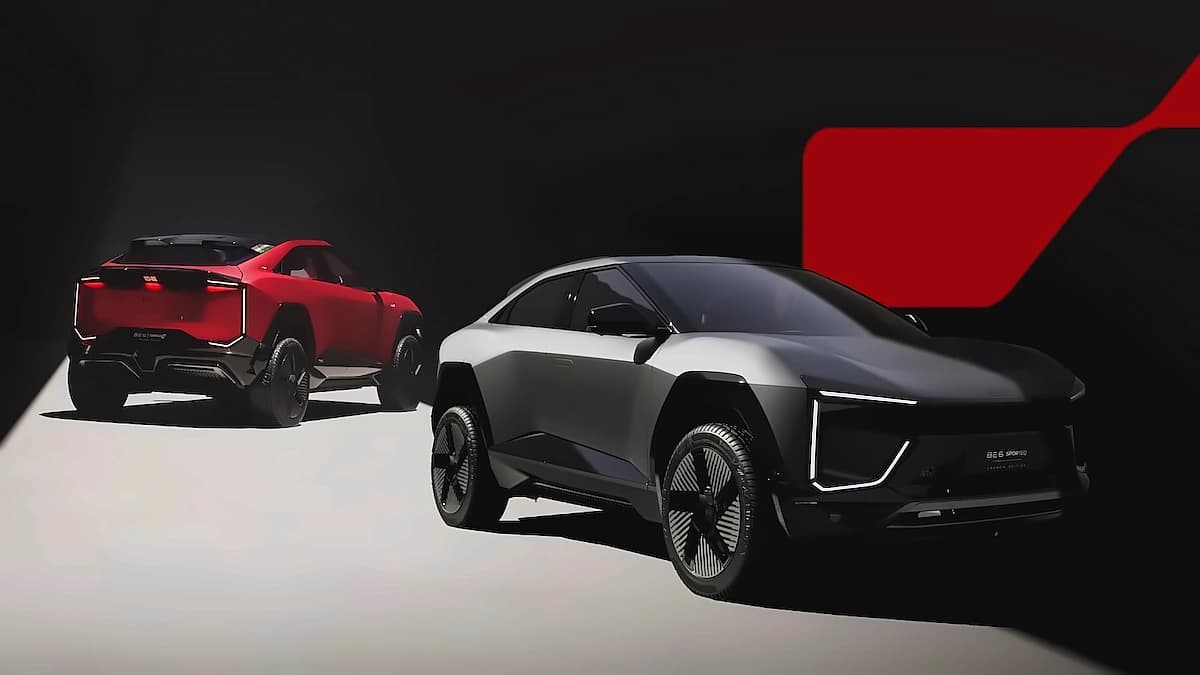
The 2027 Avinya delay (from 2025) creates a dangerous window. Mahindra launched its XEV 9S three-row SUV in November 2025, with BE 6 and XEV 9e already gaining traction. MG's premium expansion continues with Cyberster and M9 MPV. Every month of delay allows competitors to strengthen their position, making Tata's market recovery more challenging.
Regulatory Risks and Strategic Interdependence
India's strict curbs on Chinese investment since 2020 create substantial regulatory uncertainty. Press Note 3 requires government approval for all investments from entities in countries sharing land borders with India. While Tata's arrangement appears structured as technology licensing rather than equity investment—potentially avoiding direct Press Note 3 restrictions—the broader geopolitical context creates vulnerability. Historical precedents are concerning: Great Wall Motor's $1 billion investment plans were canceled in 2022, and BYD's $1 billion investment was blocked in 2023 due to "security concerns".
The Chery-JLR joint venture adds complexity. JLR licensed the dormant Freelander brand to CJLR in June 2024 for EV production using Chery's E0X platform. This arrangement creates synergies for Tata—access to proven technology through an existing JLR partnership—but also conflicts. The Freelander brand is positioned as independent from both JLR's House of Brands and Chery's portfolio, yet Tata will use essentially the same underlying architecture. This creates potential brand positioning challenges and competitive dynamics, particularly if JLR decides to introduce Freelander-branded vehicles in India.
Tata's statement that "our collaboration with JLR and its partners will be an important pillar of our global premium EV journey" reveals deepening strategic interdependence. However, this relationship is fundamentally asymmetric. JLR maintains strategic autonomy focused on global luxury markets, while Tata exhibits greater dependence on the partnership for technology access. The EMA cancellation demonstrated that JLR will prioritize its global luxury mandate over Tata's market-specific ambitions when economics don't align.
The Path to Technology Sovereignty
Achieving platform independence will require substantial investment acceleration. Tata's current R&D spending, while growing significantly, lags global leaders. BYD invested ₹54,200 crore in R&D in 2024—surpassing its net profit for 13 of the past 14 years. Tesla's R&D reached approximately ₹8,000 crore, with heavy focus on Full Self-Driving and AI. Tata's ₹29,398 crore in FY24, while impressive for an Indian company, represents roughly 6.7% of revenue compared to BYD's 7%.
Bridging the technology gap will require ₹8,000-10,000 crore in additional investment over 5-7 years, with R&D spending needing to reach ₹70,000+ crore annually by FY30. This includes ₹3,000-3,500 crore for platform architecture, ₹1,500-2,000 crore for battery technology, ₹1,200-1,500 crore for powertrain integration, and ₹1,000-1,200 crore for software and connectivity. The company must hire 1,200-1,500 specialized engineers across these disciplines.
The timeline is challenging but achievable with sustained commitment. A realistic path targets first indigenous platform vehicles by 2032, with full platform portfolio across segments by 2034. This requires maintaining the Chery platform as a bridge while aggressively building indigenous capabilities—a delicate balancing act between short-term competitiveness and long-term sovereignty.
The next 3-5 years will prove decisive. Tata must navigate the transition from licensed platform dependence to genuine technology independence while defending market share against well-funded competitors with indigenous platforms. Success depends on sustained investment, strategic talent acquisition, effective technology transfer from Chery, and supplier ecosystem development. Failure risks permanent competitive disadvantage in India's rapidly evolving premium EV market.