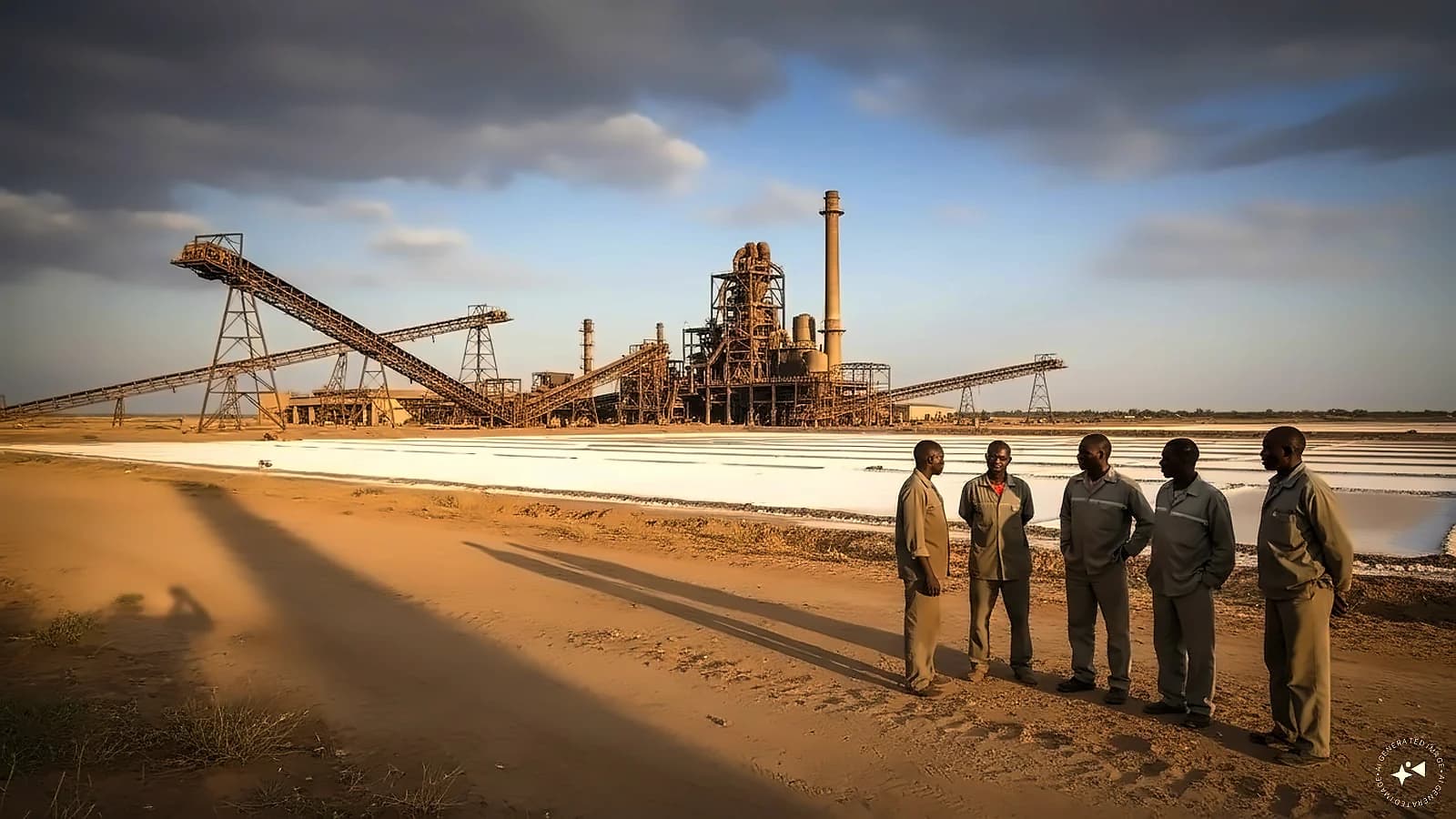
On July 28, 2026, Kenya's Ministry of Mining, Blue Economy and Maritime Affairs dropped a bombshell: Tata Chemicals Magadi Ltd (TCML) must cease operations immediately. The order cited specific compliance failures—unresolved royalties, weak local procurement, insufficient Kenyan hiring, gaps in export reporting, and environmental compliance issues. Perhaps most damaging, TCML doesn't hold a current mining licence; its renewal application remains stuck in processing.
The timing tells its own story. TCML submitted its comprehensive compliance documentation on August 11, 2026—two weeks after the suspension order. This wasn't proactive compliance; it was damage control. The company had filed a legal challenge on July 30 seeking to block the suspension, but the High Court declined the interim prohibition order on August 7. By September 3, President William Ruto escalated matters dramatically, publicly ordering TCML's complete exit and announcing two replacement companies would take over.
The Compliance Paradox
Here's where it gets interesting. TCML asserts full regulatory compliance, while Kenya's government alleges zero economic contribution. Both claims contain truth—they're just measuring different things.
That's not insignificant.
But Kenya's Ministry evaluated different metrics. They found TCML employed only about 500 people directly, with unresolved royalty arrears and weak local procurement. The company's CSR efforts—subsidizing Magadi Hospital serving 30,000 people, supporting local schools, providing water infrastructure—didn't register as economic contribution in the government's value-addition calculus.
The fundamental disconnect? TCML focused on technical regulatory compliance. Kenya demanded industrial transformation—glass plants, chemical processing facilities, manufacturing jobs. TCML exported raw soda ash; Kenya wanted downstream processing.
Market Reaction and Financial Exposure
The stock market reacted swiftly. Tata Chemicals Ltd shares fell 2.17% to ₹628 on the closure announcement. The decline reveals investor concerns about geopolitical risk, regulatory uncertainty, and the vulnerability of international operations.
Financially, the exposure appears moderate but strategically significant.
President Ruto's replacement strategy—two new companies establishing glass manufacturing and chemical processing plants in Kajiado—could eliminate this revenue stream entirely. The most likely scenario involves a complete exit, potentially reducing Tata Chemicals Ltd's overall ROCE from 9.56% to 9.8-10.2% through capital redeployment, but losing high-margin African operations.
Legal Battles and Community Leverage
TCML isn't going quietly. The company has pursued judicial review in Kenya's High Court, challenging the suspension order on procedural grounds. Historical precedent offers some hope—TCML won a major ₹783 crore land-revenue dispute against Kajiado County in October 2025, with favorable rulings in January and March 2025 restraining interference with business operations.
The company's strongest negotiating card might be its community footprint. Five hundred direct employees plus their families, contractors, suppliers, and transporters depend on TCML. Approximately 30,000 community members benefit directly from TCML's support across water, healthcare, education, and infrastructure. Magadi Hospital, subsidised by 75%, serves 30,000 people across an 80 km radius—the only such facility in the region.
Abrupt withdrawal would create immediate hardship and political costs. This community investment creates leverage in negotiations, positioning TCML as a development partner rather than a foreign extractor.
Strategic Alternatives and Portfolio Impact
The decision will likely follow a phased approach: legal resolution through months 1-3, strategic evaluation through months 4-6, and implementation through months 7-12. Key criteria include financial impact over 5-10 years, regulatory risk profiles, strategic fit with long-term corporate goals, and stakeholder considerations.
Kenya's Policy Shift and Sovereign Risk Warning
President Ruto's direct intervention signals a fundamental shift in Kenya's approach to foreign investment. This isn't routine regulatory oversight—it's executive override of administrative processes, unilateral decision-making without consultation, and public announcements preceding legal resolution.
For Indian multinationals, the implications are sobering. Major Indian corporate investments in Kenya span Tata Group, Reliance Industries, Mahindra & Mahindra, Bharti Airtel, Adani Group, and Aditya Birla Group. Mining and extractive industries face highest risk, but manufacturing and telecommunications aren't immune.
The Kenya Business Climate Survey 2026 already flagged regulatory complexity, taxation challenges, political uncertainty, and administrative inefficiencies as major constraints. TCML's case transforms these theoretical risks into concrete reality.
The Bigger Picture
The Tata Chemicals Magadi crisis represents more than a single regulatory dispute—it's a watershed moment for Indian investment in Africa. The era of predictable regulatory environments in resource-rich African nations is giving way to resource nationalism and state-directed economic transformation.
For Tata Chemicals Ltd, the immediate financial impact appears manageable at 3-4% of consolidated metrics. But the strategic implications extend far beyond Kenya. The company—and other Indian multinationals—must fundamentally reassess African investment strategies, incorporating enhanced local content compliance, accelerated technology transfer, community investment scaling, and partnership structures that share ownership and risk.
The question isn't whether Tata Chemicals Ltd can weather this storm—it likely can. The question is what this storm signals about the future of foreign investment in Africa's resource sector, and how Indian companies will adapt to this new reality of sovereign risk and policy volatility.