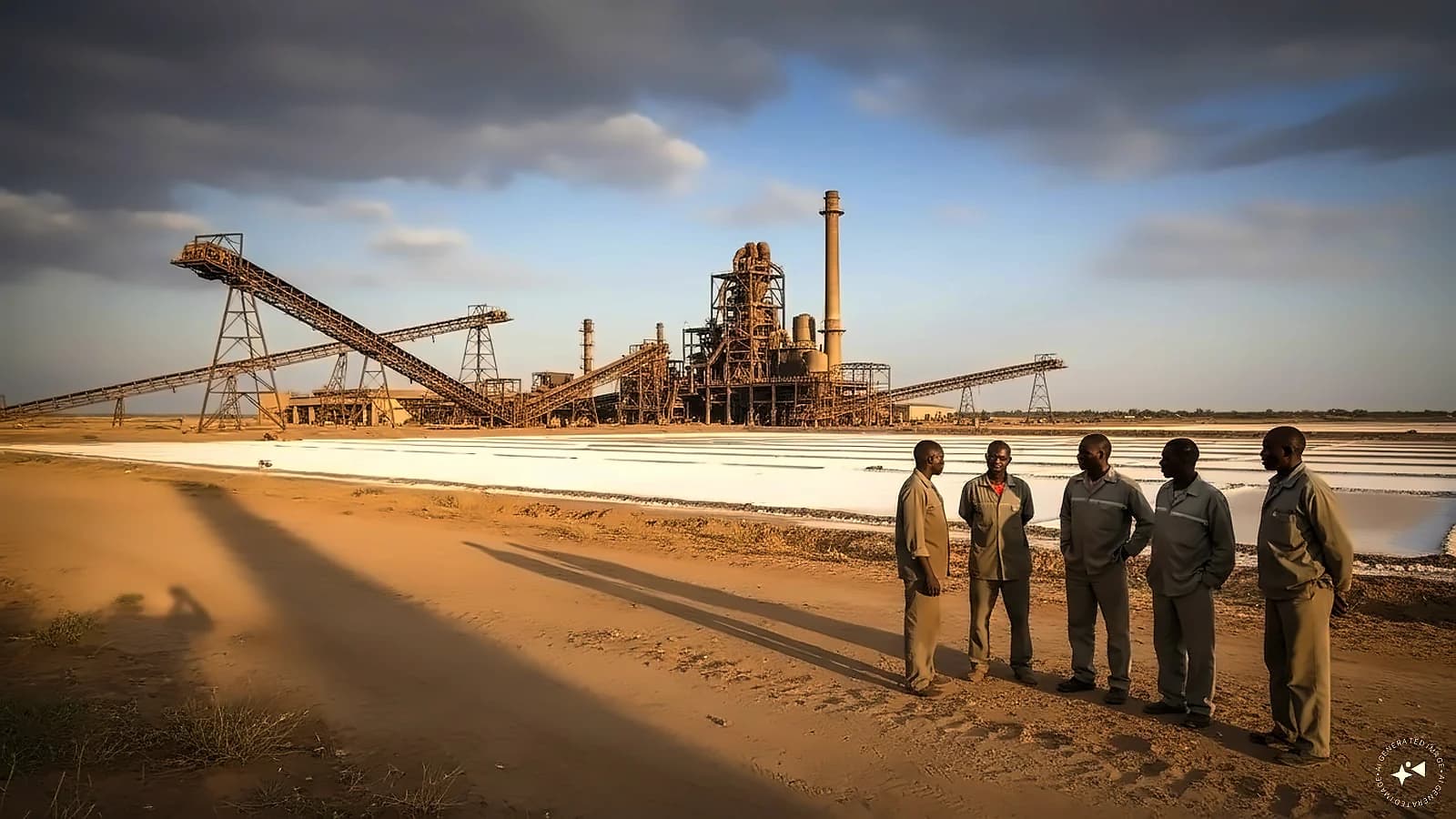
Kenyan President William Ruto has ordered the immediate cessation of Tata Chemicals Ltd.'s operations at Lake Magadi in Kajiado County, bringing a dramatic end to over a century of mineral extraction by the company and its predecessors. Speaking during a development tour in southern Kenya, Ruto accused the firm of failing to deliver tangible economic development, employment, or local industrial infrastructure despite exploiting the region's vast natural soda ash deposits for decades. The president questioned why raw materials continue to be shipped abroad without benefiting host communities, declaring 'We have said we will bring a new company, and they should put a big glass company here in Kajiado, and another company to make chemicals here. Are we slaves to other people?'
The decision follows a formal suspension of Tata's mining operations issued on July 28 by Mining Cabinet Secretary Hassan Joho, as reported by Reuters. Regulatory authorities cited non-compliance with local procurement laws, export reconciliation gaps, and unpaid county land rates as grounds for the shutdown. Mining, Blue Economy and Maritime Affairs Cabinet Secretary Hassan Ali Joho suspended the firm's license two months ago, citing regulatory non-compliance, unresolved royalty obligations, and the absence of a clear mineral beneficiation strategy. Kajiado Governor Joseph Ole Lenku confirmed that the mining rights expired in 2023, with Kenya having produced the resource since 1911. Tata Chemicals bought the operation from Brunner Mond Ltd. in 2005, marking a significant change in ownership after nearly a century of local control.
According to Reuters, Governor Lenku outlined specific requirements for future operators, stating that 'those who we will license to extract the resource must build a huge processing facility here to produce glass' and 'build a big factory to produce chemicals here.' The government now requires any new investor to establish large glass and chemical manufacturing facilities within Kajiado County, aiming to stimulate economic growth and create local employment opportunities. Kenya is the world's No. 4 producer of natural soda ash, accounting for 1% of global production, according to the US Geological Survey. The government remains focused on ensuring Kenya derives greater economic value from natural resources rather than exporting raw materials for processing abroad.
The move has sparked fierce political backlash, with lawmakers from the opposition Democracy for Citizens Party (DCP) accusing the administration of 'state-sponsored economic sabotage', as reported by World News. Opposition leaders claim the closure puts over 100,000 local livelihoods and hundreds of direct jobs at risk, significantly higher than the previously reported 500 local jobs. Opposition leaders further alleged that the regulatory crackdown is a pretext to clear the way for new political allies to access lucrative unexploited lithium deposits and oil prospects in the Lake Magadi basin. The Kenyan government has denied these claims, with the president insisting that 'the presence or absence of this Tata company is of no benefit to the country.'
As reported by Reuters, the suspension threatens about 500 local jobs, highlighting the economic impact of the regulatory action. Tata Chemicals maintains that it has complied with Kenyan regulations and provides essential healthcare and water services to roughly 30,000 local residents. The company's failure to meet regulatory requirements and make required payments has led to the suspension of operations. Kenya plans to bring in two new companies to take over the operations at Lake Magadi, with the government actively seeking new investors who will establish domestic processing facilities. This represents a major escalation in Kenya's push for resource nationalisation and domestic value addition, marking the end of a century-long mining partnership.