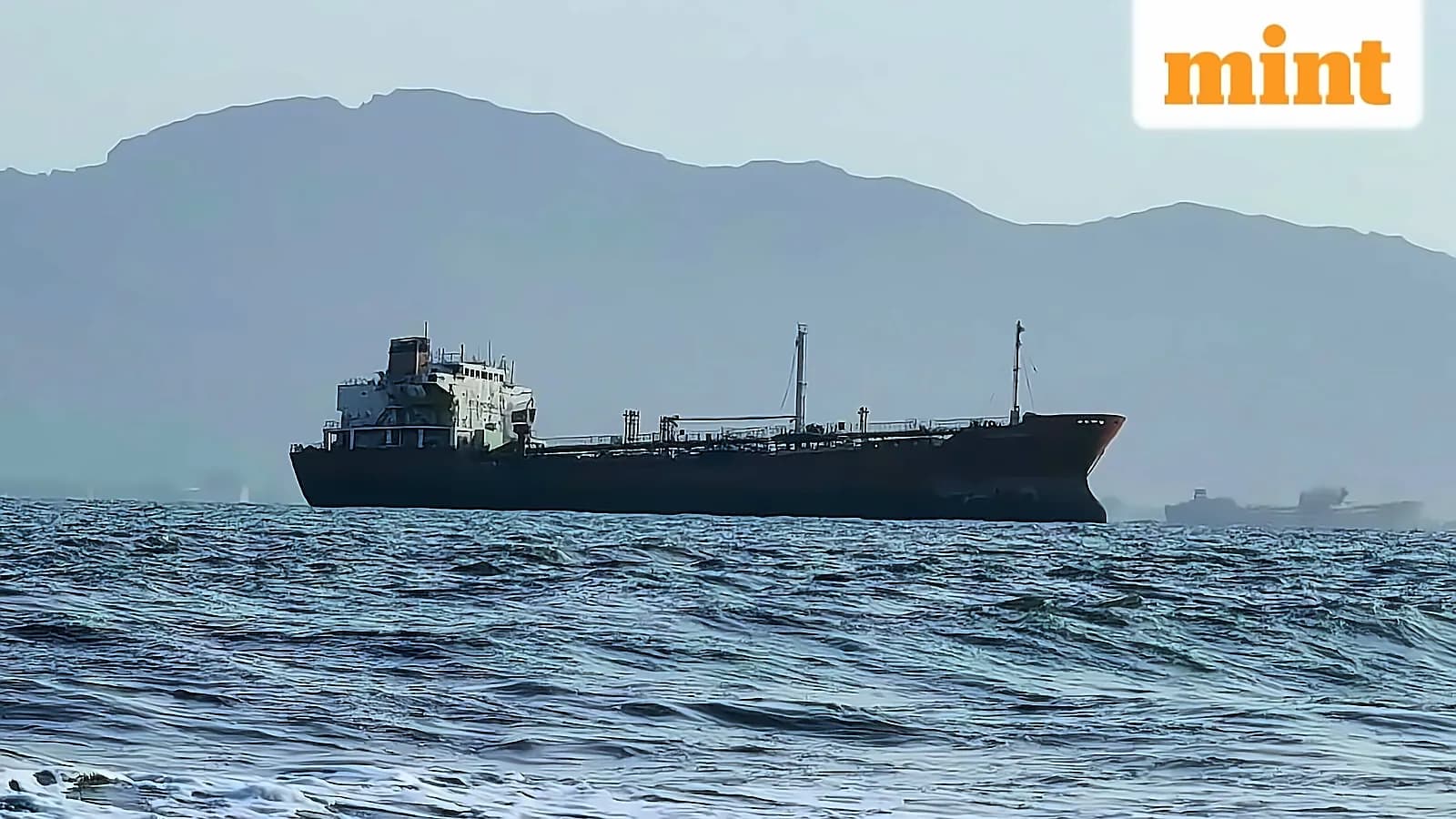
This 1,200 km pipeline, carrying 4-5 million barrels per day to the Red Sea port of Yanbu, was Saudi Arabia's critical alternative to the blocked Strait of Hormuz. With both routes compromised, Aramco's ability to export crude collapsed. The company has shifted from long-term contracts to rare spot tenders, offering cargoes at premiums to official selling prices. For Indian refiners, this means losing a reliable 9% share of crude imports and scrambling for replacement barrels in a tight market.
The Hormuz Multiplier
The Strait of Hormuz disruption compounds the crisis dramatically. About 20% of global oil supply normally passes through this chokepoint, but it has been effectively closed since the US-Iran war began in February 2026. India, importing 88.6% of its crude needs, relied on Hormuz for roughly half its imports—around 2.5 million barrels per day. With Hormuz blocked and the East-West pipeline shut, Saudi Arabia lost both primary and backup export routes. The result: 600 ships stuck in the Gulf, 240 waiting outside Hormuz, and global oil markets losing 100 million barrels weekly. For Indian refiners, this means competing fiercely for alternative supplies from the US, West Africa, and Latin America—all at higher costs and longer voyage times.
The Cost Explosion
Brent crude at $108 per barrel represents a 54% increase from pre-crisis levels around $70. But that's only half the story. Record tanker rates amplify the pain: VLCC earnings hit $451,000 daily, with Oman-Korea routes at $572,000. Freight costs alone add $8-12 per barrel versus the typical $2-3. War-risk insurance premiums have surged, and ship-to-ship transfers off Oman—now involving 15% of the VLCC fleet—add further operational costs. The total landed cost increase reaches $45-50 per barrel. For Indian refiners processing 4.5-5 million barrels daily, this translates to an additional $171-190 million in daily import value, straining working capital and compressing margins.
The Russian Discount Disappears
Indian refiners previously relied on discounted Russian Urals crude, which offered $8-10 per barrel discounts and supported refining margins of $7-13 per barrel above Singapore benchmarks. Those discounts have vanished.
The disappearance stems from Middle East supply disruptions boosting global demand for alternatives, coupled with Black Sea port constraints from drone attacks. With Russian crude no longer a cost-effective hedge, refiners must source from Venezuelan, US, or Middle Eastern grades—increasing weighted average procurement costs by $1.5-2 per barrel. This directly compresses the GRM premium Indian refiners have enjoyed in recent years.
The Iraqi Risk Premium
Iraqi crude offers deep discounts—Basrah Medium at $25-27 per barrel below benchmarks, Basrah Heavy at $27.80-29.80 below—but these come with extraordinary risks. The discounts represent a "negative risk premium" compensating buyers for Hormuz transit dangers. Indian refiners have suspended loadings from Iraq, with Indian Oil abandoning plans to load the 2-million-barrel supertanker Lila Jamnagar. The risks are multifaceted: physical security from drone attacks, war-risk insurance escalation or cancellation, vessel shortages, and regulatory compliance. FOB terms mean buyers assume full responsibility after loading. For traders, the price gap between Hormuz-bound crude and non-Hormuz crude exceeds $40 per barrel, but timing is everything—discounts shrink dramatically once oil clears the dangerous chokepoint.
The Spot Market Volatility Trap
Saudi Aramco typically sells 80-85% of exports through annual term contracts, providing predictable pricing and volume certainty. The shift to spot purchases exposes Indian refiners to severe volatility. Bharat Petroleum met 69% of its oil needs through spot purchases in Q1 FY2026, reporting it could not process the optimal crude mix. Spot markets offer real-time pricing and access to floating inventories held by major traders, but during supply disruptions, spot prices can rise much faster than futures. The loss of term contract stability means refiners face uncertain costs, volume availability, and the need for sophisticated trading capabilities. While spot purchases offer flexibility during crises, they create budgeting nightmares and working capital pressures.
The Margin Compression
HPCL lost ₹11,526 crore, BPCL ₹3,962 crore, and IOC ₹2,661 crore. Refining GRMs remained resilient—BPCL at $41.4 per barrel, IOC at $36, HPCL at $23.4—but marketing margins collapsed. OMCs are losing ₹5 per litre on petrol and ₹23 on diesel as Brent crosses $100. LPG under-recoveries surged from ₹80 per cylinder to ₹510. The near-term outlook shows GRMs compressing to $5-7 per barrel from current elevated levels, with Singapore GRMs expected to remain subdued at $3.5-4.5. The loss of Russian discounts, higher freight costs, and limited product price pass-through create a perfect storm for margin pressure.
The Working Capital Squeeze
Higher crude and freight costs dramatically increase working capital requirements.
A 30-day inventory position now requires $14.6-16.2 billion versus $9.5-10.5 billion before. This strains cash flows, impacts interest payments, and may force dividend reductions or capex delays. Combined capex by 12 oil and gas PSUs fell 3.8% to ₹27,161 crore in Q1 FY27. Refiners need inventory optimization, supplier credit extensions, hedging programs, and potentially government support to manage the squeeze. The structural shift suggests working capital requirements may settle 20-30% above pre-crisis levels even if prices moderate.
The Houthi Escalation
The conflict between Saudi Arabia and Iran-aligned Houthi forces creates additional supply uncertainty. Houthis captured territory along the Red Sea coast, giving them control over the narrowest part of the Bab al-Mandab Strait. Their stated aim is a "siege for a siege" on Saudi oil exports. Since July 2024, no Saudi-flagged ships have attempted Bab al-Mandab crossings. Tankers avoiding the strait face 30 additional sailing days. VLCCs cannot transit the Suez Canal, creating logistical bottlenecks. Saudi oil production fell to its lowest level since 1990 in August. For Indian refiners, this means extended voyage times, higher costs, and the threat of further infrastructure attacks disrupting supply.
The Pipeline Shutdown Risk
If the East-West pipeline remains shut beyond the estimated 7-10 days, the consequences escalate. Red Sea inventories can sustain exports for only a week to ten days. An extended shutdown could force Saudi production cuts, removing 4-5% of global supply. The Jizan refinery has already suspended operations, and other Red Sea refineries may lower runs. For Indian refiners, a prolonged shutdown means competing for replacement barrels, pushing up crude differentials and freight costs. The risk is not just losing Saudi crude itself, but the price impact on securing alternatives. Supply chain resilience requires diversification beyond the 45% Persian Gulf dependence, strategic storage expansion, and infrastructure investments for crude flexibility.
The Regulatory Dilemma
Indian regulators face tough choices. Despite formal deregulation, fuel pricing remains effectively semi-administered during geopolitical stress.
The government cut excise duty by ₹10 per litre in March 2026, but OMCs used this to offset under-recoveries rather than lower pump prices. Full price pass-through would eliminate OMC losses but add 0.7-1% to wholesale inflation and widen the current account deficit. Continued suppression costs 0.6% of GDP annually. The optimal path likely involves a Fuel Price Transparency Framework linking pump prices to crude costs with dynamic tax bands, targeted support for vulnerable households, and gradual restoration of market pricing. The challenge is balancing consumer protection, fiscal sustainability, and economic stability.