Sansera Engineering is attempting something most auto component manufacturers only dream of: successfully pivoting from cyclical automotive dependence to high-growth, high-margin aerospace, defense, and semiconductor (ADS) segments. The early results are striking. Non-auto revenue surged 129.9% year-on-year to Rs 199.8 crore in Q1 FY27, with the ADS segment alone contributing Rs 145.4 crore—about 73% of that non-auto total. This isn't just diversification; it's transformation. The ADS segment's contribution to total sales has climbed from 3.8% in FY21 to 14.2% in Q1 FY27, and management has set a long-term vision for ADS to reach 20% of total sales. InvestorPresentations +1
The engine driving this transformation is a substantial order book. Sansera holds Rs 4,437 crore (INR 44,368 million) in ADS orders executable over approximately five years. This provides the revenue visibility needed to scale beyond traditional automotive. Management has guided for ADS revenue of Rs 550-600 crore in FY27, representing 64-79% growth over FY26's Rs 335.9 crore. The growth drivers are clear: aerospace demand rebound, new customer wins, semiconductor equipment opportunities, and the addition of another large aerospace OEM. InvestorPresentations +3
The Margin Premium Story
What makes this diversification particularly compelling is the margin profile.
This stands in sharp contrast to the consolidated EBITDA margin of 21.7% in Q1 FY27 (up from 16.9% in Q1 FY26). The 480 basis point year-over-year margin expansion reflects positive operating leverage, better product mix, and commodity price stabilization. Transcripts +4
The international revenue mix supports this margin improvement. In Q1 FY27, exports from India grew to 25% of total revenue from 22.2% in Q1 FY26, with international business accounting for 31.7% overall. Management maintains a balanced currency approach—approximately 40% of exports in Euro and 60% in USD—with natural hedging through Euro imports covering about 75% of Euro export value. However, management cautions against using Q1 FY27's margin as a sustainable baseline. Commodity price stabilization provided temporary relief, and one-time benefits may normalize. InvestorPresentations +4
Building the Infrastructure for Growth
To execute this strategy, Sansera is investing aggressively in capacity. The company has board approval for a ~70,000 sq ft hangar expansion expected to be completed by mid-FY27. A new brownfield surface coating facility has been established adjacent to the ADS plant in Bengaluru—critical because aerospace special processes require NADCAP (National Aerospace and Defense Contractors Accreditation Program) approval. Previously, Sansera relied on external vendors for these processes, creating bottlenecks. In-house capabilities enable acquisition of higher value-added business, as customers are tentative if suppliers lack these facilities. InvestorPresentations +2
The company's 140,000 sq ft ADS facility has a strategic allocation: 2/3 for Aerospace & Semiconductor and 1/3 specifically for Defense. The defense section has separate access and is built separately to ensure no mixing of commercial aerospace and defense operations—addressing geography sensitivity and specific regulatory requirements. This separation creates competitive advantages in regulatory compliance, customer segmentation, and operational flexibility. InvestorPresentations +2
Capability Transferability Across Industries
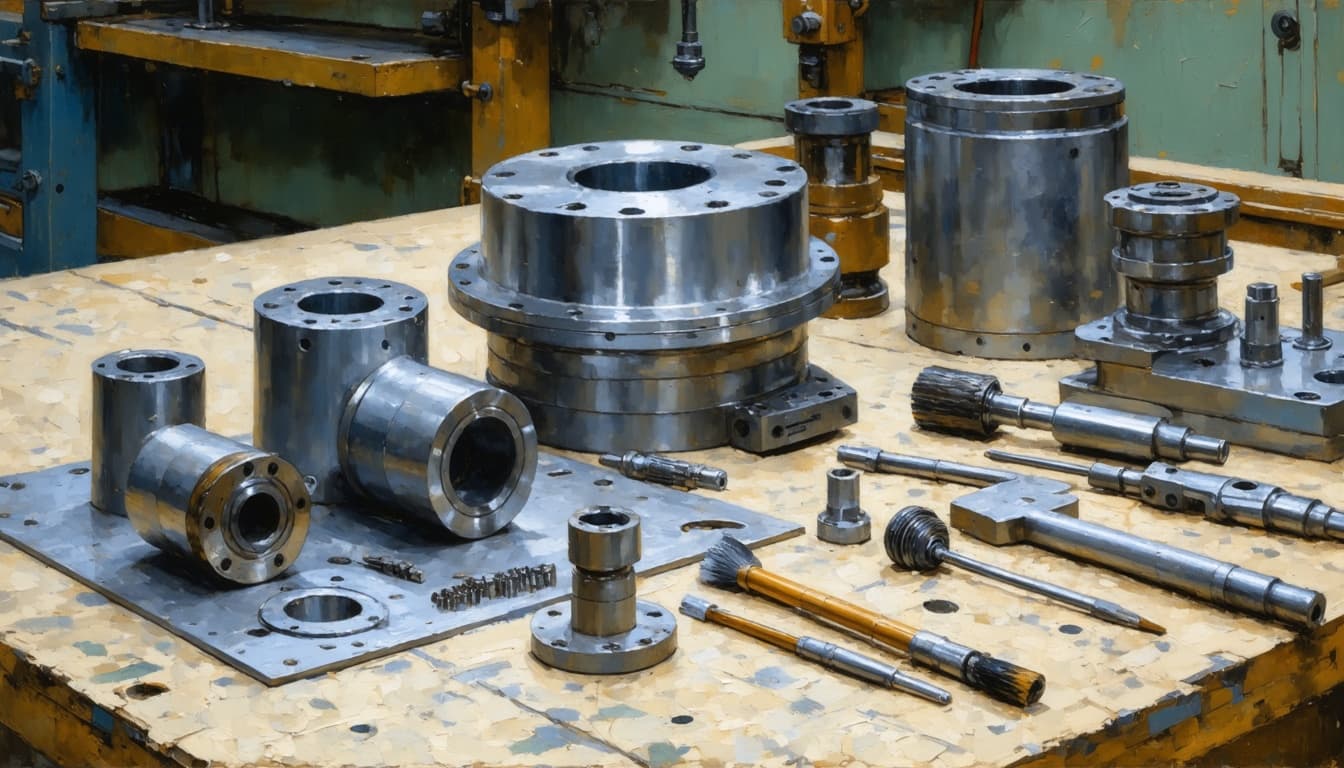
Sansera's entry into semiconductor equipment manufacturing demonstrates how its precision engineering DNA transfers across industries. The company has won orders from a global leader in wafer fabrication equipment for high-precision and complex machine parts. However, the qualification process is rigorous—extensive evaluation over 1.5 to 2 years before securing business relationships. The requirements include a Class 1,000 clean room and unique machining capabilities compared to traditional business. Transcripts +3
The available data shows a $17 million semiconductor order book as of Q3 FY25 (recently increased from $12 million), not the $75 million figure sometimes mentioned. The timeline reveals semiconductor supply chain complexity: First Article Inspection (FAI) requirements carry 6-month cycle risks, and missing FAI sample delivery can cause missing entire ordering cycles with incumbent suppliers, resulting in 6-12 month delays. Machine availability is another bottleneck—lead times for mother machines can extend to 7-9 months. Transcripts +2
Moving Up the Aerospace Value Chain
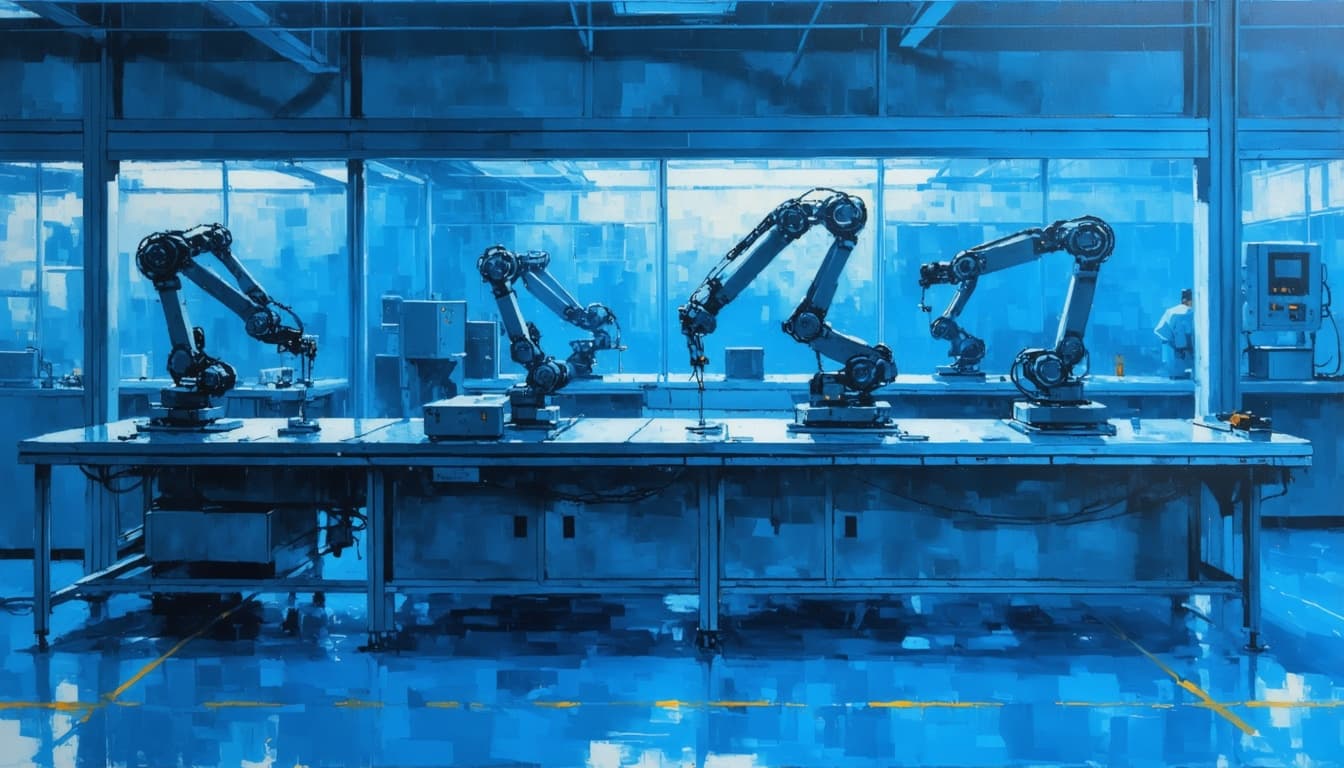
In aerospace, Sansera is expanding into larger, more complex components. The company has added 5-axis machining capabilities for large components used in Aerospace and Defense, maturing to handle components up to four meters. Very few facilities in India can handle 4-meter jobs with consistent mass production. This capability enables entry into more complex and large structural parts, including seating systems and door assemblies for North American OEMs, cargoes, lighting, landing gear, engine casing, and structural parts. Transcripts +7
The value chain migration is clear: from precision components to complex geometries to integrated assemblies. This progression increases customer engagement from component supplier to solution provider to strategic partner, while revenue quality shifts from volume-based to value-based to relationship-based.
The Automotive Foundation
None of this would be possible without a strong automotive business generating cash flow. In Q4 FY26, Auto ICE delivered its highest ever quarterly revenue of Rs 642.6 crore with 21.6% YoY growth, while Auto-Tech Agnostic and xEV segments registered their highest ever quarterly revenue of Rs 121.7 crore with 19.8% growth. Operating cash flow has been strong—Rs 376.56 crore in FY25—providing the funding capacity for ADS investments. Transcripts +1
Sansera maintains relationships with key automotive OEMs including Bajaj, Maruti, Tata Motors, General Motors, and TVS. While specific market share data isn't available in the disclosures, these relationships provide revenue stability and predictability. The company is investing in forging and machining facilities at Pantnagar (2 lakh sq ft with 2 crankshaft lines), Manesar (additional crankshaft capacities), and Bangalore/Bidadi (80,000 sq ft facility construction). More than 60% of future capex is intended for new-age components in tech-agnostic, xEV, and non-auto segments. Transcripts +6
Valuation Premium and Execution Risks
The market has taken notice.
The stock has delivered exceptional performance since listing in September 2021, with a total return of 379.46% (not 3,000% as sometimes mentioned) and a CAGR of 37.81%. Recent momentum has been particularly strong: +64.08% over 3 months and +205.16% over 1 year. Goldman Sachs has initiated coverage with a BUY rating and target price of Rs 4,130. Transcripts
This premium reflects market expectations for successful ADS execution. But the risks are substantial.
Customer dependency is another concern—Sansera works primarily with one customer in semiconductor space, realizing only 25-30% of overall potential. Transcripts +4
The macro environment adds uncertainty. The timeline for reaching Rs 8,000-8,200 crore order book visibility "could vary by a year or 2" depending on macro conditions. Inflationary pressures across steel, aluminum, energy, tooling, consumables, and freight require caution. Export markets remain sensitive to tariff changes and geopolitical stability. Transcripts +2
The Stakes Are High
Sansera Engineering stands at a critical juncture. The company has successfully demonstrated the transferability of its precision manufacturing capabilities across industries, built substantial order book visibility, and made strategic investments in capacity and capabilities. The automotive business provides a strong cash flow foundation, while the ADS segment offers the potential for sustainable high growth and margin expansion.
But the valuation premium of 67x PE requires flawless execution. The gap between current performance and market expectations is filled with execution risks: qualification delays, capacity constraints, working capital pressure, customer concentration, and macro uncertainty. Success would justify the premium and potentially drive further re-rating. Failure could trigger significant valuation contraction as the growth narrative unwinds.
For investors, the key monitoring points are clear: ADS revenue trajectory against the Rs 550-600 crore FY27 guidance, margin progression toward the 25-30% target, order book conversion from backlog to revenue, customer diversification in semiconductor, and capacity expansion timeline and utilization. The next 2-3 years will determine whether Sansera Engineering's bold diversification bet pays off or whether the premium valuation proves premature.