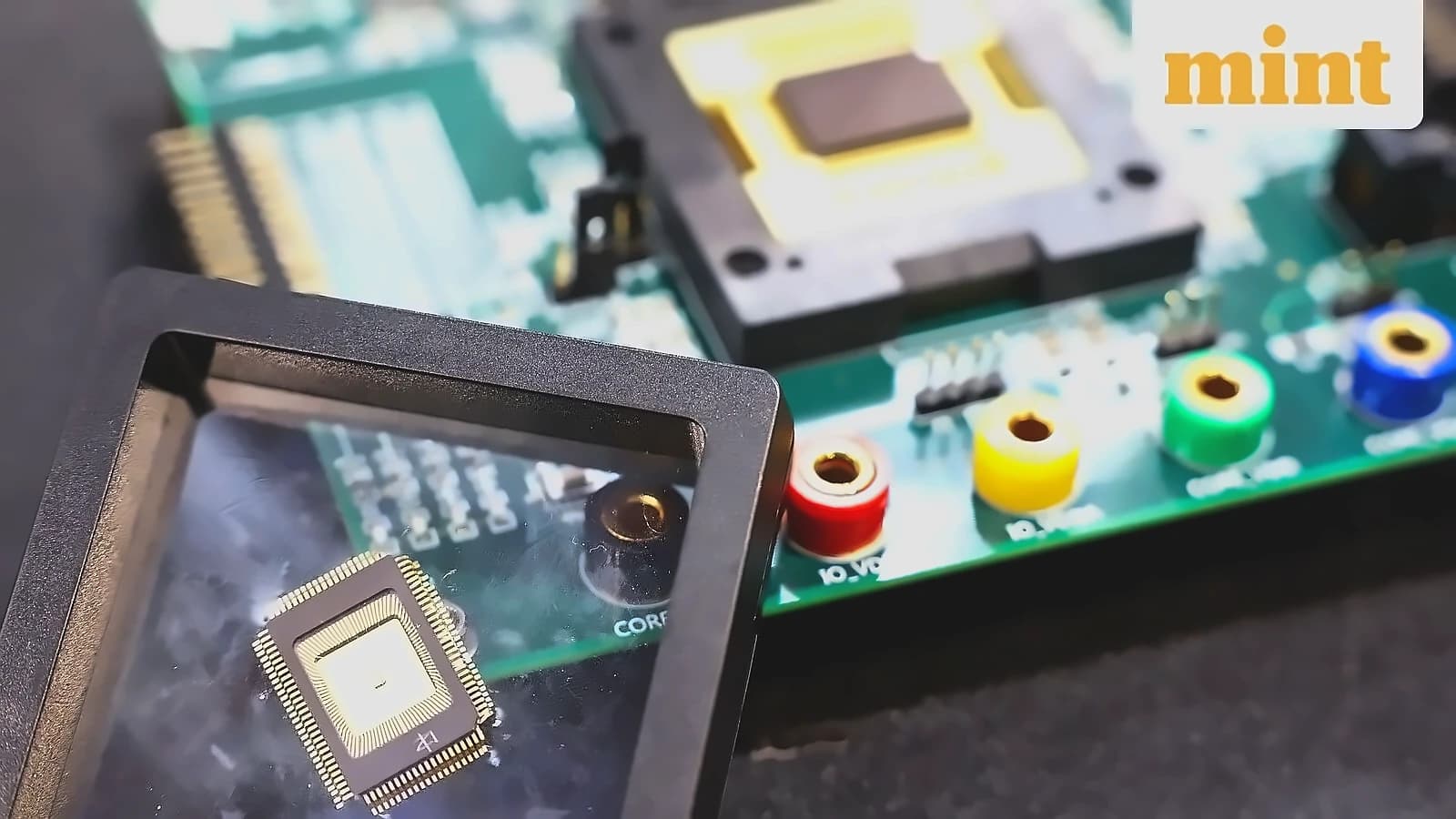
Paras Semiconductors, a subsidiary of Paras Defence and Space Technologies Limited, signed a Memorandum of Understanding with the MP State Electronics Development Corporation to establish a greenfield Outsourced Semiconductor Assembly and Test (OSAT) facility in the Ujjain–Indore corridor. The proposed investment of approximately ₹6,200 crore (US$644 million) represents one of Madhya Pradesh's largest proposed investments in semiconductor manufacturing.
The strategic drivers are clear. India is accelerating efforts to build a domestic semiconductor value chain under the India Semiconductor Mission, with the Union Cabinet approving ISM 2.0 with an outlay of ₹1.27 lakh crore. OSAT facilities are critical components of this ecosystem, handling the final packaging and testing before chips reach end users. By securing regional policy benefits and focusing on specialized techniques like 3D heterogeneous integration, hybrid bonding, and chiplet integration, Paras is bypassing generic assembly to target high-margin segments.
This aligns with Paras Defence's existing portfolio. The company has built expertise in optics and optronics systems, and the OSAT facility will initially focus on advanced semiconductor packaging for sensor devices, optical and optronic systems, and strategic applications, with future expansion into AI chips. It's a calculated move to transform from a niche defense contractor into a broader technology player.
Why Madhya Pradesh? The Competitive Edge
Madhya Pradesh offers compelling advantages. Under the MP Semiconductor Policy 2025, the state provides capital subsidies of up to 40% of eligible capex for non-government approved projects, power tariff subsidies of ₹2 per unit for 10 years, and interest assistance of 6% or actual interest (whichever is lower) for up to 5 years. These incentives can reduce effective capital requirements by 36-57% and improve project IRR by 6-7 percentage points.
The Ujjain–Indore corridor is being positioned as a dedicated semiconductor hub with industry-academia collaboration, research infrastructure, and skill development initiatives. Compared to established hubs like Gujarat, MP offers less competitive intensity and more aggressive fiscal support, though it sacrifices some ecosystem maturity and infrastructure readiness.
Financial Impact: A Capital Structure Transformation
The ₹6,200 crore commitment fundamentally alters Paras Defence's financial profile. The company currently has a market capitalization of ₹9,853 crores, total debt of just ₹22.22 crores, and a debt-equity ratio of 0.09. The OSAT investment represents 63% of current market cap and 17x annual revenue.
Interest costs could increase by ₹250-350 crores annually. The remaining equity requirement could result in 290-485% dilution of existing shareholders.
Capital deployment will span 36-54 months, with significant negative cash flow expected during Years 2-3. Working capital requirements could peak at ₹500-700 crores during ramp-up. The facility is projected to generate ₹2,000-2,500 crores in annual revenue by Year 5 with 22-28% EBITDA margins, potentially contributing ₹280-450 crores in net profit.
Competitive Positioning in a Crowding Market
India's OSAT ecosystem is developing rapidly. Micron Technology operates a $2.75B facility in Sanand, Gujarat. Tata Electronics has a $3.2B plant in Assam. CG Power, Kaynes Semicon, and an HCL-Foxconn JV are all investing billions. Paras Semiconductors' $644M investment positions it as a smaller, specialized player focusing on advanced packaging for defense and strategic applications—a segment with higher barriers to entry but longer development timelines.
The global OSAT market was valued at $40.95 billion in 2024 and is projected to reach $99.65 billion by 2035 (8.42% CAGR). Leaders like ASE Group ($6.32B revenue) and Amkor Technology dominate with scale advantages. Paras cannot compete on volume but can differentiate through technology focus and strategic market positioning.
Execution Risks and Regulatory Hurdles
The challenges are substantial. India faces a critical skills gap of 320,000-350,000 professionals in semiconductor engineering, materials science, and specialized roles like process engineers and cleanroom technicians. Hiring critical leadership positions can take 90-120 days, and every month of delay can push go-live schedules by 2-3 months.
Technology transfer for advanced packaging capabilities like 3D heterogeneous integration and hybrid bonding requires partnerships with established global OSAT providers. Supply chain dependencies are high—90% of advanced packaging equipment is imported, with lead times extending to 18-24 months.
Regulatory approvals add complexity. Environmental Impact Assessment from MoEFCC can take 12-18 months. Pollution Control Board clearance, land acquisition, building plan approval, and India Semiconductor Mission approval are all required. The realistic timeline from MoU to commercial operations is 3-3.5 years, with each 6-month delay reducing IRR by 1.5-2% and extending payback by 4-6 months.
Market Reaction: Why Shares Fell 1%
On July 22, 2026, following the announcement, Paras Defence shares fell approximately 1% to close at ₹1,222.95. The negative reaction reflects rational investor concerns rather than market irrationality.
Investors are also concerned about execution capability—Paras has no prior semiconductor manufacturing experience. Demand visibility is limited with no customer commitments announced. And the stock trades at a stretched 110x P/E, already pricing in significant growth.
The market expected specific details on debt-equity mix, strategic partnerships, customer off-take agreements, and phased investment milestones. Instead, it received a preliminary MoU with a state government and a massive capital commitment without execution details.
The Path Forward
The OSAT facility represents a transformative but high-risk strategic move. Success depends on several factors: securing favorable funding terms through government incentives and strategic partnerships, achieving 70%+ capacity utilization by Year 3, and maintaining growth in the core defense business during the transition.
The next 3-5 years will be critical. Years 1-2 will focus on establishing technology capabilities and securing initial customers. Years 3-4 will involve scaling operations and building market share. Years 5+ should see expansion into adjacent markets and potential strategic partnerships.
For investors, the current valuation implies that OSAT success is already priced in. The facility would need to contribute ₹360-460 crores in annual net profit by Year 5 to justify current multiples. Execution missteps at these valuation levels could trigger significant downside, while successful delivery could drive substantial re-rating.
Paras Defence is betting big on India's semiconductor future. The strategic rationale is sound, the policy support is substantial, and the market opportunity is real. But the execution challenges are equally formidable, and the financial stakes are unprecedented for a company of this scale. The next few years will determine whether this ₹6,200 crore gamble transforms Paras Defence into a semiconductor powerhouse or becomes a cautionary tale of ambition outpacing execution.