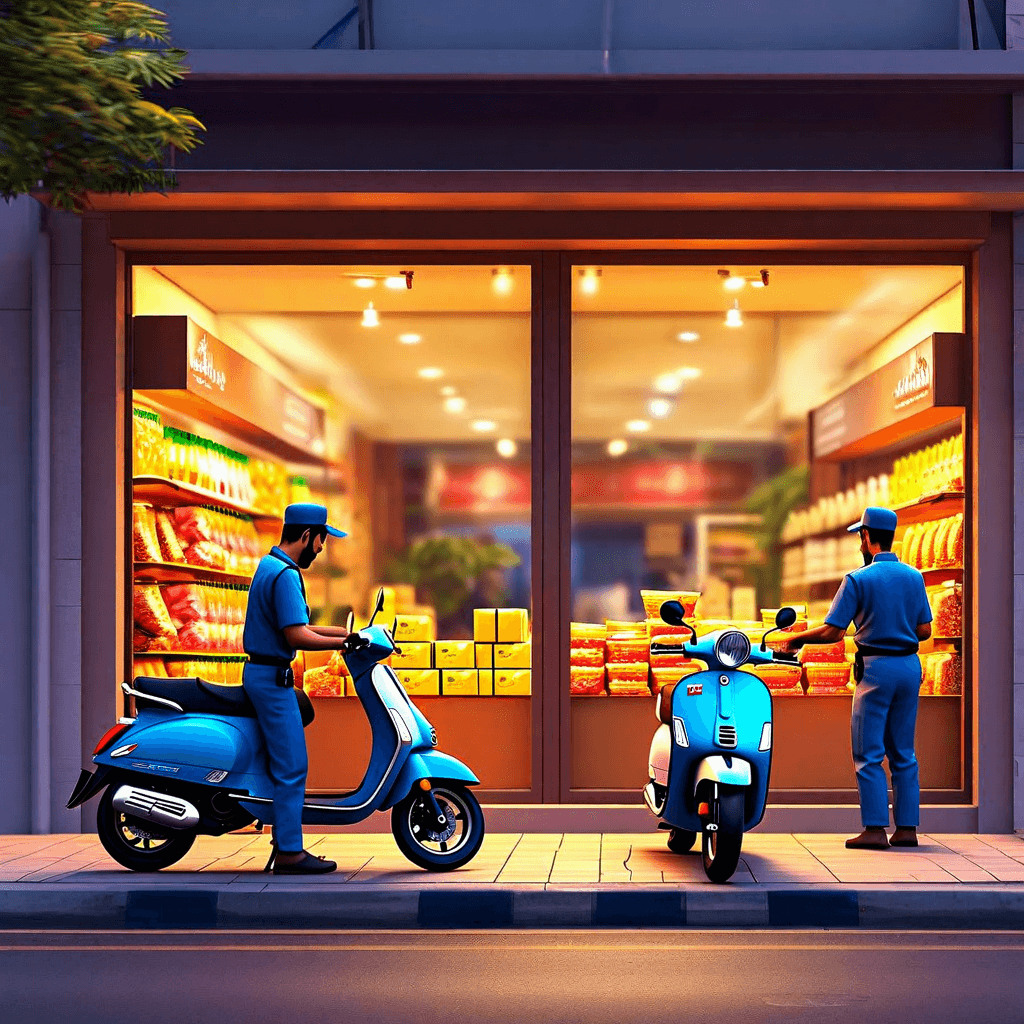
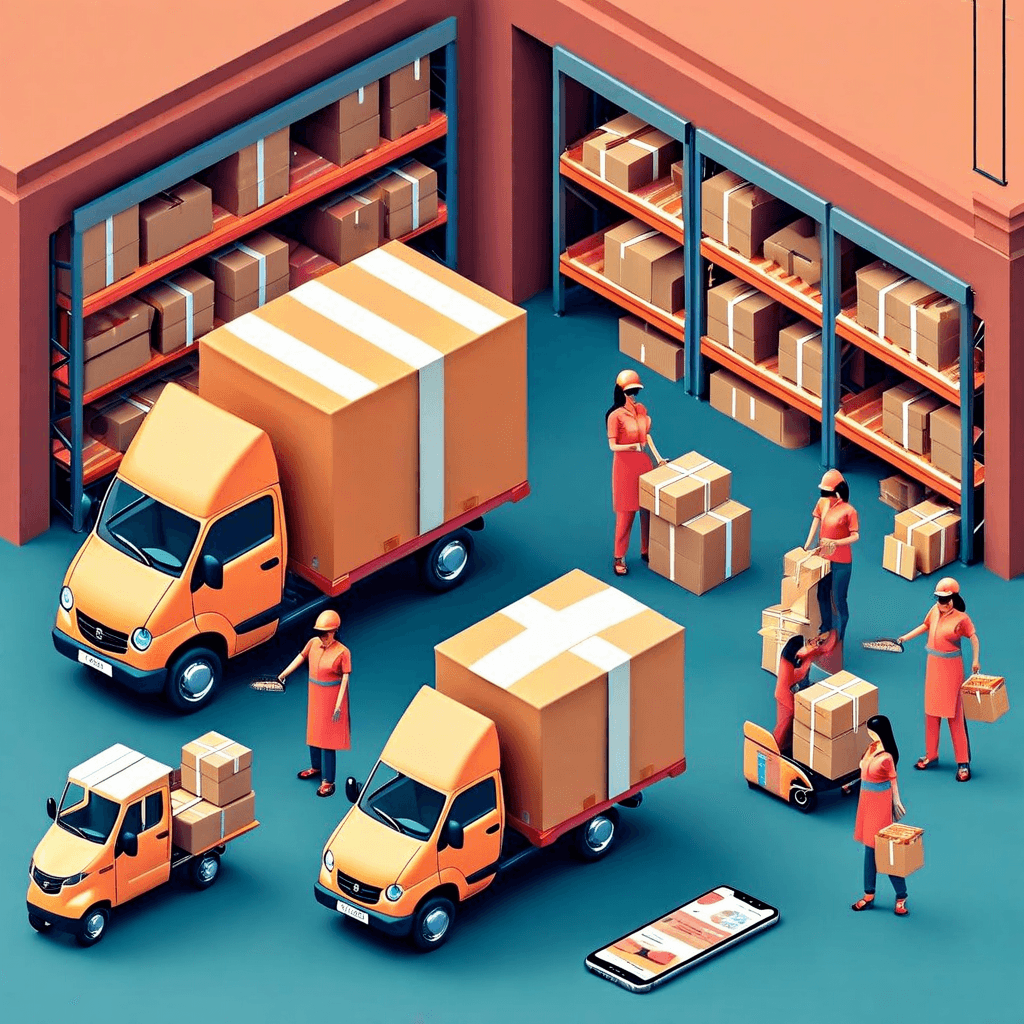
Reliance Retail is quietly rewriting the rules of India's quick commerce battle. While Blinkit and Zepto burn cash building dark stores for 10-minute grocery delivery in metros, Reliance is doing something fundamentally different: transforming its existing network of 20,160 stores into local fulfillment hubs. The results speak for themselves—hyperlocal orders surged over 4x year-on-year in Q4 FY26, reaching 585 million quarterly transactions, all while maintaining positive contribution margins where competitors bleed cash Transcripts.
The Store Network Advantage
The math is brutally simple: proximity drives speed. Reliance operates 20,160 stores across 78.3 million square feet of retail space, covering 1,200+ cities and 5,100+ pin codes InvestorPresentations. Compare this to Blinkit's ~2,100 dark stores, Zepto's ~1,100-1,200, or Swiggy Instamart's ~1,100-1,200—all concentrated primarily in top metros . By repurposing existing retail stores as fulfillment centers, Reliance has "improved operational efficiency, helping the retail giant reduce the average distance covered per order" in the quick commerce sector .
This geographic reach creates delivery capabilities competitors simply cannot match. While Blinkit and Zepto promise 10-15 minute delivery in metros, Reliance offers a tiered approach: 30-minute delivery from high-density grocery stores in urban areas, 2-hour delivery from 682 electronics stores and 1,700+ fashion outlets, same-day delivery from regional stores, and next-day delivery in tier 2/3 cities InvestorPresentations. This flexibility means Reliance can serve delivery scenarios—like electronics in tier 2 cities—that competitors cannot address at all.
Beyond Groceries: The Category Expansion Strategy
The most significant shift this year was structural. Reliance aggressively expanded beyond groceries into higher-value categories. In Q4, JioMart scaled its non-grocery quick hyperlocal commerce network to 682 electronics stores and over 1,700 fashion and lifestyle stores with a 2-hour delivery promise . This is something "nobody has the kind of network density to be able to offer," according to management .
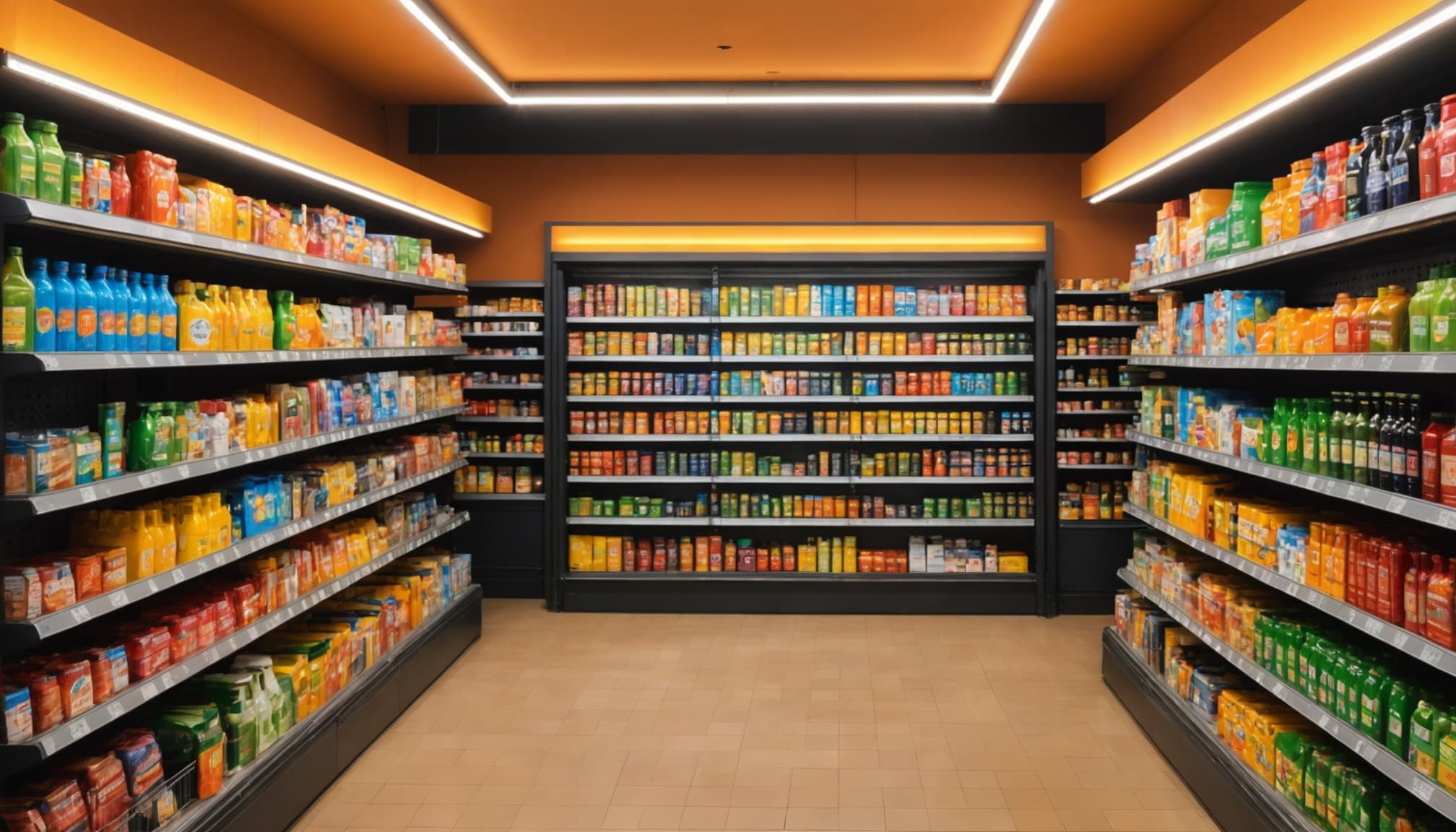
Unlike competitors who operate multi-category fulfillment through dark stores with limited assortment, Reliance offers "the entire full store assortment on a hyperlocal basis" . This creates several advantages: customers discover products they wouldn't find in limited-assortment dark stores, full assortment enables one-stop shopping increasing transaction frequency, and broader selection drives additional add-on purchases per transaction. For fashion quick commerce, faster delivery "significantly reduces returns while also increasing bill values" Transcripts.
The FMCG vertical plays a crucial role as the adoption engine. Reliance Consumer Products achieved ₹22,000 crore gross revenue in FY26 (2x year-on-year), with Q4 reaching ₹7,350 crore (2.2x year-on-year) InvestorPresentations. Private label brands like Campa (₹4,700+ crore sales) and Independence (~₹2,600 crore) deliver 15-20% higher margins than third-party brands, enabling competitive pricing to drive adoption InvestorPresentations. High-frequency FMCG products create habitual ordering patterns, building trust for higher-value category purchases.
Operational Efficiencies: Store-Based vs. Dark Store Model
Reliance's store-based fulfillment model creates structural economic advantages. The most significant efficiency comes from spreading fixed costs across multiple revenue streams. Real estate, utilities, staff, security, and inventory are shared between walk-in retail and online fulfillment. This shared cost structure means Reliance's incremental cost per order is significantly lower than competitors who must bear 100% of fixed costs for dedicated dark stores.
Management confirms that on a contribution margin level, Reliance's quick commerce business is already positive Transcripts. This positive unit economics stems from lower fixed costs per order through shared infrastructure, higher order values from multi-category capability, efficient procurement built over years providing intake margin advantages, and category mix optimization with higher-margin electronics and fashion improving overall economics Transcripts.
The store-based model also creates inventory advantages. Dual-channel inventory serves both walk-in customers and online orders, reducing stockouts through broader assortment, lowering inventory holding costs through faster turnover, and enabling seasonal flexibility as store inventory shifts between channels based on demand. Adding fulfillment capability doesn't always require new investment—Reliance retrofits existing stores, leverages existing infrastructure like backrooms and loading docks, adapts store management systems for online order processing, and scales with store expansion as new stores automatically add fulfillment capability .
Data and Network Advantages
The scale of Reliance's operations creates unprecedented data advantages. With 1.93 billion annual transactions (585 million quarterly) and 387 million registered customers, Reliance has visibility into consumer demand patterns that competitors cannot match InvestorPresentations. This massive dataset enables sophisticated optimization across operations.
Demand density mapping from 585 million quarterly transactions across 5,100+ pin codes allows Reliance to identify high-demand zones for priority fulfillment infrastructure, optimize new store placement based on transaction density patterns, plan delivery routes based on historical order clustering, and allocate fulfillment capacity based on demand patterns InvestorPresentations. Time-of-day and seasonal patterns from the data reveal peak hours for resource allocation, seasonal forecasting for inventory and workforce planning, day-of-week optimization strategies, and event-based planning for festivals and special occasions.
Customer behavior prediction from 387 million registered customers enables purchase frequency modeling to predict when customers will place their next order, basket analysis to understand frequently purchased products, churn prediction to identify customers at risk, and lifetime value optimization to tailor service levels . Hyperlocal demand forecasting at the pin code level allows each store to be stocked based on local purchase patterns, with category preferences, brand affinity, and price sensitivity all informing assortment and pricing decisions.
The Competitive Landscape
As quick commerce shifts from "blitzscaling to balance," Reliance's hybrid model signals how scale, profitability, and reach could coexist . While incumbents still dominate metros with 10-minute delivery, Reliance's advantages are fundamentally different: broader reach in tier 2/3 cities where competitors cannot operate profitably, better economics with positive contribution margins versus competitor cash burn, category breadth with electronics and fashion versus competitors' grocery focus, and data superiority with unmatched transaction volume for continuous optimization.
The question becomes: Can speed-first platforms adapt, with Reliance-like retail giants quietly rewriting the rules of the game? Reliance's advantages suggest that speed is not the only dimension that matters—geographic reach, category breadth, and unit economics are equally important. Scale creates sustainability through massive physical and data assets that form durable advantages. Hybrid models combining physical retail with digital commerce optimize economics better than pure-play approaches. And data drives continuous operational improvement that compounds over time.
Reliance Retail's hyperlocal commerce expansion represents more than just another player entering the quick commerce market. It's a fundamentally different approach leveraging existing assets rather than building from scratch, optimizing for sustainable economics rather than growth at any cost, and serving the breadth of India's consumption story rather than just metro elites. With 20,000 stores as fulfillment hubs, 387 million customers generating data insights, and positive unit economics from day one, Reliance is building something that looks less like a quick commerce startup and more like the next phase of retail itself.