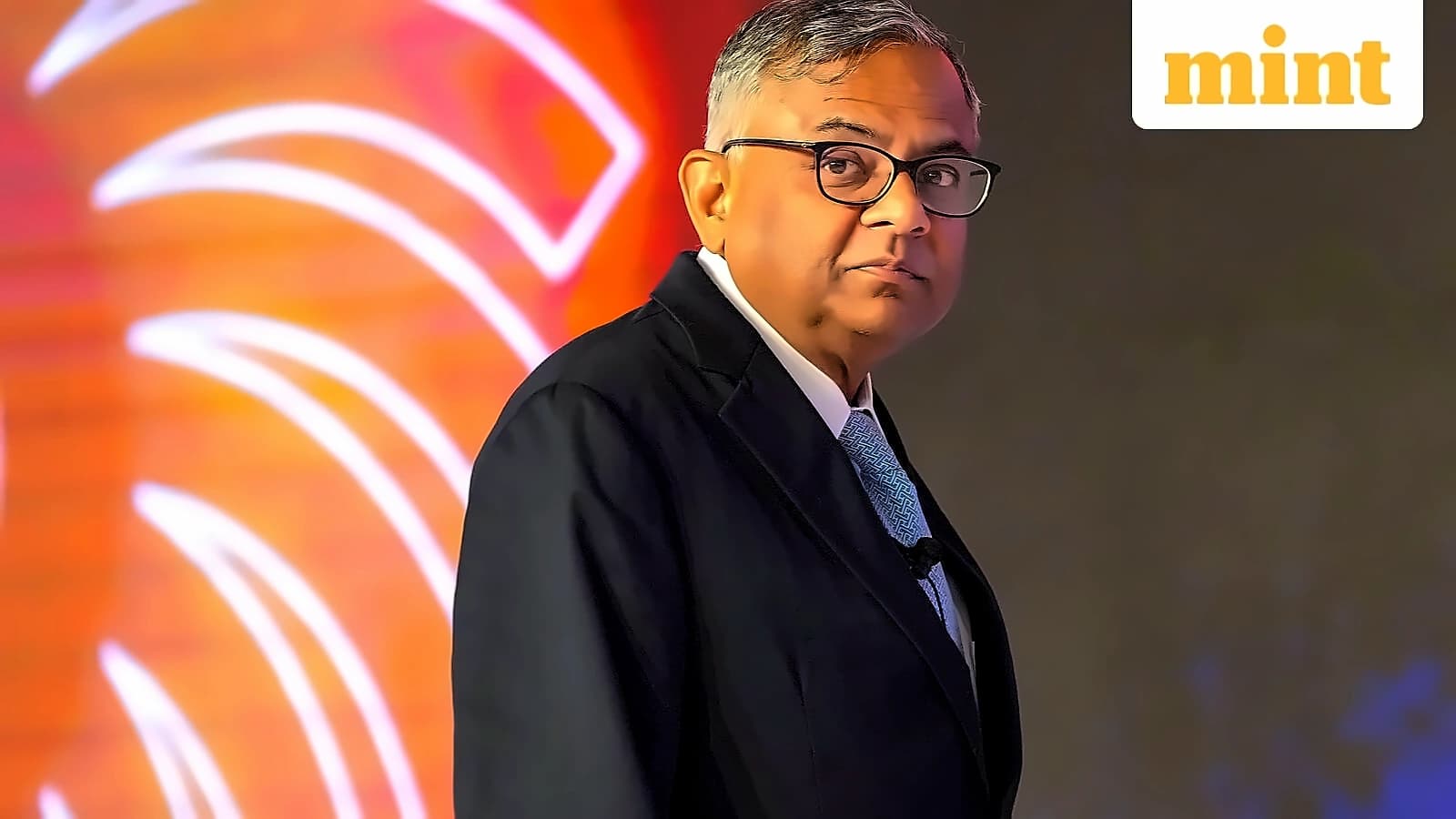
The Reserve Bank of India (RBI) has put it in writing: Tata Sons must comply with all regulations governing Upper Layer Non-Banking Financial Companies (NBFC-UL), including the mandatory listing requirement. In a letter dated November 16, 2026, addressed to Tata Sons' CFO, the central bank explicitly used the word "listing" for the first time, directing the holding company to follow the framework applicable to NBFCs in the Upper Layer. This clarification closes the argument that the regulator had never specifically mentioned listing, a position previously maintained by those opposing the move within the group.
The directive stems from Tata Sons' classification as an Upper Layer NBFC in September 2022. Under the RBI's scale-based regulatory framework, entities in this category must list within three years. For Tata Sons, that deadline was September 30, 2025—a timeline that has already lapsed. The company had sought to avoid the listing requirement by clearing its debt and applying to surrender its registration as a Core Investment Company (CIC) in March 2024. However, the RBI rejected that application in September 2026, leaving the listing obligation intact.
The implications for Tata Sons' capital structure are significant. The Tata Trusts hold approximately 66% of Tata Sons. A listing would likely involve an offer for sale or a fresh issue, potentially reshaping the shareholder base and diluting the Trusts' control. This is the core of the internal dispute, with Tata Trusts Chairman Noel Tata opposing listing and urging a restructuring plan to avoid stock market entry, while the board led by N. Chandrasekaran has moved toward compliance.
Beyond ownership, a listed Tata Sons would fall under SEBI's Listing Obligations and Disclosure Requirements (LODR) rules. This means quarterly results, detailed related-party transactions, and material-event disclosures would become public. The cross-holding structure that defines the group—Tata Sons' stakes in listed operating companies—would face unprecedented transparency. While this could lead to a governance discount if investors perceive complexity, it also opens access to public equity markets and a market-based valuation for the holding company. The RBI has not set a fresh deadline, leaving the timeline uncertain ahead of the crucial board meeting on November 26.
IDBI Bank's Fairfax Sale: Hurdles and Structure
The government's plan to sell a 60.72% stake in IDBI Bank to a subsidiary of Fairfax Financial Holdings for Rs 52,878 crore (about US$5.6 billion) has crossed the Cabinet approval hurdle, but the finish line remains distant. The price of Rs 81 per share represents a 23% premium to the bank's book value as of June 30, 2026. However, the transaction is not complete. The signing of the Share Purchase Agreement (SPA), RBI clearance, and an open offer to minority shareholders are all still pending.
Several hurdles could delay completion within the current fiscal year (FY27). While one source suggests RBI fit-and-proper clearances were received in mid-2024, others indicate RBI approval is still pending. Fairfax also needs RBI approval for its proposed contribution of Digit Insurance and IIFL Capital to IDBI Bank, creating a unified financial services entity. Additionally, Fairfax holds about 40% of CSB Bank, and the RBI requires it to resolve this overlap—either by merging CSB or exiting one of the two banks—within two years of closing. This condition will be written into the SPA but adds complexity to negotiations. Employee unions have also urged the RBI to withhold approval, though the government has committed to protecting service conditions and pensions in the SPA.
For Fairfax, the transaction represents a massive capital allocation of roughly US$5.6 billion. The company has indicated it will not raise long-term debt to fund the deal and is expected to submit a long-term capital infusion roadmap for the bank. The move significantly increases Fairfax's exposure to India's financial sector, spanning banking, insurance, and capital markets. However, regulatory caps will limit control: despite acquiring 60.72% equity, voting rights in an Indian bank are capped at 26%. Furthermore, a five-year lock-in applies, followed by a glide path requiring Fairfax to reduce its stake to 40% within 10 years and to 26% over the following five.
The completion of regulatory processes is directly tied to the government's disinvestment targets. Proceeds depend on the deal closing; if the RBI, SPA, or open-offer steps slip past March 31, 2027, the receipts would move into FY28. The government stands to receive roughly Rs 26,500 crore from its 30.48% stake, with the remainder going to LIC. The Cabinet has also authorized the sale of the government's residual 15% in the open market, and LIC must cut its holding to 15% within two years of closing. These future sales depend entirely on the primary deal closing first.
TVS Family Dispute: Governance Risks
The TVS family dispute has escalated from a private disagreement to a formal legal claim. On November 16, 2026, Dr. Lakshmi Venu served a partition notice on her father, Venu Srinivasan, under the Hindu Succession Act, seeking an equal share in the family assets. Her mother, Mallika Srinivasan, has publicly backed the claim. The notice gives Venu and his son Sudarshan Venu one week to respond, with counsel indicating the matter may go to court if not settled.
The assets in question include family interests held through the VS Trust and other holding vehicles, covering TVS Holdings, TVS Motor Company, TVS Credit Services, and Sundaram-Clayton. The dispute centers on whether the broader 2020 TVS family arrangement settled the division of assets within Venu Srinivasan's immediate family. Lakshmi maintains it did not, arguing that the allocation of management responsibilities does not equate to a transfer of exclusive ownership.
Governance stability varies across the entities. TVS Motor, with a market cap exceeding Rs 2 lakh crore, is insulated by two layers of ownership—the trust and TVS Holdings—and is led by Sudarshan Venu. Sundaram-Clayton, where Lakshmi is MD, carries the highest leadership risk given her direct executive role and the company's smaller size (market cap ~Rs 2,400 crore). TVS Holdings, where Venu Srinivasan is Chairman and Sudarshan is MD, faces the highest control risk as the dispute targets the beneficial interest in its largest shareholder, VS Trust.
If the VS Trust interests are partitioned, TVS Holdings could face a multi-holder promoter group, requiring consensus on board appointments and capital allocation. While cash flows at operating companies wouldn't change, the market might apply a higher governance discount, increasing volatility. A negotiated settlement could involve share transfers or buyouts, requiring financing and regulatory compliance. The combined market cap of the three listed entities is about Rs 2.37 trillion, exposing significant value to uncertainty.
TVS Credit Services, a subsidiary of TVS Motor, is structurally insulated as it is held directly rather than by the trust. Its growth trajectory remains strong, with Assets Under Management (AUM) at Rs 32,053 crore as of June 30, 2026 (up 19% YoY) and Q1 FY27 profit after tax of Rs 208 crore (up 15%). Tier 1 capital stands at 16.5%. However, the ICRA rating factors in parent support from TVS Motor. A prolonged dispute that weakens this perception could raise funding costs. Additionally, TVS Credit has relied on regular equity infusions from TVS Motor and other investors; promoter-level instability could complicate future capital raises.
Vedanta's Videocon Confusion
Shares of Vedanta Limited fell nearly 3% on November 16, 2026, following media reports that the Supreme Court had upheld the rejection of Twin Star Technologies' resolution plan for Videocon Industries. The plan, worth Rs 2,962 crore against admitted claims of nearly Rs 65,000 crore, was sent back to the committee of creditors for fresh bidding. The stock decline was likely driven by headline association—Twin Star is a Vedanta-group promoter entity, and reports framed the ruling as a "setback for Vedanta".
Vedanta promptly clarified to the exchanges that it is not a party to the proceedings, which concern Twin Star Technologies and do not require disclosure under SEBI Regulation 30. The company stated that no balance-sheet commitment or corporate guarantee of Vedanta was engaged. This legal separation helps insulate the listed company's balance sheet from the Videocon resolution process. The stock partially recovered, closing up 0.80% the next day at Rs 255.03 [Stock Agent], suggesting the market largely accepted the clarification. Other +1
However, the assertion that no disclosure is required under Regulation 30, while legally sound, does little to address investor concerns about transparency. A narrow compliance reading tells investors the conclusion but not the reasoning. Investors may want clarity on the group relationship between Vedanta and Twin Star, and whether any indirect exposure exists through guarantees or pledges. Vedanta's promoter-group entities had sent Regulation 30A intimations earlier in 2026, though the documents do not confirm a link to Videocon. Other +2
To prevent future information asymmetry-driven volatility, companies can employ proactive mechanisms. These include issuing voluntary clarifications before price moves, providing fuller reasoning in filings that explains the group relationship and any exposures, maintaining standing disclosures on group structure and litigation, and engaging with media to correct headlines that blur the distinction between listed entities and promoter companies. While Vedanta's legal position appears robust, the episode highlights the importance of proactive communication in maintaining investor confidence.