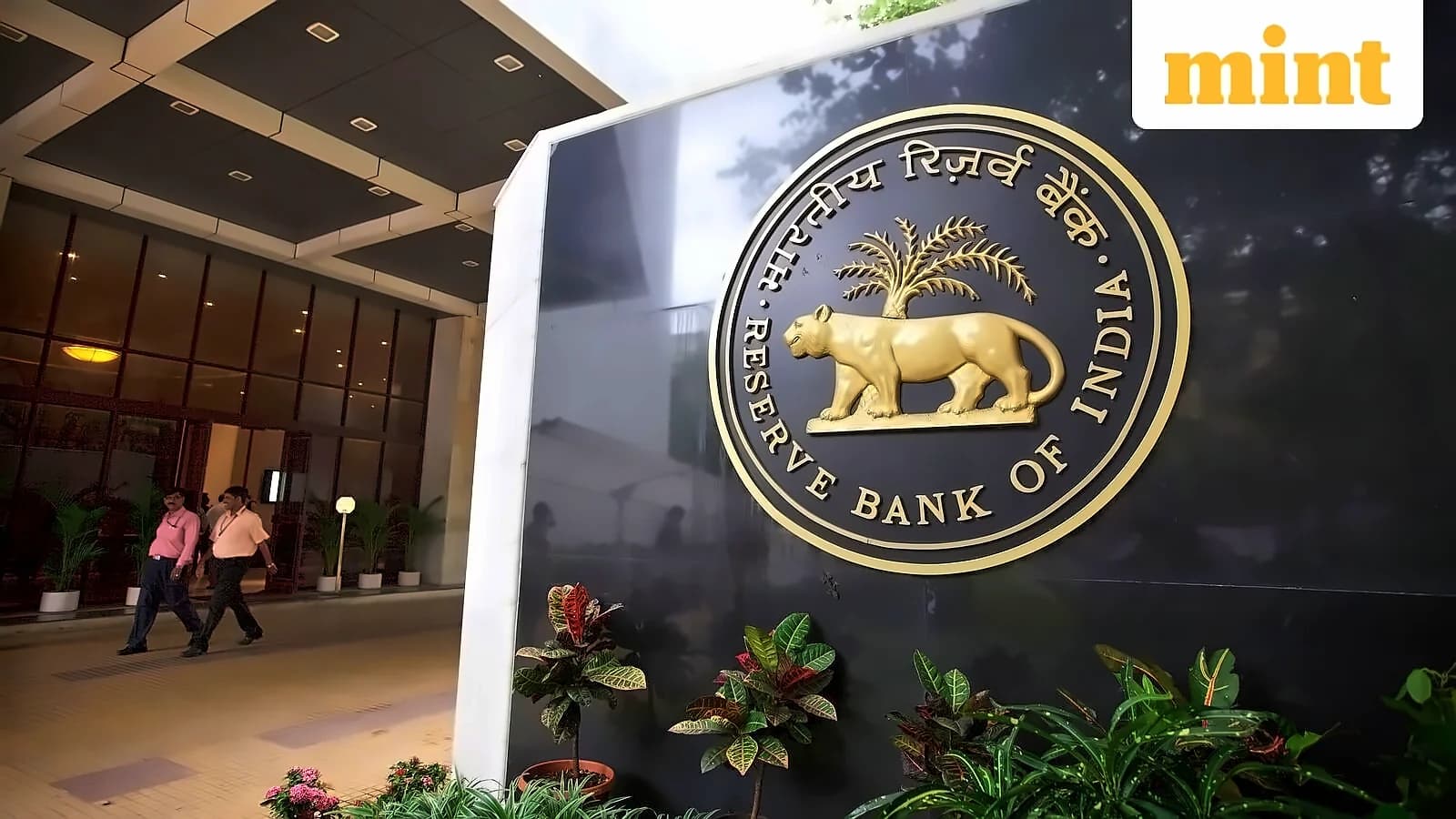
The Reserve Bank of India (RBI) has pushed back the implementation date for new capital market exposure rules from April 1, 2026 to July 1, 2026. This three-month deferment gives banks, brokers, and capital market intermediaries extra breathing room to prepare for stricter collateral requirements and risk management frameworks. The original rules, announced on February 13, 2026, were designed to tighten bank lending to stockbrokers and capital market intermediaries (CMIs) .
Why the Deferment Matters Now
The timing of this extension isn't random. The RBI received representations from banks and industry associations flagging operational and interpretational issues that needed clarification before implementation . But there's a bigger factor at play: the ongoing Iran conflict has created significant market volatility.
The Nifty 50 has fallen approximately 12% from February 27, 2026 levels, with March witnessing intense foreign institutional investor (FII) selling of around ₹105,000 crore . The Indian rupee hasn't been spared either, weakening to breach the Rs 95/$ mark during intraday trading and declining 11% over the fiscal year—its steepest fall since 2011-12 . RBI's forex reserves have declined to around $709 billion from a record $729 billion in February, reflecting sustained intervention to stabilize the currency .
As Deven Choksey, Managing Director at DRChoksey FinServ, noted: "It is good that RBI has delayed implementation of these rules as there is a lot of volatility anyway due to the Iran war. This will give some breather to prop traders and other participants, and hopefully help in calming nerves."
What This Means for Brokers
The deferment allows brokers to continue using bank guarantees backed by 50% margin until July, rather than immediately shifting to the new framework requiring at least 50% collateral plus a 25% minimum cash component . This matters because the new rules create what's called "cash drag"—money that must sit idle as collateral rather than being deployed elsewhere.
Take Angel One Ltd as an example. The broker had total borrowings of approximately ₹3,400 crore as of March 31, 2025, with nearly ₹1,700 crore (50%) coming from banks . Its Margin Trading Facility (MTF) book exceeded ₹4,000 crore in late 2025 . Under the new rules, Angel One is expected to shift toward commercial papers (CPs) and non-convertible debentures (NCDs) instead of bank funding—it already has ₹900 crore in CPs and raised ₹50 crore via NCDs .
Groww, operating as Billionbrains Garage Ventures Ltd, presents a different picture. Largely equity-funded, Groww saw its MTF book jump 4x to ₹2,307 crore in Q3FY26 from ₹542 crore a year earlier . With strong profit growth of ₹550 crore in the December quarter and an IPO fundraise of ₹110 crore, Groww may need to tap market borrowings going forward due to rapid MTF expansion .
The broader MTF market has grown 43% year-on-year, from ₹84,000 crore in January 2025 to ₹1.2 lakh crore as of January 2026 . This rapid growth, combined with concerns about over-leverage, made the timing of regulatory tightening particularly sensitive during the Iran conflict-induced volatility.
The Proprietary Trading Puzzle
RBI has taken a nuanced approach to proprietary trading. The original ban aimed to prevent "contagion"—where a broker's bad bet on their own account could jeopardize bank capital . But the amended directions include some important exceptions.
Banks can now provide funding for proprietary trading when fully backed by cash collateral . Curbs on financing market makers have been removed, recognizing their role in providing liquidity . Acquisition finance has also been broadened to include mergers and amalgamations .
This reflects a balanced regulatory approach. The core framework remains intact—most exposures still require 100% collateral with significant cash component, and banks remain prohibited from financing speculative proprietary trading . But RBI recognizes that not all proprietary trading is speculative; some serves legitimate market functions like market-making .
Market Reaction and What Lies Ahead
When the original rules were announced in February 2026, capital market stocks reacted sharply. BSE Ltd fell up to 10% to ₹2,726.30, while Angel One Ltd declined up to 6% and Groww dropped 4% . The Nifty Capital Markets Index underperformed the broader market .
Jefferies estimates the revised norms could shave off approximately 10% from BSE's earnings, with proprietary trading volumes potentially declining by 10-12% if nearly half of proprietary trading volumes are impacted . Dhiraj Relli, MD and CEO of HDFC Securities, estimates a potential 15-20% industry-wide impact on F&O volumes due to higher borrowing costs .
However, industry participants note that large brokers typically fund their MTF exposures through internal accruals, equity, and money market instruments rather than bank lending, which may mitigate the impact . As Vineet Agrawal, Group CFO of Angel One stated, the overall cost of funds for MTF is expected to remain broadly stable with no material impact due to the revised framework .
The Bottom Line
The three-month deferment provides valuable time for market participants to adjust their business models and funding strategies. But the core direction toward reduced leverage and stronger risk management remains unchanged. Well-capitalized brokers with strong internal accruals and access to alternative funding sources are better positioned to navigate this transition, while smaller players dependent on bank funding face greater challenges.
The Iran conflict has added another layer of complexity to an already delicate situation. By deferring implementation, RBI has acknowledged the need for stability during volatile times while maintaining its commitment to a more resilient financial system in the long run. The question now is whether three months will be enough for the industry to adapt to what could be a fundamental restructuring of how capital market lending works in India.