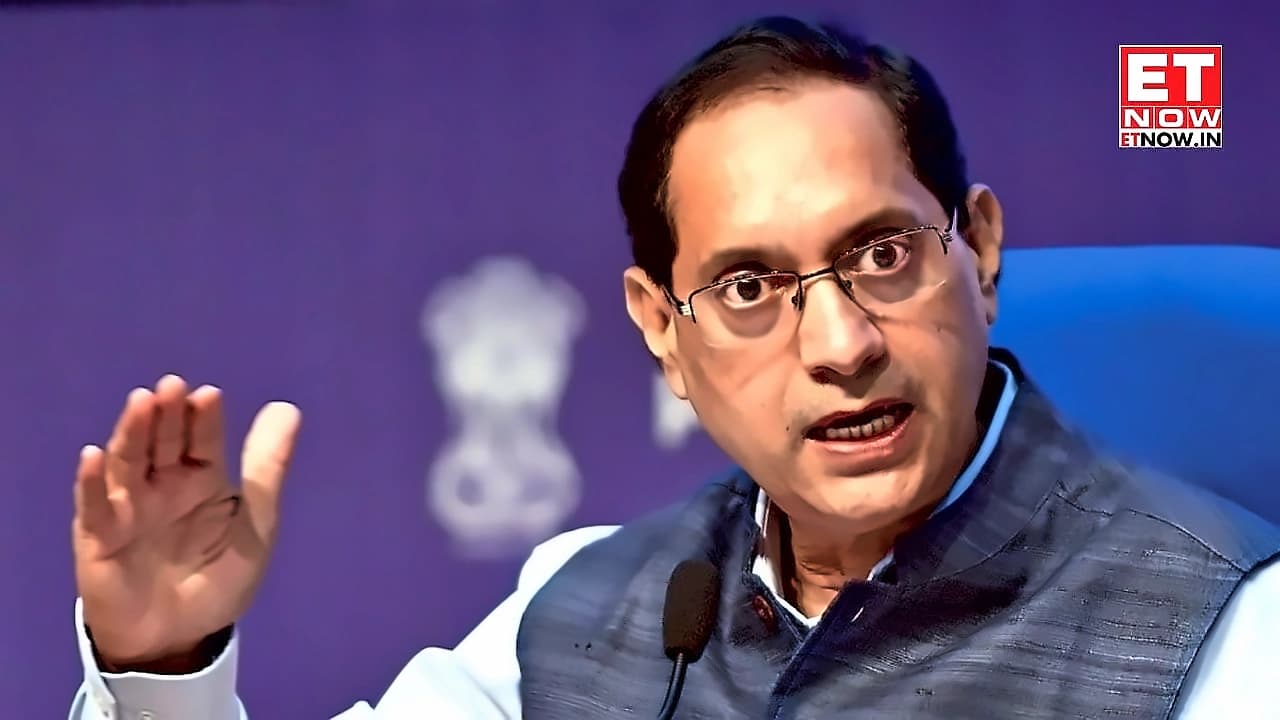
SEBI Chairman Tuhin Kanta Pandey has ruled out immediate implementation of 24x7 stock market trading, citing significant operational challenges. Speaking to the media on Wednesday on the sidelines of the 65th General Assembly and Annual Meeting of the World Federation of Exchanges (WFE), Pandey emphasized that any move towards round-the-clock trading would require "a very strong kind of reason why should we do it, and what are the costs and what are the risks of that." He specifically cited cybersecurity concerns, noting that "nobody has a clue of how they are going to handle the cybersecurity. Every day something is happening in the US." The SEBI chief questioned the efficiency of longer market sessions, stating that "extending the market hours is not necessarily a very efficient way" and warned that "people will complain that the prices have gone up at night while they were sleeping." According to The Financial Express, Pandey stated that extending trading hours would bring operational challenges, including liquidity management and cybersecurity risks, adding that any proposal to extend market hours must have a clearly defined objective, with the potential benefits weighed against the costs and risks involved. The SEBI Chairman indicated that extending trading hours is not a very big priority, pointing to constraints that make the proposal a lower priority for the markets regulator. As per The Hindu BusinessLine, Pandey said that growing cyber risks mean there has to be a strong business case for extending market hours, adding that he does not see feasibility of extending market hours for trading in India. The SEBI Chairman indicated that extending trading hours is not a very big priority, pointing to constraints that make the proposal a lower priority for the markets regulator. As per CNBC TV18, Pandey acknowledged that there is widespread discussion globally on the subject, and that a working group under the International Organization of Securities Commissions is also examining it. Also Read discussions have grown as US stock exchange Nasdaq will expand trading hours for US equities to 23 hours a day, five days a week, starting December 6, with a one-hour maintenance pause.
A significant trigger for the sell-off was a report that SEBI is considering linking margin-trading facility limits to a stock's free float, which rattled brokers, capital market stocks and leveraged mid- and smallcap positions. According to The Hindu BusinessLine, margin-funded positions across the market have risen to ₹1.53 lakh crore as of November 13, up 29% from a year earlier, raising concern at the regulator. SEBI is examining proposals to strengthen the margin trading facility framework as it seeks to balance the growth of leveraged trading with risks to market stability. The markets regulator is reviewing the framework governing the margin trading facility, which allows investors to buy shares using funds borrowed from brokers, after borrowing through the MTF reached ₹1.53 lakh crore. SEBI had earlier proposed widening funding avenues and easing operational requirements for brokers under the MTF framework, but has since been considering additional safeguards, including possible limits on fresh margin-funded positions in stocks where exposure crosses a threshold linked to free float. More than 220 stocks have already crossed the 5% level, while 36 stocks are above 10%, exchange data shows. As per The Hindu BusinessLine, the outstanding MTF book stood at ₹1.53 lakh crore as of November 13, up 29 per cent from a year earlier, with nearly two-thirds of the exposure concentrated in small- and mid-cap stocks. A source told Reuters that "The regulatory checks do not suggest any cause of concerns, but the rising retail participation requires additional risk management to contain any cascading effect in volatile markets."
The Indian stock market experienced a significant decline on Wednesday, with NSE Nifty 50 closing at 25,227.95, down 159.45 points or 0.63%, and BSE Sensex falling 500.38 points or 0.61% to 82,031.81. The Bank Nifty ended at 62,038.65, down 234.60 points or 0.38%, retreating from the record high of 62,442 it had scaled earlier in the session. According to The Hindu BusinessLine, the markets reversed course as investors cashed in on positions built during a sharp 13% rally over 12 sessions, with concerns over proposed regulatory changes to margin trading and hawkish US Federal Reserve signals triggering the sell-off. Nifty Midcap 100 declined 1.22% and Nifty Smallcap 100 fell 0.35%, reflecting broader selling pressure beyond the headline indices. Titan shares emerged as a key drag, with the Consumer Durables sector shedding 3.10% as jewellery stocks were hurt by a nearly 2% drop in MCX gold and a 3% fall in silver. Metals declined 2.46% and Auto fell 1.4%, while IT shed close to 1%. Notable exceptions included PSU Banks gaining 0.6% and Media adding 0.5%, with SBI rising 2.38% among Bank Nifty constituents.
The session's sharpest damage was driven by hawkish remarks from Federal Reserve officials ahead of the US FOMC minutes, which bolstered expectations of further Fed rate hikes and strengthened the greenback. According to The Hindu BusinessLine, IT also declined as Nvidia's results reinforced concerns over AI-led disruption to traditional services, while a firmer rupee added to the drag on export earnings. Foreign portfolio investors remained net buyers with net equity purchases of around ₹4,000 crore in Tuesday's session, taking November inflows to approximately ₹84,290 crore. India's wholesale inflation accelerated to 12.29% year-on-year in October from 11.39% in September, driven by a 32.84% surge in fuel and power prices. Market experts maintain a constructive medium-term view, with Ajit Mishra of Religare Broking recommending a 'buy on dips' approach with upside potential towards the 25,500–25,700 zone. Ankur Punj of Equirus Wealth characterized the day's action as part of a healthy correction, noting that concerns over potential regulatory changes and rising US-Iran tensions have added to near-term volatility.
SEBI is undertaking comprehensive reviews of key market regulations as part of its modernization efforts. According to The Financial Express, the regulator is examining proposals concerning the Margin Trading Facility (MTF) and a pre-IPO platform, while also reviewing Issue of Capital and Disclosure Requirements (ICDR), Listing Obligations and Disclosure Requirements (LODR), and Innovators Growth Platform (IGP) norms, which were last overhauled in 2018. On Securities Lending and Borrowing (SLBM), Pandey emphasized India's commitment to "an exchange-traded model rather than adopt opaque over-the-counter practices." "We don't want anything dark pool or outside OTC kind of thing. We want it on exchanges," he said, emphasizing the need for transparent market frameworks. "We are very clear. We don't want anything that is dark pool. We don't want OTC kind of thing. We want it to be on the exchange. Hopefully we should be able to work out a model which will be pretty enthusiastic model and very transparent for the world," he added. At the summit, Pandey also detailed challenges to allowing dual listing on exchanges in GIFT City. On any potential curbs on the margin trading facility, the Sebi chairman noted that the regulator had not taken any final decision yet and would bring it up for discussion if any plan was 'concretised'. The India VIX, which measures volatility, gained more than 2% to rise close to 16, indicating increased market uncertainty amid these regulatory developments. On Demat 2.0, Pandey said SEBI would assess the efficiency and cost implications of extending distributed ledger technology to equity transactions, given the enormous scale and volume of daily trading, with the technology having been introduced only for tokenisation of corporate bonds so far. On tokenisation, he said SEBI was first looking to complete a three-phase pilot for corporate bonds before considering wider adoption, noting that "Equity is a slightly different cup of tea" due to the size of India's equity market and high cost of the technology. Speaking at the event, Pandey said the number of unique investors in India's securities markets can double to over 380 million over the next five years if the trend growth on additions continues.