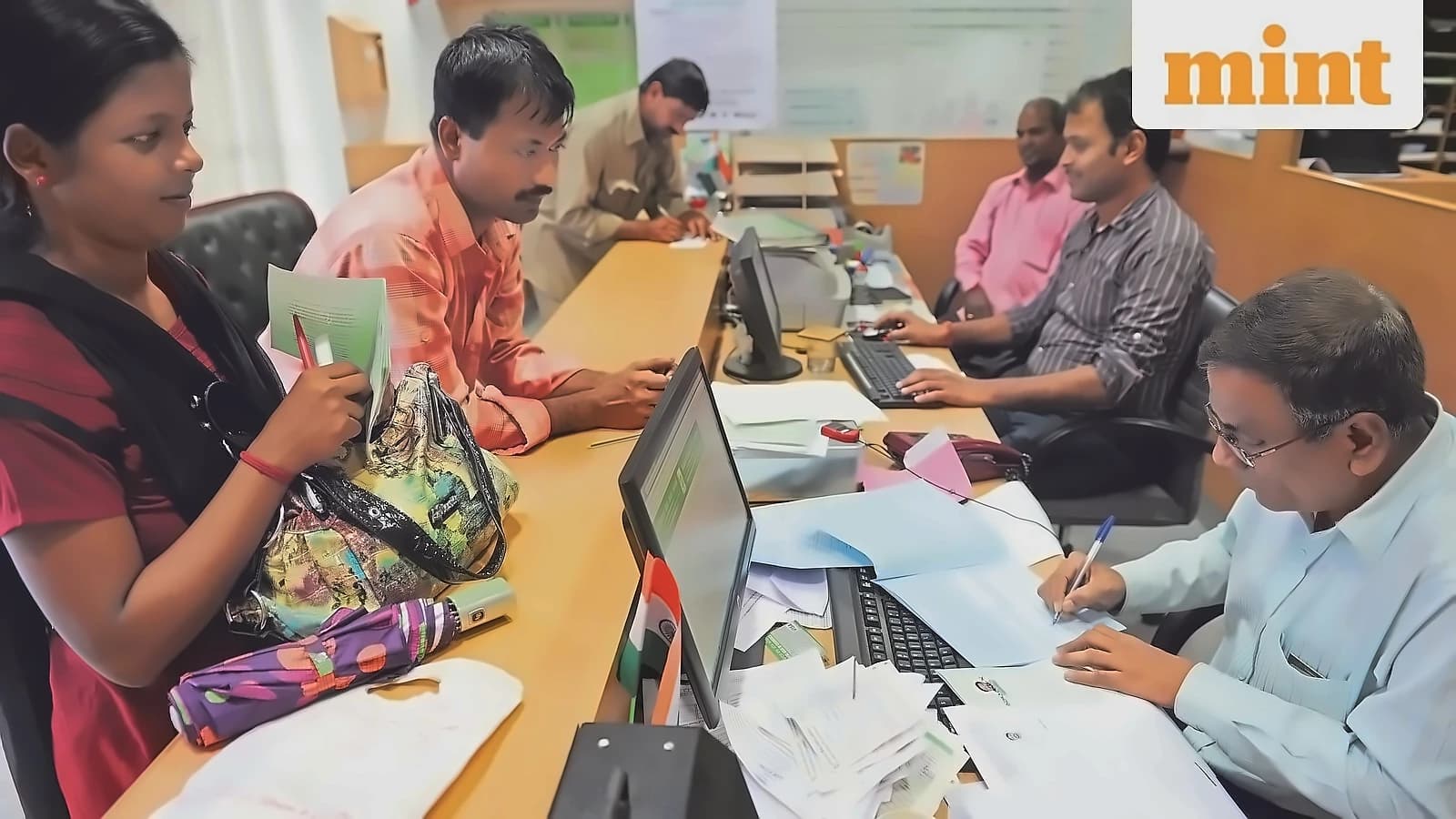
The Department of Financial Services (DFS) has directed India's 12 Public Sector Banks (PSBs) to automate promotion and transfer processes through digital portals, a move designed to inject much-needed transparency into a system long plagued by opacity. By establishing online platforms that host transfer policies, seniority lists, and vacancy details, the government aims to eliminate discretionary decision-making that has fueled employee resentment. This digital overhaul mandates that transfer exercises be completed before June annually, while promotion processes must begin in January-February with results declared by March 31. This standardized timeline addresses the historical variance in promotion cycles across banks, reducing uncertainty and delays that have hampered workforce planning. The operational efficiency gains are clear: predictable HR cycles allow for better organizational structuring, timely deployment of talent, and reduced administrative friction, enabling PSBs to focus on their core mandate of financial inclusion.
Aligning with Financial Inclusion
These HR reforms are strategically aligned with PSBs' role as the primary implementing agencies for flagship government schemes like the Pradhan Mantri Jan Dhan Yojana (PMJDY) and Pradhan Mantri Mudra Yojana (PMMY). With over 55.90 crore Jan Dhan accounts opened and nearly 54 crore loans amounting to over ₹35.13 lakh crore sanctioned under Mudra, PSBs require a motivated, efficiently managed workforce to sustain this massive outreach. The Centre's reform agenda recognizes that opaque HR practices and rigid workplace cultures directly impact institutional efficiency, affecting the delivery of these critical schemes. By streamlining HR operations, the government aims to build a "future-ready" banking workforce capable of supporting India's growth trajectory while deepening credit outreach in underserved areas.
Diverging Workforce Strategies
The contrast with private sector banks is stark. While PSBs added a marginal 0.22% to their headcount, reaching 757,641 in FY25, private banks reduced their workforce by 0.86% to 838,150. This divergence highlights fundamentally different human capital strategies.
HDFC Bank, for instance, quadrupled its tech investments to around $1 billion, while Axis Bank allocated 10% of operating expenditure to technology. This "employee optimization" allows private banks to expand branch networks even while trimming staff. PSBs, however, are bound by a financial inclusion mandate that necessitates physical presence in rural and semi-urban areas, requiring calibrated workforce expansion. The government's strategic recruitment drive—selecting over 50,000 candidates through IBPS in FY26, a 33% increase—reflects the need to strengthen operational capacity and reduce workload pressures in these geographically diverse roles.
Performance Amidst Challenges
Despite these workforce challenges, PSBs have delivered remarkable financial performance, recording a historic net profit of ₹1.98 trillion in FY26. This marks the fourth consecutive year of profitability, supported by a robust Capital to Risk-weighted Assets Ratio (CRAR) of 16.6%. The sector's gross advances grew by 15.7% year-on-year to ₹127 lakh crore, significantly outpacing the marginal headcount increase. This indicates substantial productivity improvements, likely driven by the early adoption of digital transformation initiatives under the EASE (Enhanced Access and Service Excellence) reforms agenda. The relationship between HR automation and financial performance is mediated through operational efficiency gains. Research indicates that digital transformation can reduce the Cost-to-Income Ratio by 0.53% for every 1% increase in IT investment share. By automating high-volume administrative tasks, PSBs can free up HR professionals to focus on strategic initiatives, thereby enhancing overall organizational productivity and sustaining the ₹3.21 trillion operating profit.
The Human Cost of Toxicity
However, the urgency for these reforms stems from a darker reality: the human cost of systemic workplace toxicity. Opaque transfer and promotion policies have created deep-seated resentment among PSB employees, contributing to a culture where arbitrary decision-making and punitive transfers are common. The All India Bank Officers' Confederation (AIBOC) has consistently raised concerns about unfair labour practices and the lack of accountability in management decisions. In extreme cases, this toxic environment has been linked to tragic outcomes, including suicides at institutions like Bank of Baroda. Reports of excessive pressure, humiliation by superiors, and punitive "exile" transfers to remote locations paint a picture of a workplace where employee well-being has often been secondary to administrative convenience. The causal chain is evident: rigid, opaque HR practices foster a toxic culture that leads to severe mental health crises and, ultimately, extreme outcomes.
Technology as a Remedy
The proposed reduction of human interface in HR processes offers a potential path to mitigating this toxicity. By automating seniority-based promotions and transfers, the government aims to remove the scope for bias, favoritism, and vindictive action. Digital portals that allow employees to indicate location preferences and access transparent seniority lists can restore faith in the system. Furthermore, the establishment of committees to address transfer-related appeals within 15 days introduces a layer of accountability previously missing. For the over 750,000 PSB employees, this shift promises greater predictability in career progression, reducing the anxiety and uncertainty that have long plagued the workforce.
Beyond Automation
Yet, technology alone cannot cure deep-seated cultural issues. Structural stressors like the ₹5 lakh service bond and restrictive posting policies continue to pose significant challenges. While the Supreme Court has upheld the validity of service bonds as a necessary deterrent against attrition, the financial burden on junior officers can be immense, limiting their career mobility and creating psychological stress. Similarly, arbitrary posting policies that disrupt family life and force employees into remote locations without adequate support contribute to burnout and attrition. Addressing these issues requires more than automation; it demands a fundamental rethink of the employee value proposition. PSBs can look to private sector best practices, such as "liquid careers" that offer dynamic career pathing, empathetic workplace design, and a clear narrative around purpose to attract and retain talent.
The Path Forward
The path forward for PSBs lies in balancing their unique social mandate with modern HR practices. The government's reform agenda is a crucial first step, leveraging technology to bring transparency and efficiency to archaic systems. However, true transformation will require a cultural shift that prioritizes employee well-being alongside operational metrics. By learning from the private sector's focus on talent management and engagement while staying true to their mission of financial inclusion, PSBs can build a workforce that is not only efficient but also motivated and resilient. The stakes are high: a healthy, transparent work culture is not just a moral imperative but a strategic necessity for sustaining the financial performance and social impact that India's public sector banks are uniquely positioned to deliver.