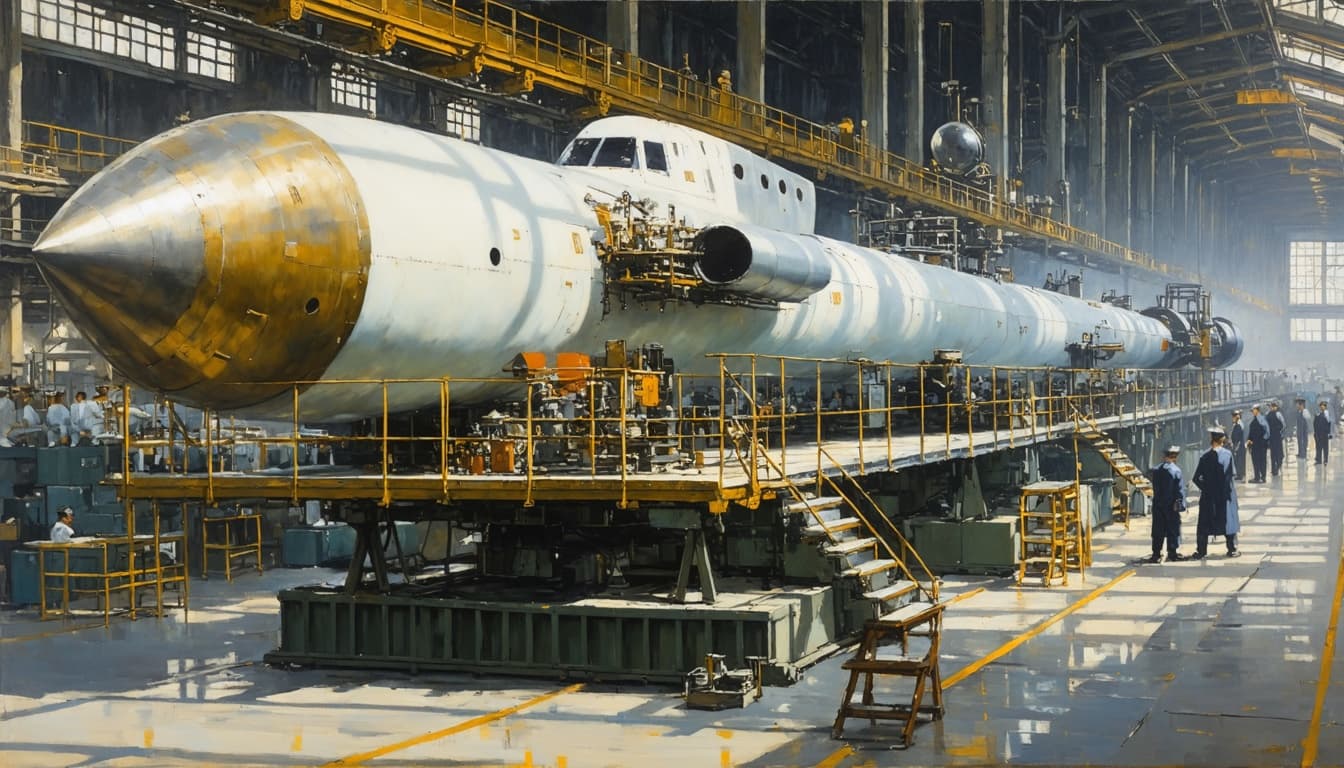
India's indigenous Pinaka Multi Barrel Rocket Launcher system has emerged as a cornerstone of the country's defence modernization programme. Developed by the Defence Research and Development Organisation (DRDO), this long-range weapon system can deploy multiple rockets in seconds, targeting enemy positions up to 120 km away. The opportunity extends far beyond domestic requirements—Armenia has already signed a ₹2,000 crore deal for four Pinaka batteries, making it the first international customer, while France has expressed keen interest in evaluating the system against global competitors like the US-made HIMARS.
For Indian private sector companies, Pinaka represents a transformative opportunity. The Ministry of Defence's 2,000-unit Pinaka rocket program, combined with contracts worth ₹10,147 crore already inked with Economic Explosive Limited and Munitions India Limited, creates substantial revenue visibility. But two companies—Solar Industries and Apollo Micro Systems—are approaching this opportunity from fundamentally different angles, with contrasting strategies, risk profiles, and valuation dynamics. InvestorPresentations
Solar Industries: Margin Expansion Through Vertical Integration
In Q1FY27, the company reported defence revenue of ₹933 crore, surging 123% year-over-year and increasing its defence revenue share from 19% to 26% of total sales. This shift in business mix has been the primary driver behind EBITDA margin expansion to 27.9% from 24.8% in the previous year.
The mathematics behind this margin expansion is straightforward but powerful. Defence products carry substantially higher margins compared to traditional industrial explosives. As defence revenue grows from 19% to 26% of the mix, it pulls up the consolidated EBITDA margin. The company has also benefited from average realization rates rising more than 30%, driven by commodity inflation and surging global demand for high-energy materials and ammunition replenishment.
Solar's competitive advantage stems from its vertically integrated position. The company controls the entire value chain—from high-energy materials and propellants to complete rocket manufacturing. This integration spans eight years of R&D investment, including testing approximately 100 rockets for operational validation of the Pinaka Enhanced Range System. The result:
The company's order book of ₹21,400 crore, with ₹18,000 crore in defence backlog, provides exceptional revenue visibility. Of this defence backlog, ₹8,500 crore comes from international orders, demonstrating export traction beyond domestic requirements. Solar has already begun exporting guided Pinaka rockets to Armenia, with the first batch flagged off in January 2026—before the Indian Army received them. This export success validates commercial viability and positions Solar to capitalize on growing international interest from countries like France, Indonesia, and others. Transcripts +1
Apollo Micro Systems: Margin Compression Amidst Aggressive Expansion
Apollo Micro Systems tells a different story. In Q1FY27, the company reported 88.1% revenue growth but experienced a dramatic 920 basis point EBITDA margin compression to 21.4%. The culprit: the dilutive effect of consolidating Ideal Explosives, a loss-making bulk explosives business acquired for vertical integration. InvestorPresentations +1
The numbers reveal the stark contrast between standalone and consolidated performance. Apollo's standalone EBITDA margin remains strong at 31.0%, reflecting its core defence electronics business. But consolidated margins drop to 21.4% due to Ideal Explosives' lower-margin profile and ongoing restructuring costs.
Despite these near-term headwinds, Apollo is pursuing an aggressive consolidation strategy. In July 2026, the company announced acquisition of a 41.3% stake in Premier Explosives for ₹1,550 crore, with a mandatory open offer for an additional 26%. This move complements the Ideal Explosives acquisition, positioning Apollo to offer end-to-end solutions across the entire weapon system lifecycle—from electronics and arming mechanisms to complete munitions and integrated platforms. Others
The strategic rationale is compelling. Apollo supplies critical guidance electronics and components for Pinaka rockets, with an estimated ₹85 lakh value per rocket. The Ministry of Defence's 2,000-unit Pinaka program therefore represents a ₹1,700 crore opportunity. Additionally, Apollo captures more than ₹1 crore worth of components per missile in QRSAM and Akash-NG programs, with 1,000 units of each planned. Management expects a single order of ₹2,500-3,000 crore in the current financial year based on new Acceptance of Necessity already accorded. Transcripts +1
To execute on these opportunities, Apollo is undertaking a massive 12x capacity expansion by March 2027, with ₹300 crore investment including a 2,47,441 sq ft land bank in Hyderabad. Unit 3 alone represents an 8x capacity enhancement when fully ready. This expansion is designed to support manufacturing of Grad rockets, anti-submarine warfare rockets, anti-tank mines, artillery munitions, and other weapon systems. InvestorPresentations +2
Valuation Divergence: Growth vs. Quality
The market is pricing these two companies very differently.
Both trade at significant premiums to their respective industry medians, but the justification differs substantially. InvestorPresentations
Solar's premium valuation is supported by superior fundamentals. The company's higher defence revenue mix, larger order book (3x projected FY26 revenue), proven execution capability, and consistent margin expansion create a quality compounder profile. The company has demonstrated the ability to achieve 27-28% EBITDA margins while maintaining strong growth, with export success validating global competitiveness. Transcripts
Apollo's valuation premium is more speculative, pricing in perfect execution of its transformation strategy. Investors are focusing on long-term potential rather than near-term profitability metrics. The company's 700+ onboard technologies across 150+ indigenous programs, 60 DcPP program participation, and structural defence indigenization tailwinds under the 'Atmanirbhar Bharat' policy provide growth visibility. But the 3-4 quarter timeline to optimize Ideal Explosives' operations, integration complexity from multiple acquisitions, and current lower profitability metrics create execution risk. Transcripts
The Path Forward
Both companies face critical execution milestones in the coming quarters. For Solar, the focus is on scaling Pinaka production and converting its massive order book into revenue while maintaining margin discipline. The company's guidance of ₹14,000 crore revenue for FY27, with defence expected to reach ₹4,500 crore (32.1% of total), will test its operational capabilities.
For Apollo, the next 3-4 quarters are make-or-break. Successful integration of Ideal Explosives, completion of the Premier Explosives acquisition, and execution of the 12x capacity expansion will determine whether it can justify its valuation premium. Management expects Ideal to be fully positive from FY28, but delays or execution setbacks could pressure margins and investor confidence. Transcripts
The Pinaka rocket system opportunity represents a microcosm of India's broader defence manufacturing transformation. Solar Industries' organic, vertically integrated approach offers lower risk and proven execution. Apollo Micro Systems' aggressive consolidation strategy offers higher growth potential but carries significant execution risk. Both paths reflect the enormous opportunity created by India's defence indigenization push—but only time will tell which strategy delivers superior shareholder returns.