The Regulatory Spiral That Led to License Cancellation
The Reserve Bank of India's (RBI) action against Paytm Payments Bank Limited (PPBL) wasn't sudden—it was the culmination of a progressive escalation spanning over four years. The first major intervention came on March 11, 2022, when the RBI directed PPBL to stop onboarding new customers and appoint an IT audit firm for a comprehensive systems review. The supervisory concerns centered on persistent deficiencies in Know Your Customer (KYC) systems, monitoring controls, governance oversight, and technology risk management frameworks.
The situation deteriorated significantly in early 2024. On January 31 and February 16, 2024, the RBI imposed severe operational restrictions, prohibiting PPBL from accepting fresh deposits, credits, or top-ups in customer accounts, prepaid instruments, wallets, and FASTags. These restrictions followed a comprehensive system audit report and subsequent compliance validation that revealed "persistent non-compliances and continued material supervisory concerns".
By April 24, 2026, the RBI cancelled PPBL's banking license under Section 22(4) of the Banking Regulation Act, 1949, citing four specific grounds: the bank's affairs were conducted detrimentally to depositor interests; management character was prejudicial to public interest; no public purpose would be served by allowing continuation; and the bank failed to comply with licensing conditions. The Delhi High Court subsequently ordered winding up in July 2026, and by October 2026, PPBL was removed from the Second Schedule to the RBI Act, 1934.
How Liquidity Was Preserved Despite Years of Restrictions
Remarkably, the RBI confirmed that PPBL had "enough liquidity to repay its entire deposit liability" upon winding up. This liquidity assurance was built into the payments bank model itself. RBI regulations mandate that payments banks maintain a minimum investment of 75% of demand deposit balances in Government securities and Treasury Bills with maturity up to one year. These highly liquid, risk-free sovereign securities could be readily converted to cash to meet withdrawal demands.
Additionally, payments banks must maintain a Cash Reserve Ratio (CRR) with the RBI, equivalent to a prescribed percentage of Net Demand and Time Liabilities. This created a structural liquidity buffer. PPBL's own website explicitly stated: "We invest deposits only in government bonds. None of your deposits will be converted into risky assets".
The regulatory restrictions did impact PPBL's financial performance dramatically. Current assets contracted by 62% from ₹7,832 crores (March 2023) to ₹3,012 crores (March 2024), reflecting customer withdrawals following the deposit ban. Revenue collapsed by over 90% from ₹2,357 crores (FY23) to ₹220 crores (FY25), and profitability swung from a ₹57 crores profit to a ₹987 crores loss. However, the conservative investment mandate ensured that whatever deposits remained were held in instruments that could be liquidated without significant market impact. Annual Report +2
One97 Communications: Investment Impairment and Strategic Decoupling
One97 Communications Limited, which held a 49% stake in PPBL, moved decisively to sever ties. On March 31, 2024, the company fully impaired its investment in PPBL, writing off ₹227.1 crore (consolidated) and ₹209.6 crore (standalone)—representing the entire residual carrying value. This decision was triggered by the RBI's January 31, 2024 action, which created extreme uncertainty about PPBL's future operations. Annual Report +4
The impairment significantly impacted One97's Q4 FY24 results, with net loss widening to ₹550 crore compared to ₹167 crore in Q4 FY23. Beyond the investment write-off, One97 terminated all major business arrangements with PPBL, including nodal accounts, inter-company agreements, and withdrew its nominee director from PPBL's board. Annual Report +1
The financial impact was substantial. The discontinuation of PPBL offerings, particularly wallet and FASTag, resulted in a steady state annualized EBITDA impact of approximately ₹500 crore. Related party transactions with PPBL, which included ₹743.2 crore in payment processing charges annually, were eliminated. However, One97 successfully transitioned to a multi-bank UPI model, maintaining 25% YoY revenue growth in FY24 despite the disruptions. Annual Report +1
Multi-Bank Model: The Engine of Operational Continuity
The cornerstone of Paytm's business continuity strategy was the transition from a PPBL-dependent UPI model to becoming a Third-Party Application Provider (TPAP) under a multi-bank framework. In March 2024, the National Payments Corporation of India (NPCI) approved One97 to operate as a TPAP. By April 2024, Paytm had secured partnerships with four major banks: Axis Bank, HDFC Bank, State Bank of India, and YES Bank.
The migration process involved transitioning users from '@paytm' handles to new bank-specific handles: @ptsbi, @pthdfc, @ptaxis, and @ptyes. This was executed gradually—customers were converted as and when they accessed the app, rather than requiring simultaneous migration of all users. Merchant migration was completed early, with consumer migration reaching the "tail end" of completion. Transcript
The results were impressive. Paytm's Monthly Transacting Users (MTUs) continued to grow, with the company adding approximately 20 million MTUs over four to five quarters following the PPBL restrictions. All core services remained fully operational: Paytm UPI, QR payments, Soundbox, card machines, Payment Gateway, Paytm Gold, and Paytm Money functioned without interruption. Transcript +1
Structural Separation: Protecting Business Verticals from Contagion
The protection of Paytm's various business verticals from regulatory contagion was achieved through deliberate structural separation implemented at PPBL's inception. Management emphasized that Paytm Bank (PPBL) and Paytm (One97 Communications) were "two very, very different companies"—described not just at "arm's length" but at "farm's length". Transcript +1
Paytm Money Ltd was structured as a completely separate SEBI-regulated entity with its own standalone balance sheet. It operates under SEBI's "Segregation and Monitoring of Collateral at Client Level" system, ensuring customer funds and securities are kept separate from the broker's own funds. Paytm Money explicitly stated that RBI's action on PPBL "does not have any impact either on the operations of Paytm Money Ltd. (PML) or on your investments". Transcript +1
Paytm Gold was protected through a partnership with MMTC-PAMP, a joint venture between MMTC Ltd (a Government of India undertaking) and PAMP SA, Switzerland. This partnership structure ensured gold holdings were not dependent on PPBL's banking license.
When PPBL originated, One97 had deliberately transferred the wallet, bill payment business, and UPI operations to the bank specifically to maintain them at arm's length and in a different entity. This structural separation meant that PPBL had its own business priorities independent of One97 Communications. Transcript +1
Competitive Positioning: Challenges and Strategic Advantages
The forced migration of PPBL depositors has had a manageable impact on customer retention, but Paytm faces significant competitive challenges. In the UPI market, Paytm's share has declined to approximately 7.91% in 2026, compared to PhonePe's 46.26% and Google Pay's 32.75%. PhonePe has over 650 million registered users, while Paytm has around 300 million.
However, Paytm maintains distinct competitive advantages without a banking license. The company operates as a Lending Service Provider (LSP), focusing on distribution and technology rather than owning loan books. It has expanded its lending partner base to nine partners, including Tata Capital and Shriram Finance. Paytm Postpaid, a "Spend Now, Pay Next Month" UPI overdraft product, offers up to 30 days short-term credit from bank partners. Transcript +3
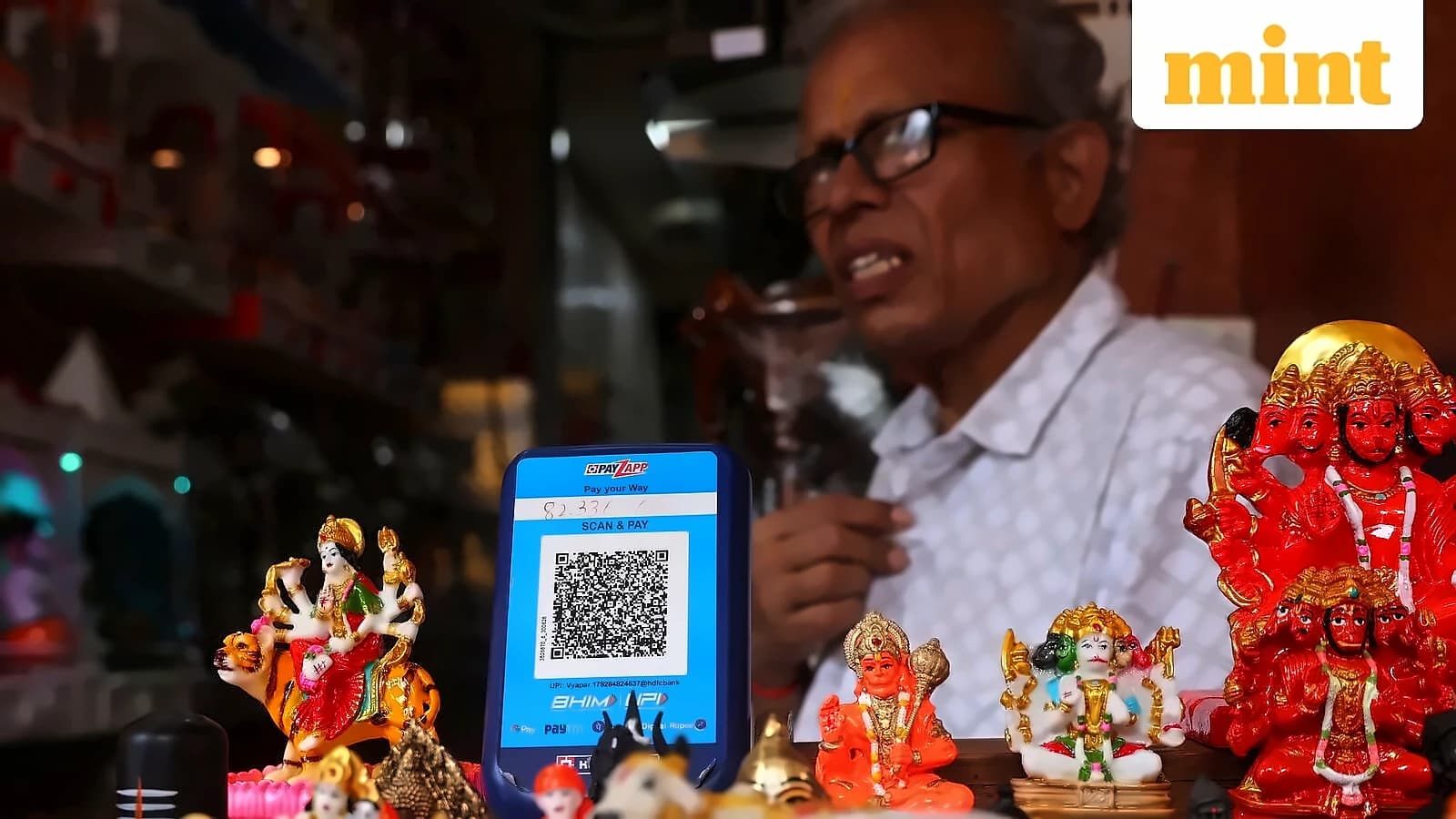
Paytm's strongest advantage lies in its merchant device network—over 10 million devices including QR codes, Soundbox, and card machines. Management positioned the company as the most logical channel for serving merchants where they capture everyday payment flows, with current penetration estimated at only 7% of the merchant base, indicating significant headroom for growth. Transcript
The loss of banking license capabilities creates specific limitations: Paytm cannot offer new savings or current accounts directly, cannot issue new debit cards, and must rely on partner banks for all credit products. However, the company's focus on distribution excellence, technology platform monetization, and super-app ecosystem integration provides a solid foundation for continued relevance in India's digital payments landscape.
The Paytm Payments Bank saga demonstrates that while regulatory compliance is non-negotiable, strategic structural separation and agile partnership models can insulate a fintech ecosystem from even the most severe regulatory actions.