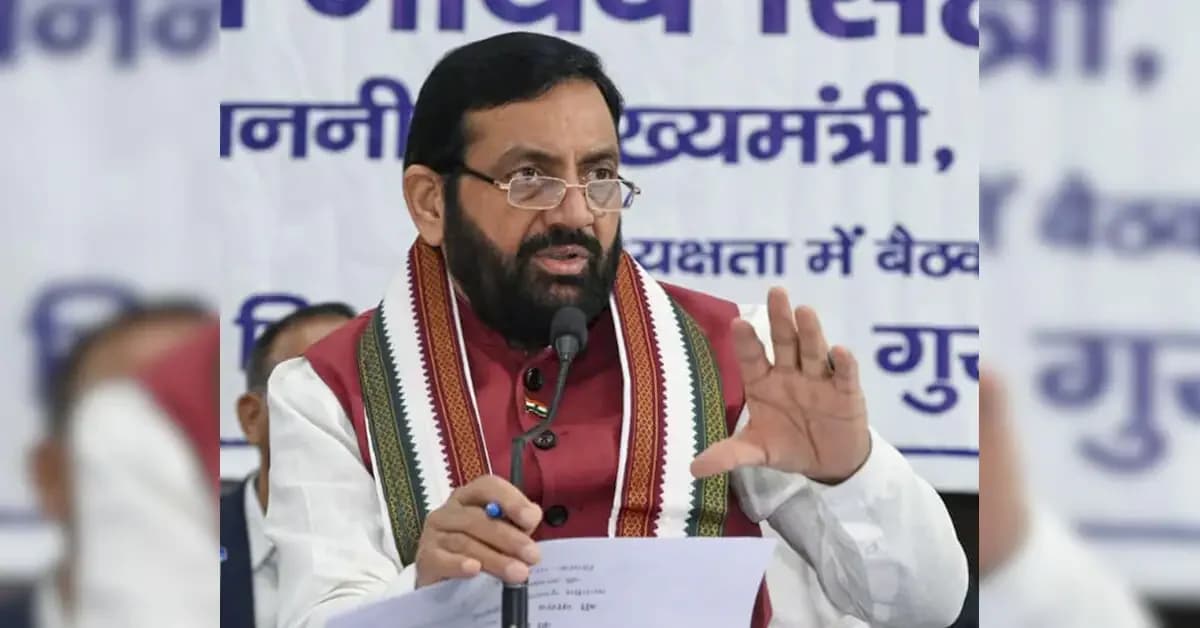
Oil and Natural Gas Corporation has crossed a historic threshold. The company now produces and sells more natural gas than crude oil, with gas contributing higher earnings due to favorable pricing reforms and lower handling costs. This isn't a temporary blip—it's a structural transformation driven by Chairman Arun Kumar Singh's vision of ONGC as a "gas-and-oil" company rather than the traditional "oil-and-gas" producer.
The shift stems from three fundamental drivers. First, India's energy policy aims to raise natural gas share in the energy mix from 6.7% to 15% by 2030, creating massive demand. Second, mature oil fields like Mumbai High face natural decline rates of 5-7% annually, making maintenance increasingly expensive. Third, and most crucially, the government has implemented pricing reforms that make new gas production significantly more profitable than legacy oil operations.
The Pricing Revolution: How Policy Drives Profit
The game-changer is the government's "new well gas" pricing mechanism. Gas from newly drilled wells now commands prices linked to 12% of crude oil prices, compared to legacy gas capped at 10% with a ceiling of USD 6.75 per MMBTU. At USD 90 per barrel crude, new well gas realizes nearly USD 10.8 per MMBTU—making India among the highest-paying gas markets globally.
This pricing differential creates a powerful economic incentive. 'New well gas' accounted for roughly 20% of gas volumes last year and is expected to rise to 25-30% this year before climbing to 30-36% in the near term. As older gas fields priced at lower administered rates are gradually replaced by higher-priced output from new wells, overall profitability improves substantially.
The government has also slashed royalty rates—onshore crude oil royalties dropped from 16.66% to 10%, offshore crude from 9.09% to 8%, and natural gas from 10% to 8%. Deepwater fields enjoy zero royalty for the first seven years. These reforms directly enhance upstream economics, making domestic extraction projects more commercially attractive.
Strategic Investments: Where the Money Flows
ONGC is executing offshore projects worth approximately Rs 33,000 crore aimed at sustaining and increasing production. Western offshore assets account for around 60% of ONGC's oil production and 70% of gas output, making this region the primary focus.
The capital deployment balances three priorities: maintaining mature assets through redevelopment, developing new gas fields, and enhancing recovery through technology. The Deepwater Development Project (DUDP) targeting marginal gas fields B-12 and C-24 represents a strategic allocation toward fields that can benefit from new well pricing. Four wells under the DUDP project have already been opened, with total gas production expected to rise progressively as additional wells come online. AnnualReports
The company's drilling intensity has reached historic levels. In FY25, ONGC drilled 578 wells total (highest in 35 years), comprising 109 exploratory wells and 469 development wells. This aggressive drilling program supports a reserve replacement ratio of more than 1.1 in FY26, meaning the company added more reserves than it produced during the year. AnnualReports
The BP Partnership: Technology Meets Experience
Perhaps the most significant operational development is ONGC's partnership with BP for technical services across the entire Western Offshore asset base. The partnership has projected a potential increase of about 10.8% in crude oil production from 46.25 MMT to 51.26 MMT and a 31.5% rise in natural gas output from 82.68 BCM to 108.69 BCM over ten years.
Overall hydrocarbon output is expected to rise by about 24.1% from 128.93 MMTOE to 159.96 MMTOE during the contract period. The gains are expected to start becoming visible from FY27, with full-scale impact likely from FY30. This partnership allows ONGC to access global best practices and technology-driven solutions to extract additional output from ageing fields.
International Portfolio: Geographic Diversification
ONGC's overseas assets through ONGC Videsh provide crucial geographic diversification. The company operates across 19 countries with participation in 32 oil and gas projects, contributing approximately 20% of ONGC Group's total production (10.28 MMTOE out of 51.4 MMTOE in FY25). AnnualReports +1
Russia's Sakhalin project has demonstrated remarkable production stability, recovering to near pre-Ukraine-war levels. This stability provides a crucial counterbalance to ONGC's domestic production mix changes. The Mozambique LNG project, with first LNG expected in 2029, represents a massive resource base of approximately 65 trillion cubic feet of recoverable natural gas. However, security challenges in Cabo Delgado remain a significant risk factor.
Venezuela operations remain contingent on regulatory and operating conditions. ONGC Videsh awaits more than $900 million in pending dividend dues, but a revised legal framework creating opportunities for overseas investors could unlock significant value.
Beyond Hydrocarbons: The New Growth Engines
ONGC is diversifying beyond traditional E&P through two major initiatives. ONGC Petro Additions Limited (OPaL), the petrochemicals venture, is undergoing a massive Rs 18,365 crore equity infusion to correct its distorted capital structure. The company exited from the SEZ area effective March 8, 2025, which is expected to improve net realization from domestic sales by approximately Rs 800 crore per annum. OPaL is expected to turn profitable by FY25-26, supporting ONGC's downstream integration strategy. AnnualReports
ONGC Green Limited has rapidly expanded its renewable portfolio to 3.563 GW through strategic acquisitions, including PTC Energy (288.8 MW operational wind capacity) and Ayana Renewable Power (~2 GW operational capacity + 2.1 GW under-construction projects). The company has committed an Energy Transition Investment Plan of Rs 1 lakh crore by 2030 and Rs 2 lakh crore by 2038. AnnualReports +2
The Profitability Equation
The traditional upstream E&P segment remains ONGC's profitability engine, with total segment profit of Rs 45,072 crore in FY25 and a profit margin of 25.8%. However, the company is building a more diversified profitability profile. AnnualReports +1
Petrochemicals (OPaL) reported revenue of Rs 14,804 crore but a net loss of Rs 3,726 crore in FY25. The restructuring measures are expected to position OPaL on a path toward financial sustainability. Renewable energy investments are currently in the capital deployment phase but expected to generate stable, long-term cash flows once operational capacity is fully commissioned. AnnualReports +1
ONGC's Energy Strategy 2040 aims to triple integrated portfolio revenue, quadruple profit, and ensure non-hydrocarbon lines account for at least 10% of additional earnings. The company is leveraging its strong financial position (Debt-Equity ratio: 0.03) to fund this transition while maintaining robust core operations. AnnualReports +1
The transformation from oil-dominant to gas-led production represents more than a production mix change—it's a fundamental repositioning of India's energy giant for the transition era. With pricing reforms supporting profitability, strategic investments driving growth, and diversification building resilience, ONGC is positioning itself to maintain its leadership role while adapting to the evolving energy landscape.