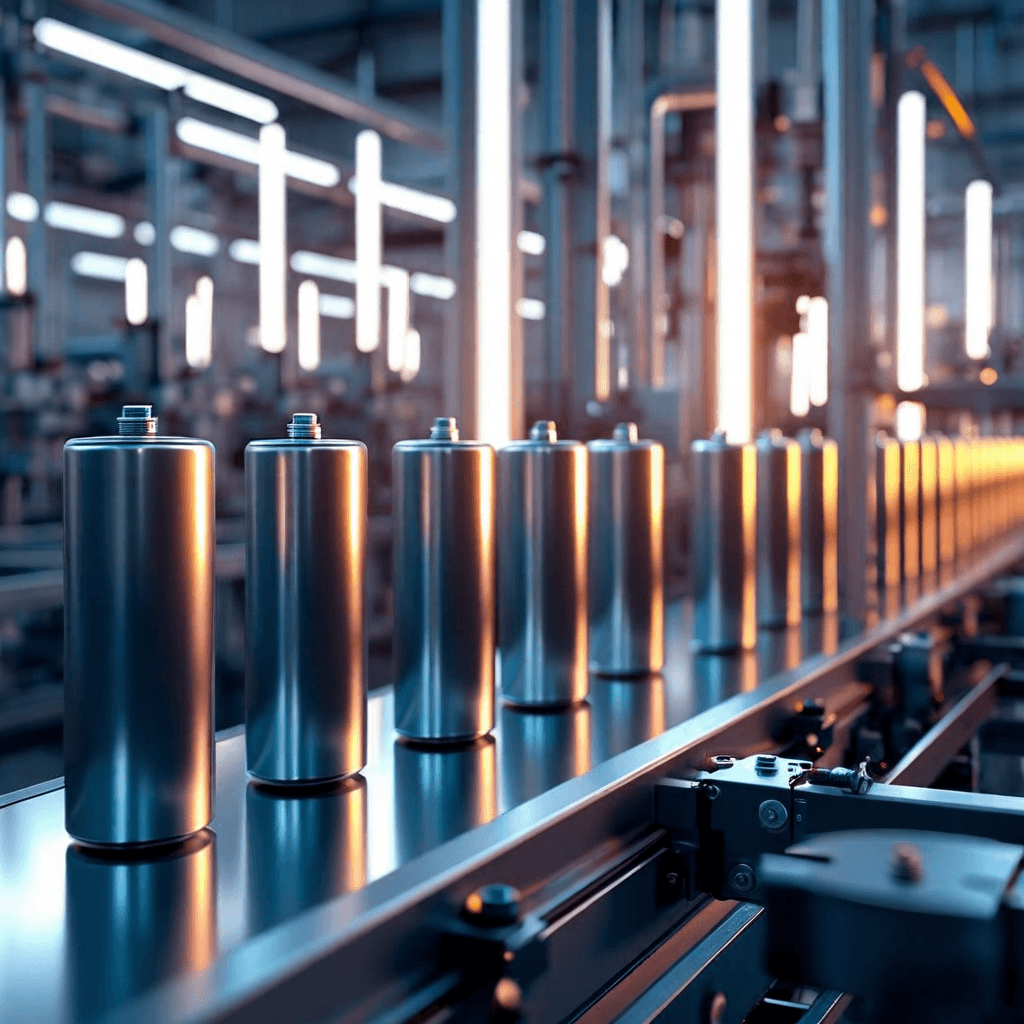
Ola Electric Mobility recently declared its indigenous 46100 LFP (Lithium Iron Phosphate) battery cell "production-ready." It sounds impressive on the surface. But here's the thing: the company hasn't released critical technical specifications like energy density, capacity rating, cycle life data, or charging rates. This transparency gap makes it impossible to independently verify whether this is a genuine breakthrough or just another headline-grabbing announcement .
The timeline raises eyebrows too. In February 2026, Ola's shareholder letter stated the 46100 LFP cell was "12 to 24 months away" from production readiness. Just two months later in April, it was declared "ready for prime time" and scheduled for product integration the next quarter . That's a dramatic acceleration for complex battery chemistry development. Either Ola achieved remarkable progress in eight weeks (unlikely), or "ready" describes a lab prototype rather than mass-production-ready technology.
Official disclosures paint a different picture. The LFP cell development is still classified as an "experimental project" with cell systems undergoing testing, approximately "1.5-2 years away from production" Document. The impressive specifications cited in investor materials (300+ Wh/kg energy density, 3x faster charging, 20% lower cost) are projected targets, not actual measured performance data InvestorPresentations +1.
The Manufacturing Mountain
Manufacturing battery cells at scale is brutally difficult. Ola currently operates at approximately 70% yield during production scaling Document. That's identical to the fatal threshold that contributed to Northvolt's bankruptcy in March 2025. Industry estimates suggest you need over 95% yield for costs to fall enough to be commercially attractive .
Tesla provides a sobering benchmark. The company announced its 4680 cell in 2020, targeted mass production for 2021, but only reached small-scale production around mid-2024. That's a 5.5-year journey with world-class engineering and virtually unlimited capital. By end of 2024, Tesla's 4680 yield was only about 92%—still below the 95%+ threshold . Ola is attempting to compress this learning curve with fewer resources and a non-standard format.
The 46100 format itself presents challenges. No major manufacturer currently mass-produces 46100 cells globally. Samsung SDI has announced plans but hasn't commenced manufacturing . This means Ola cannot easily source compatible cans, caps, and winding equipment from established suppliers. The company must develop or customize these components internally, adding complexity and cost.
Scale Disadvantage
Ola's capacity position looks modest compared to global leaders. The company currently has 2.5 GWh installed capacity, scaling to 6 GWh by March 2026 Transcripts. Meanwhile, CATL commands 39.2% of the global market share with 464.7 GWh of annual installations in 2025 . Ola's 6 GWh target represents just 1.3% of CATL's current output. CATL produces more in five days than Ola's entire annual capacity at 6 GWh.
This scale disadvantage matters for cost competitiveness. Chinese LFP pack costs have fallen to approximately $84/kWh in 2025, down 13% year-on-year . Goldman Sachs forecasts global battery prices reaching $80/kWh by 2026 . Chinese firms operate at 4x market demand, creating oversupply and intense price pressure. Ola's limited scale makes it difficult to match Chinese cost structures without government support.
Government Support: Necessary but Insufficient
The Indian government provides protection through an 18.5% customs duty on imported battery cells . Tariffs buy time but don't close cost gaps. If Indian cells cost 20-30% more than Chinese imports (industry estimate), the downstream EV buyer absorbs the remaining premium .
The PLI (Production Linked Incentive) scheme for Advanced Chemistry Cells offers additional support. Ola received a 20 GWh allocation but has commissioned only 1.4 GWh as of October 2025—just 2.8% of the national 50 GWh target . PLI incentives contributed +5.6% to +10.7% to Ola's gross margins, providing crucial bridge support InvestorPresentations. However, no manufacturer has qualified to receive money yet, and the annual budget was cut from ₹250 crore to ₹15.42 crore due to lack of qualifying manufacturers .
Credibility Questions
The LFP battery announcement arrives against a backdrop of deteriorating core business performance. Ola's scooter market share has collapsed from 35% to under 6% over 13 months . Revenue dropped 55% year-over-year in Q3 FY26, and the stock has plummeted 82% from its IPO peak, destroying approximately ₹56,000 crore in market value .
This deterioration creates resource allocation constraints. The company faces competing demands: crisis management for market share collapse, addressing 10,600+ consumer complaints, responding to competitive pressure from Ather, TVS, and Bajaj, and stabilizing financial performance. All while attempting to execute complex battery manufacturing.
There's also a documented pattern of announcements outpacing delivery across Bhavish Aggarwal's ventures. The electric car project announced in August 2022 was shelved by mid-2024. The Roadster X motorcycle suffered repeated delivery delays. The Krutrim AI venture, declared India's first AI unicorn within weeks of launch, has seen three rounds of layoffs, senior departures, and limited commercial traction with 90% of revenue sourced from Ola group companies .
The LFP timeline compression—from "12-24 months" to "ready in 2 months"—mirrors this pattern. As Swarajya Magazine noted, "the announcement does arrive from a source where the gap between declaration and delivery has been wide and recurrent, and the burden of proof sits, fairly, with the company" .
Adding to credibility concerns, an ongoing South Korean investigation alleges that Ola Electric stole proprietary pouch-type battery manufacturing technology from a former LG Energy Solution researcher . Ola categorically denies the allegations, noting the technology is "irrelevant to its cylindrical cell programme" . However, the investigation raises questions about indigenous development claims versus reliance on external technology partnerships.
The Bottom Line
Ola Electric has demonstrated genuine capability in electrode manufacturing and cell production with its 4680 NMC platform. The company has invested approximately ₹5,300 crore in manufacturing infrastructure and operationalized India's first Gigafactory Transcripts +1. These are real achievements.
However, the 46100 LFP announcement appears to represent a lab-scale achievement rather than commercially mature technology. The lack of technical specifications, non-standard format choice, deviation from global best practices, and credibility challenges collectively suggest that Ola is still in the development and optimization phase.
The "ready for prime time" characterization likely refers to functional prototype readiness rather than production-ready, validated technology. Given the documented pattern of over-promising, ongoing technology transfer investigation, and core business deterioration creating resource constraints, Ola faces an elevated burden of proof.
Reasonable observers should expect independent third-party validation of technical specifications, evidence of mass production capability beyond lab-scale prototypes, and real-world deployment data from customer vehicles before accepting the LFP battery announcement as commercially viable. Until then, skepticism remains the prudent position.