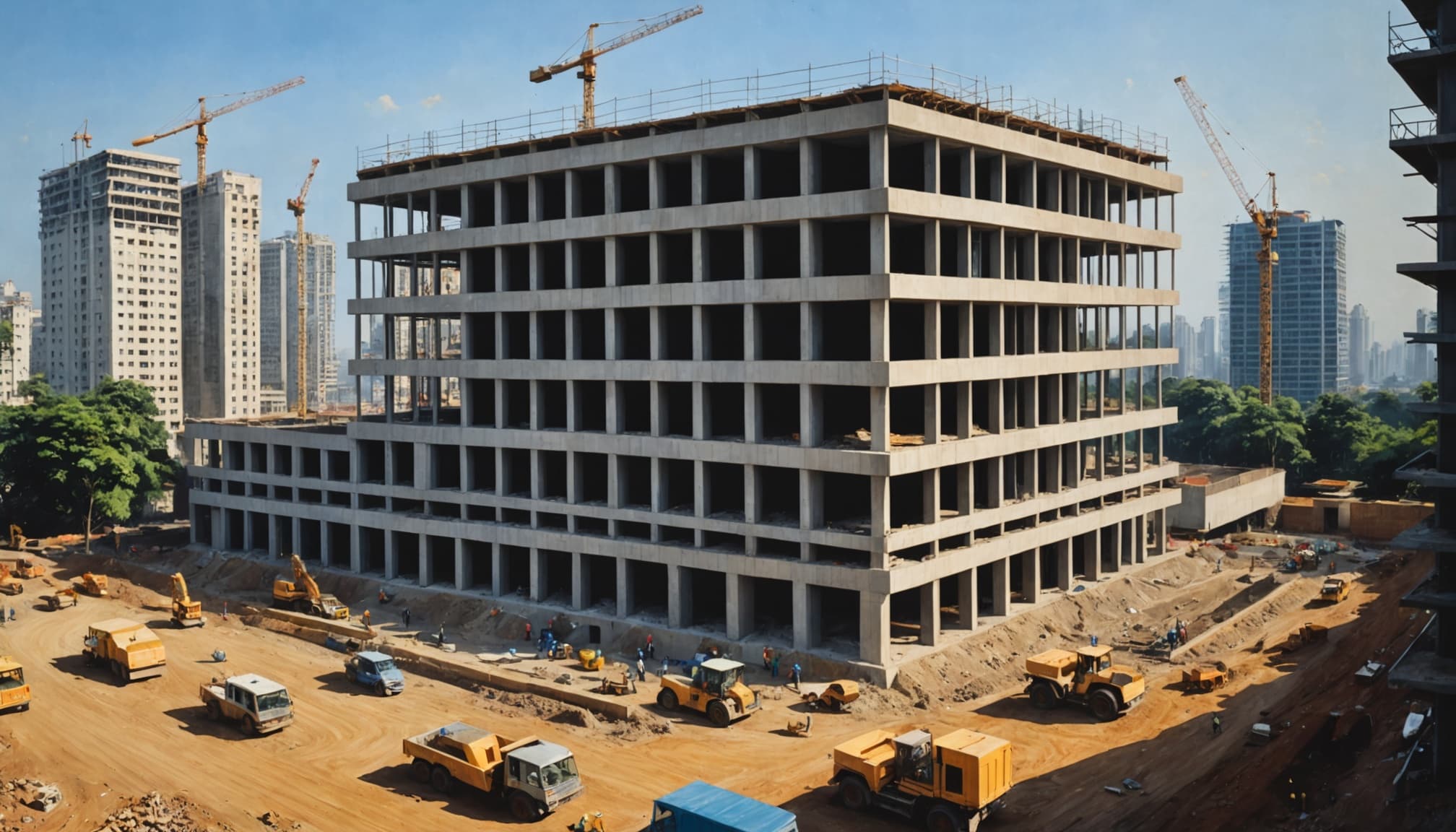
Mahanagar Telephone Nigam Limited shares jumped nearly 17% on October 1, 2026, after its board approved the sale of a Powai property to the Income Tax Department for ₹891.53 crore. The transaction, structured as a Government-to-Government (G2G) transfer, covers 20,895.60 square meters of land at Technology Street, Mumbai. The move comes as the state-owned telecom operator grapples with total liabilities of around ₹40,009 crore and mounting losses.
The Debt Math: Modest Relief, Massive Burden
The company's total borrowings stand at a staggering ₹48,076.60 crore, meaning the sale proceeds cover roughly 1.9% of outstanding debt. More critically, MTNL's net worth is deeply negative at approximately ₹29,960 crore, rendering traditional leverage ratios like debt-to-equity meaningless. Annual Report +1
The cash position, however, sees a dramatic relative improvement. Cash and equivalents will surge from ₹137.4 crore to an estimated ₹1,029 crore—a 649% increase. This provides a crucial buffer for near-term obligations. Yet, the company's ability to service debt from operations remains severely constrained. With annual finance costs around ₹2,983 crore and negative EBITDA, the interest coverage ratio sits at a dismal 0.07 times. Even if the entire ₹891.53 crore were directed solely toward interest payments, it would cover only about five months' worth, leaving the fundamental solvency challenge unaddressed. Annual Report
Asset Quality: Hidden Value Surface
The specific book value of the Powai property hasn't been disclosed, but context suggests a significant potential gain. Properties classified as "Non-Current Assets held for sale" as of March 31, 2026, had a total carrying value of just ₹93.80 crore against fair values of ₹4,272.54 crore. This massive discrepancy indicates that MTNL's real estate assets are carried on the balance sheet at historical costs far below current market rates. The Powai sale, therefore, not only generates cash but also exposes the hidden value embedded in MTNL's property portfolio, potentially improving asset quality metrics if similar gains are realized on future sales. Annual Report
Why the Market Cheered: Certainty Over Size
The stock market's enthusiastic reaction—marking the sharpest single-day gain in nearly 20 months—was driven less by the absolute size of the deal and more by the certainty of execution. The G2G transfer mechanism, backed by Presidential Approval and Alternative Mechanism (AM) approval from the Cabinet, eliminated the typical risks associated with property sales: buyer withdrawal, regulatory delays, and valuation disputes.
The Income Tax Department had already provided formal acceptance before the board's vote, creating a locked-in transaction. This execution certainty is invaluable for a company where going concern status depends on implementing monetization plans. Furthermore, the rally reflects a shift in market perception.
The core telecom operations continue to bleed—revenue declined to ₹1,469 crore in FY26 from ₹1,696 crore in FY22, while losses widened to ₹3,101 crore. In contrast, the property portfolio offers tangible, realizable value. Annual Report
Strategic Rationale: G2G for Speed and Survival
MTNL's board prioritized the Income Tax Department as the buyer for strategic reasons rooted in survival. The G2G framework offers a streamlined path compared to open market sales, which require competitive bidding, extensive marketing, and carry higher execution risk. For a PSU facing severe liquidity distress, speed and certainty are paramount.
This sale is not an isolated event but part of a structured, government-mandated revival package approved by the Union Cabinet in 2019. The strategy employs a three-tier classification system: properties above ₹100 crore require NLMC and Cabinet approval; those between ₹10-100 crore need Group of Ministers clearance; and assets below ₹10 crore can be sold by the MTNL Board. The Powai property falls into the highest tier, and its successful execution validates the framework for the remaining 16 properties identified for monetization in FY27. Annual Report
The Trade-off: Cash Now vs. Options Later
The decision to monetize rather than retain the Powai property highlights a critical trade-off. Retention would offer potential long-term appreciation and strategic flexibility for future expansion. However, MTNL's operational reality has fundamentally changed. Since January 2025, BSNL has operated MTNL's telecom services under a service agreement, handling maintenance, CAPEX, and OPEX. This arrangement significantly reduces MTNL's need for extensive independent real estate holdings.
Moreover, the carrying costs of property—taxes, maintenance, security—drain resources that are desperately needed for debt servicing. At an estimated rental yield of 2-3%, it would take 30-40 years to generate cash flow equivalent to the immediate sale proceeds, ignoring the time value of money. Given the going concern risk, the opportunity cost of holding non-core assets far outweighs the potential long-term strategic option value. MTNL is pursuing a hybrid approach, monetizing surplus assets like Powai while generating rental income from strategically useful properties where possible.
Government Relationship: Deepening Dependence
The transaction reinforces MTNL's deepening dependence on government support. The approval chain—Presidential, Alternative Mechanism, and Income Tax Department acceptance—demonstrates cross-government commitment to MTNL's survival. This multi-layered support builds on the existing revival package, which includes sovereign guarantee bonds worth ₹40,399 crore and administrative allotment of 4G spectrum.
However, this reliance also constrains MTNL's autonomy. Operational decisions are increasingly influenced by the BSNL partnership, and strategic moves like asset sales require navigating complex bureaucratic approvals. While the government backing ensures survival in the near term, it also creates heightened accountability and performance expectations. The delayed BSNL-MTNL merger adds another layer of complexity, raising questions about asset ownership and utilization in the eventual merged entity.
The Road Ahead: A Monetization Pipeline
The ₹891.53 crore from Powai is just the beginning. The government has approved the monetization of 23 prime properties across six cities, including MTNL assets in Delhi's Chanakyapuri, Hauz Khas, and Vasant Vihar, with an estimated total value of ₹13,500 crore. The National Land Monetization Corporation (NLMC) is targeting ₹7,500 crore in monetization by the end of the current fiscal year.
The market's rally embeds expectations for this pipeline to deliver. Investors are betting that the G2G model, proven successful with Powai, can be replicated to unlock value from MTNL's substantial real estate holdings. If successful, this could provide the liquidity needed to service debt and fund operations until the core telecom business stabilizes or the merger with BSNL materializes.
Conclusion: A Necessary Step, Not a Cure-All
MTNL's Powai property sale is a strategically sound and well-executed transaction that provides immediate liquidity relief and validates the asset monetization framework. The 17% stock surge reflects market relief at seeing a concrete, executable plan in action. However, perspective is crucial. While ₹891.53 crore is significant, it is a fraction of the ₹48,000 crore debt mountain. The company's negative equity and inability to service debt from operations remain existential challenges.
The transaction transforms MTNL into a property monetization story, but the ultimate test lies ahead. Can the government successfully execute the remaining pipeline of high-value asset sales? Will the proceeds be sufficient to bridge the gap until operational turnaround or merger completion? For now, the Powai sale is a vital lifeline, keeping MTNL afloat, but the company's long-term survival depends on sustained asset monetization and successful integration with BSNL, not just a single property deal.