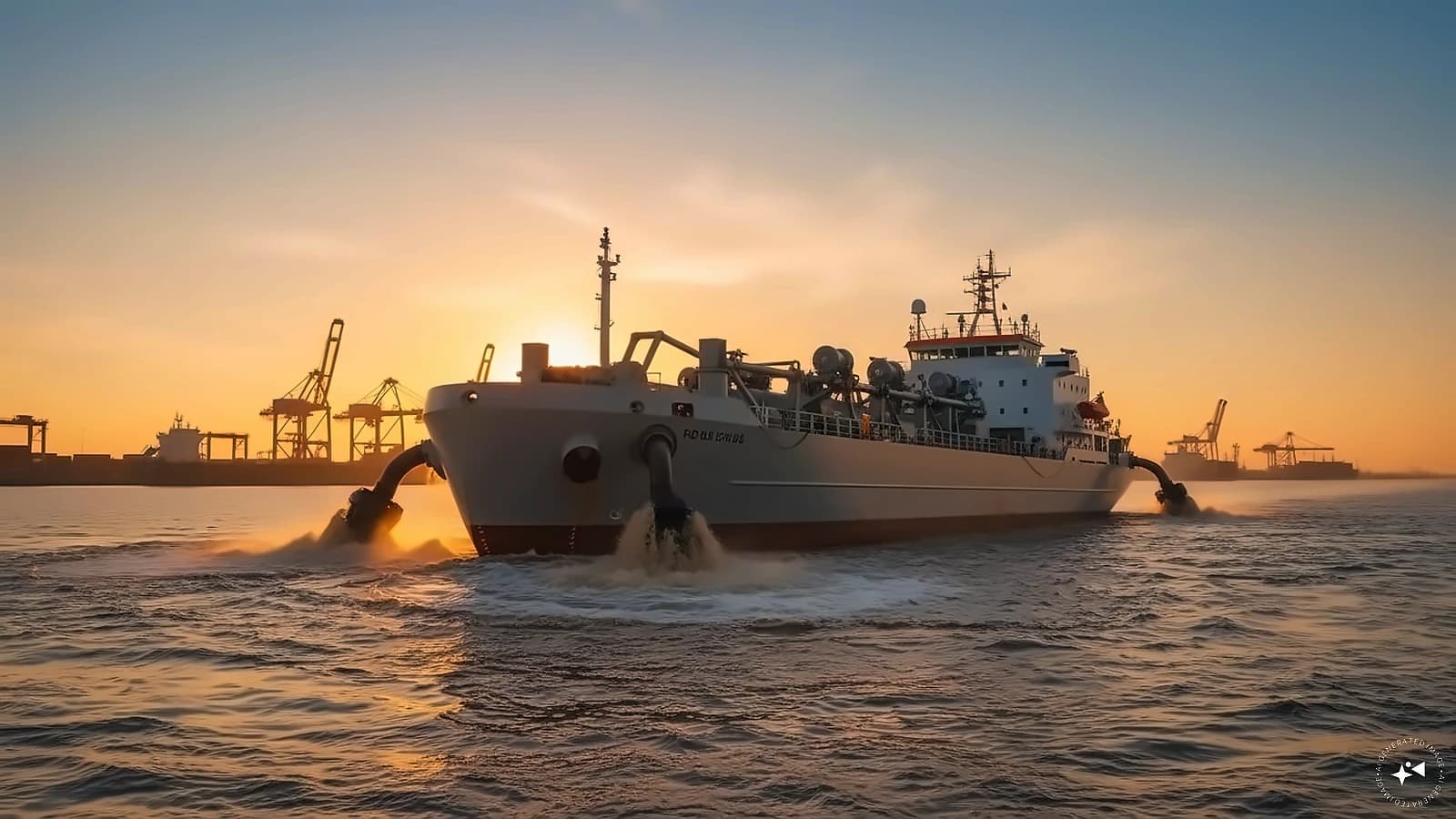
Let's start with the headline-grabbers. Knowledge Marine & Engineering Works reported Q1 FY27 revenue of ₹115.41 crore, up 142% year-on-year from ₹49.03 crore. But the real story lies in the bottom line: Profit After Tax (PAT) exploded to ₹61.73 crore from ₹11.27 crore—a staggering 447.74% jump. That's essentially a fivefold increase in net profit, turning heads across Dalal Street and sending the stock surging 10% in a single day to hit a fresh 52-week high of ₹2,999.90.
What makes this performance even more remarkable is that it wasn't a fluke. The company has been on an upward trajectory, with the stock delivering over 200% returns in the past year—significantly outperforming the BSE Sensex, which declined 4.6% during the same period. This wasn't just about beating expectations; it was about fundamentally transforming the business model.
The Strategic Pivot That Changed Everything
The operational story behind these numbers is fascinating. Knowledge Marine didn't just grow bigger—it grew smarter. The company executed a decisive strategic shift from small-scale maintenance dredging to high-value capital dredging and specialized chartering contracts. This wasn't incremental improvement; it was a complete transformation of the revenue mix.
Historically, dredging contracts command EBITDA margins of 50%+, with the company maintaining a 40% threshold. In Q1, they shattered even these benchmarks—EBITDA margins expanded to 63.6% from 41.2% year-on-year, a massive 2,240 basis point improvement. This margin explosion is the primary driver of the fivefold PAT surge. When you combine 142% revenue growth with margin expansion of this magnitude, you get the kind of operating leverage that turns good companies into great ones.
The company also diversified beyond traditional dredging.
This diversification isn't just about new revenue streams—it's about building a more resilient, higher-margin business.
Project Execution: Where Strategy Meets Reality
All the strategic planning in the world means nothing without execution. Here's where Knowledge Marine really delivered. The company reported 100% vessel utilization, indicating efficient deployment of maritime assets across ongoing projects. They completed complex projects ahead of schedule—the JNPA Rock Dredging project was finished in 90 days versus a 120-day timeline, while the Paradip Port Grab Dredging was also completed in 90 days against a prescribed 120-day schedule. Transcripts
This execution excellence isn't just about speed—it's about technical capability. The JNPA project involved handling ultra-hard rock with compressive strength exceeding 170 MPa, requiring underwater controlled blasting. This kind of technical differentiation positions the company for higher-value opportunities that competitors simply can't handle. Transcripts
The order book provides excellent visibility for sustaining this momentum. As of FY26, the company maintained an order book of approximately ₹1,395 crore (unexecuted) with a total contracted value of ₹1,645 crore. The bid pipeline stands at ₹2,000 crore, entirely focused on domestic orders, with plans to start adding international orders for the shipbuilding segment in Q3 and Q4 of FY27. This isn't just strong—it's the strongest order book position in the company's history. Transcripts
The Market Reaction: Why the Stock Soared
The market's reaction to these results was immediate and powerful. The stock surged 19.35% in a single day, with trading volumes hitting 504,179 shares worth ₹140.92 crore. But this wasn't just about one quarter's numbers—it was the culmination of a broader re-rating narrative that had been building for months.
Several factors drove this re-rating. First, Nuvama Institutional Equities had initiated coverage with a "Buy" rating and ₹2,500 price target in December 2025, valuing the stock at 25x estimated EPS of ₹100. This was the first analyst coverage since the company's migration from the SME to mainboard platform—a significant milestone that attracted institutional attention.
Second, the company's association with renowned investor Ashish Kacholia, who held nearly 3% stake, added credibility. When high-conviction investors back small-cap stories, it often signals something special to the broader market.
Third, sector tailwinds from the Sagarmala Programme and Maritime India Vision 2030 created a favorable backdrop. The government has identified 839 projects worth ₹5.79 lakh crore under Sagarmala, with 272 projects completed involving investment of approximately ₹1.41 lakh crore. Coastal shipping grew 118% over the last decade, while inland waterway cargo surged 700%. Knowledge Marine is perfectly positioned to benefit from this infrastructure revolution.
The Sustainability Question: Can This Continue?
Here's where investors need to be thoughtful. The exceptional Q1 performance was likely the result of several favorable factors converging—favorable weather conditions, accelerated project execution, and significant milestone payments from long-term projects. Management has indicated that Q1 and Q2 (monsoon months) typically show lower performance, while Q3 and Q4 show stronger numbers as weather conditions improve. This seasonal pattern suggests that maintaining Q1's exact ₹617 million PAT across all quarters may be challenging. Transcripts
However, the sustainability story isn't about repeating Q1 exactly—it's about sustaining elevated profitability levels.
When you combine this guidance with the robust order book and strong project pipeline, the picture that emerges is one of sustained strong profitability, even if quarterly results show normal variability. Transcripts
The risks are real and worth monitoring. Concentration risk from heavy reliance on government port contracts, fuel price sensitivity affecting vessel operating costs, and the inherent lumpiness of project-based revenue recognition could all impact future quarters. The company operates in a tender-based industry where execution depends on various external factors including customer clearances and weather conditions.
Small-Cap Dynamics: The Double-Edged Sword
Knowledge Marine's small-cap status—with a market cap of approximately ₹6,843 crore—has amplified both its upside potential and its volatility.
This outperformance demonstrates significant stock-specific alpha beyond broader small-cap trends.
But this comes with elevated risks.
This premium pricing reflects growth expectations but leaves little room for disappointment. Liquidity is moderate, with daily volumes of around 5 lakh shares, which can amplify price movements during periods of institutional buying or selling.
Institutional ownership patterns are evolving. Promoters hold 53.63%, FIIs hold 12.10%, DIIs hold 1.60%, and the public holds 34.80%. The increasing FII interest provides institutional validation but also introduces volatility, as foreign institutional investors can be momentum-driven. The limited domestic institutional support (DII holding of just 1.60%) reduces some of the stabilizing influence that larger companies typically enjoy.
The Verdict: Transformation, Not Just Momentum
What we're witnessing with Knowledge Marine isn't just a small-cap momentum story—it's a fundamental business transformation. The company has successfully pivoted from a niche contractor to a high-growth infrastructure compounder, leveraging India's maritime infrastructure revolution. The exceptional Q1 performance was the culmination of this strategic shift, not an isolated event.
For investors, the key question isn't whether Q1's exact numbers will repeat—it's whether the elevated profitability levels are sustainable. Based on the strong order book, clear management guidance, and powerful sector tailwinds, the answer appears to be yes, albeit with the quarterly variability that's inherent in project-based businesses.
The risks are real and the valuation is rich, but the transformation appears genuine. Knowledge Marine has demonstrated that it can execute complex projects ahead of schedule, maintain exceptional margins, and win significant contracts in a growing market. For investors with high risk tolerance and a long-term perspective, this small-cap maritime infrastructure player offers exposure to one of India's most compelling infrastructure stories.
The fivefold PAT surge may not repeat every quarter, but the business transformation that enabled it suggests that Knowledge Marine's best days might still be ahead.