The Platform Advantage: One Architecture, Four Powertrains
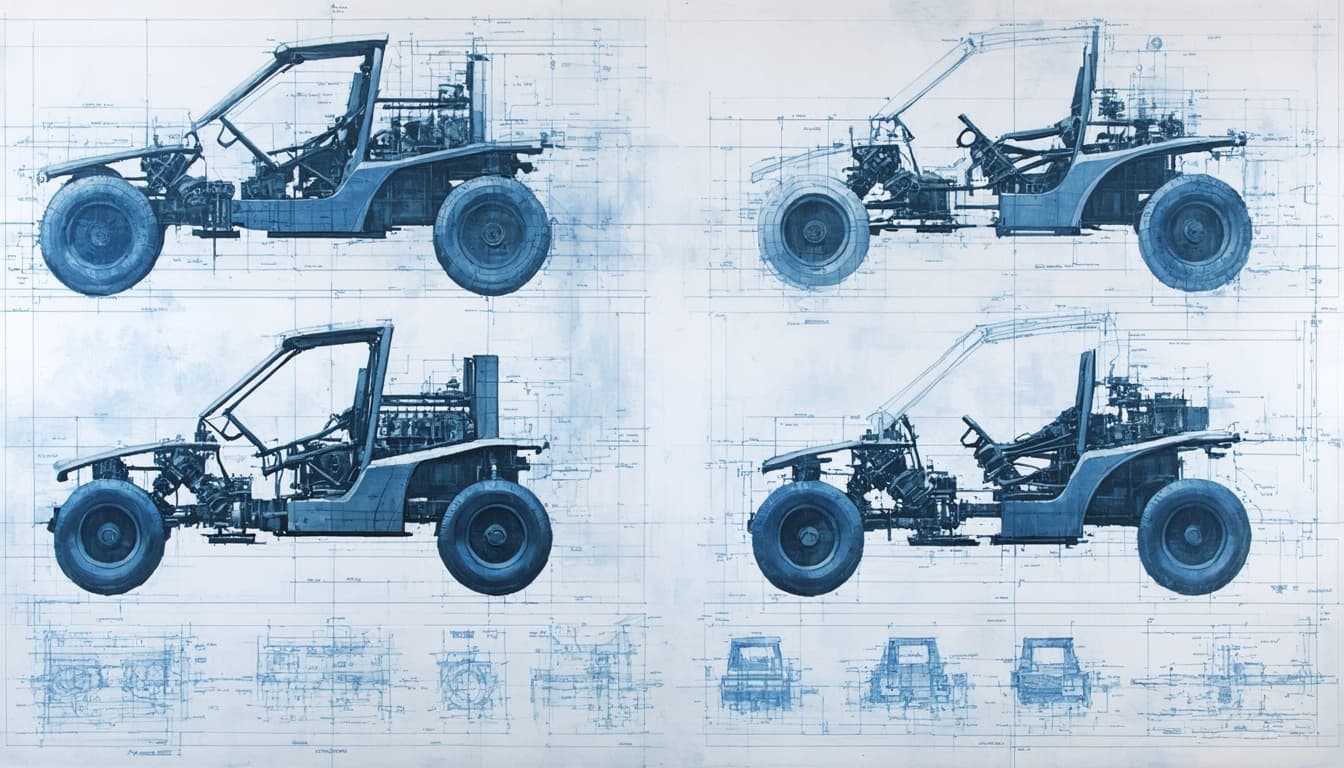
JSW MG Motor has unveiled the MG ADAPT (Advance Drive Architecture Platform Technology), positioning it as India's first multi-New Energy Vehicle platform. Unlike dedicated EV-only architectures, ADAPT supports battery electric vehicles (EVs), hybrid electric vehicles (HEVs), plug-in hybrid electric vehicles (PHEVs), and range extender electric vehicles (REEVs) on a single modular framework. The company confirms that one EV and one PHEV model will debut on this architecture by FY2026-27, with the first product being a 7-seater SUV launching in August 2026.
The financial logic is compelling.
The modular design integrates specialized components including a dedicated hybrid engine, a dedicated battery system, India's first 10-in-1 intelligent electric drive unit, and the world's first electromagnetic dedicated hybrid transmission. These shared components spread development costs across a larger volume base, while the common architecture allows faster time-to-market for new models.
Competitive Positioning Against Mahindra and Tata
Mahindra employs a flexible platform approach with its NU_IQ platform, which serves as a common platform enabling both ICE and EV variants. This provides significant fungibility between powertrain options, allowing them to adapt models based on market demand without dedicated EV-only platforms. Tata Motors has developed a sophisticated multi-generational EV platform strategy that evolves from conversion-based EVs to purpose-built architectures like the Acti.EV platform. Transcripts +3
JSW MG Motor's key differentiator is true multi-energy flexibility.
This gives JSW MG unmatched flexibility to offer customers the right powertrain for their needs without developing separate platforms. The company is positioning itself as a technology-first brand, pivoting its strategy to lead the transition from traditional internal combustion engines to a 75% electrified portfolio.
Market Share Capture Potential
The Indian 7-seater segment recorded 78,640 units in June 2026, growing 16.6% year-on-year. Mahindra dominates this space with four models in the Top 7, commanding a combined 46.4% segment share. JSW MG Motor's upcoming 7-seater SUV, based on the Wuling Eksion sold in Indonesia, will arrive in both battery-electric and plug-in hybrid forms.
Industry sources suggest JSW MG is targeting keen pricing for the electric variant, positioning it to undercut the Mahindra XEV 9S 70kWh, which currently retails at Rs 25.8 lakh (ex-showroom). The electric version will come with a 69kWh battery pack and a claimed range of around 600 kilometres. The PHEV variant pairs a 105hp/130Nm, 1.5-litre Atkinson-cycle petrol engine and a 195hp/230Nm electric motor powered by a 20.5kWh LFP battery, with Wuling claiming a 125km all-electric range and a combined range of over 1,000km.
Realistic market share projections suggest JSW MG could capture 3-6% of the 7-seater segment within 12 months, translating to 2,500-5,000 monthly units. The PHEV's first-mover advantage in an uncontested segment could generate Rs 2,000-4,000 crore in premium revenue before competitors respond, as neither Mahindra nor Tata currently offer PHEV options.
Pricing Strategy and Competitive Dynamics
JSW MG Motor's pricing strategy appears built around aggressive EV positioning and premium PHEV placement. The electric variant is expected to be priced 7-15% below the Mahindra XEV 9S 70kWh, while the PHEV will be positioned within Rs 1.5 lakh of the Mahindra XUV 7XO diesel-automatic. This pricing strategy enables JSW MG to undercut established competitors on price while offering competitive specifications.
However, India's GST structure creates a significant challenge.
On a Rs 35-lakh ex-factory vehicle, that translates into roughly Rs 14 lakh in GST for a PHEV versus about Rs 1.75 lakh for a BEV—an effective tax differential of nearly Rs 12 lakh that pushes PHEVs out of the Rs 25-30 lakh mass-premium band and into the Rs 40-50 lakh bracket.
This tax barrier means JSW MG's PHEV will compete less with mid-segment EVs and more with premium petrol SUVs such as the Toyota Fortuner and Skoda Kodiaq, highlighting how taxation has turned PHEVs into a luxury technology in India rather than a mass-market transition option.
Financial Impact: R&D, Revenue, and Margins
JSW MG Motor has structured its capital allocation around three strategic priorities for FY27: localisation (top priority), new product development, and manufacturing expansion. The company will invest around Rs 1,400 crore in the financial year, part of a broader near-term capital expenditure plan of Rs 3,000 crore to Rs 4,000 crore.
The ADAPT platform's multi-energy architecture delivers substantial R&D and capital expenditure efficiencies. The 50% CAPEX reduction through multi-energy platform architecture, shared component costs, and faster time-to-market accelerates revenue generation and improves ROI on R&D investment. The company is targeting 70% localisation by FY27, up from current levels of 50-60% for the Windsor EV and 60% for the Comet EV.
Revenue projections for the ADAPT platform models vary significantly by scenario. Conservative estimates suggest Rs 4,500-6,300 crore annually from 30,000-42,000 units, while aggressive scenarios project Rs 11,700-17,100 crore from 78,000-114,000 units. This compares to Mahindra's EV division generating over Rs 8,000 crore in revenue during H1 FY26, securing the number one position in revenue market share.
On profitability, JSW MG Motor's gross profit margin increased to 20.73% in FY24, up from the previous year, with raw material cost as a percentage of sales dropping to 79.27% from 85.23%. The company achieved its first-ever operating profit in FY24 with a 2.08% margin, but slipped back into operating losses in FY25 as losses nearly doubled to Rs 1,096 crore. The multi-energy platform approach, combined with localisation momentum and scale economies, provides unique margin optimization opportunities not available to competitors with dedicated EV-only platforms.
Regulatory Landscape and Localization Challenges
India's EV policy framework presents both opportunities and challenges. The central government's PM E-DRIVE scheme has an allocation of Rs 10,900 crore, while the PLI scheme for automobile and auto components has a budgetary outlay of Rs 25,938 crore. However, only 13% of electric vehicle models currently sold in India qualify for the government's PLI scheme, which requires a minimum of 50% domestic value addition.
Tata Motors has five models qualified for PLI incentives, including the Punch EV, Nexon EV, Harrier EV, Tiago EV, and Tigor EV. Mahindra's XEV9E is the only other model to make the list. JSW MG Motor currently has zero models qualified, missing out on the Rs 246 crore already disbursed to Tata and Mahindra. The company needs to improve localization by 10-20 percentage points to qualify for PLI, creating a significant competitive disadvantage.
Import duties also present challenges. While CKD units attract 15% basic customs duty, CBU imports face 70-100% duties. JSW MG Motor's SAIC partnership provides advantages in leveraging the CKD import route and accessing proven EV/PHEV platforms for localization. However, the government is considering tightening localization rules under the Phased Manufacturing Programme, which could accelerate the timeline for domestic component development.
The Road Ahead
JSW MG Motor's ADAPT platform represents a strategically differentiated approach to India's electrifying automotive market. The multi-energy platform's modular design, shared component architecture, and multi-powertrain flexibility position the company to achieve sustainable profitability while establishing itself as a serious competitor to Mahindra and Tata Motors.
However, success depends on execution. The company must navigate the significant GST disadvantage for PHEVs, accelerate localization to qualify for PLI incentives, and compete against established players with deeper regulatory advantages and market presence. The August 2026 launch provides a critical window of opportunity, particularly with the PHEV first-mover advantage, but the company's ability to scale production, achieve localization targets, and influence policy development will determine whether it can disrupt India's EV duopoly or remain a niche player.