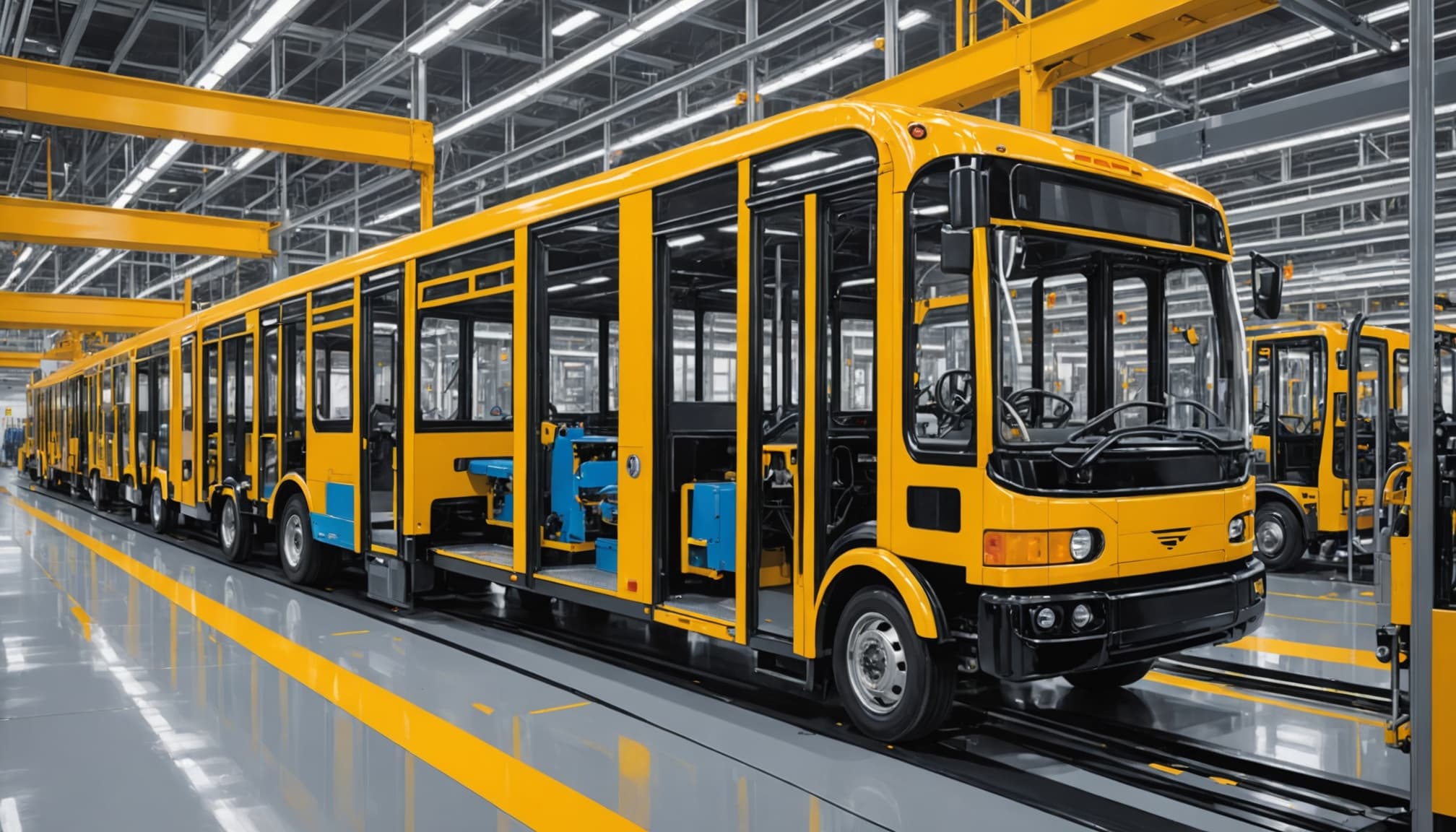
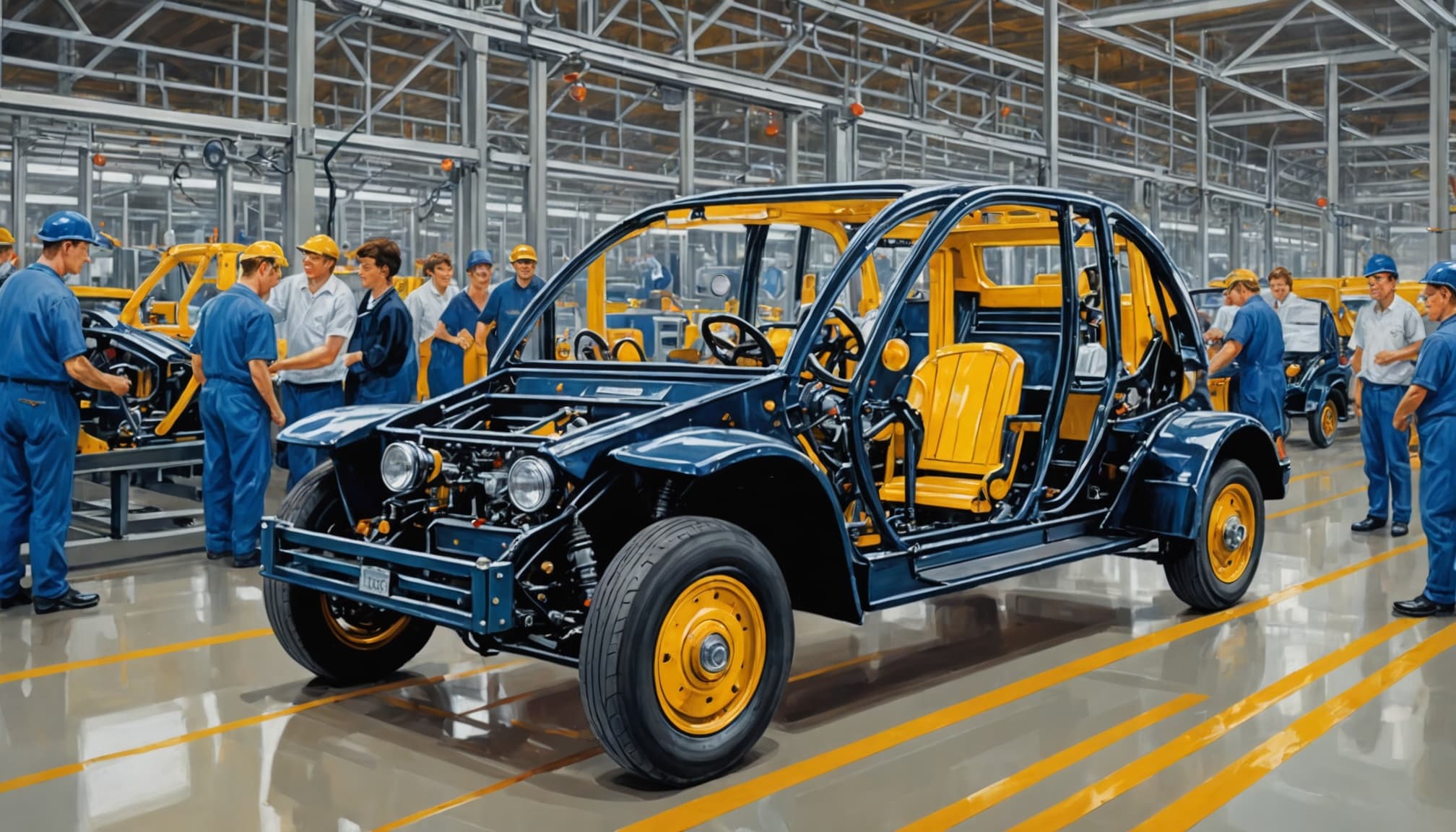
The company has invested around ₹2,500 crore in a 90-acre greenfield manufacturing facility at Chhatrapati Sambhajinagar, Maharashtra, with an initial annual capacity of 15,000 electric buses and trucks. The plant features India's first pre-treatment and electro-deposition (PT-ED) process for bus manufacturing, an automated truck-cabin line, and an integrated battery ecosystem. JSW targets production of at least 10,000 electric commercial vehicles in FY28, which would translate to approximately 67-68% capacity utilisation of the installed 15,000-unit facility.
The Pricing Challenge
The company expects the average selling price across its electric bus and truck portfolio to be around ₹80 lakh. At full utilisation of the initial 15,000-unit facility, JSW estimates potential revenue of around ₹12,000 crore. However, the portfolio spans significant variation—electric buses range from 7 metres to 18 metres, while the initial truck offering is a 55-tonne electric tractor-trailer, with plans to subsequently expand into electric tippers and fixed-body dumpers. Power configurations range from 150 kW to 500 kW, creating substantial cost differentials. Higher-power variants with larger battery packs may operate at near-breakeven gross margins at the ₹80 lakh price point, suggesting AMPSTAR will need to optimise its product mix or rely on Battery-as-a-Service models to separate battery costs from vehicle pricing.
Captive Demand Foundation
Captive demand from within JSW Group provides AMPSTAR with a strategic foundation that most new automotive brands lack. JSW Group operates businesses across steel, cement, infrastructure, paints, and other industrial sectors—all of which require employee transportation or heavy freight movement. The strategy is already operational: the first 100 electric buses have been deployed at JSW Steel's Dolvi operations for employee transportation, and plans are in place for around 100 electric trucks to be supplied to JSW Steel and JSW Cement. More broadly, JSW's steel, cement, and port businesses are served by approximately 17,000 trucks, providing AMPSTAR with a significant captive ecosystem for vehicle deployment and operating economics demonstration.
However, the 200-vehicle initial captive deployment represents only about 2% of the FY28 10,000-unit target. While important for validation and demonstration, captive demand is not the primary volume driver. The real advantage lies in three areas: assured base volumes for manufacturing operations during ramp-up, large-scale real-world operating data before broader external deployment, and the ability to demonstrate total cost of ownership to external fleet operators. This approach materially reduces the typical chicken-and-egg problem faced by new commercial vehicle manufacturers—needing fleet customers to prove vehicle reliability while customers simultaneously demand a proven operating history. JSW has indicated that based on current demand enquiries, production could be sold out for next year, suggesting external customer acquisition will drive the majority of volume toward the FY28 target.
Government Tender Opportunity
Government tenders will significantly influence AMPSTAR's revenue mix. Under the PM E-DRIVE programme, the government has allocated ₹4,391 crore for 14,028 electric buses, with large deployments planned across major urban centres. Government data published in February 2026 indicated that 13,800 buses had already been allocated across two phases to seven large cities. AMPSTAR enters the market at a time when public-sector electric-bus procurement is moving toward meaningful scale.
The trade-off is volume certainty, payment security, and market validation that enable rapid production scaling.
Localisation and Technology Edge
AMPSTAR's localisation strategy provides a critical competitive advantage. JSW says a large proportion of the bus and truck has already been localised, and the base logic, software, and algorithms controlling the electric drivetrain have been developed in-house. This gives AMPSTAR greater flexibility to configure vehicles for different operating requirements while eliminating licensing fees to external technology providers. Crucially, the 70-75% localisation level already meets FY28-29 government requirements, positioning AMPSTAR ahead of competitors still working toward localisation targets. The PM E-DRIVE framework includes a phased manufacturing programme designed to encourage domestic production, while revised localisation requirements for electric buses and N2/N3 electric trucks were issued in September 2026. Greater local content is important not only for cost competitiveness but also for eligibility in government-supported procurement programmes.
Manufacturing technology creates additional differentiation. The PT-ED process, widely used in advanced automotive markets but new to Indian commercial vehicle manufacturing, provides superior corrosion protection and vehicle durability. This should reduce warranty costs and improve residual values. The automated truck-cabin line reduces labor intensity per unit, while the integrated battery ecosystem enables better cost control through vertical integration. AMPSTAR says vehicles are engineered specifically for Indian conditions, highlighting technologies including a double-cooling battery system and high-strength monocoque construction. The double-cooling system is particularly relevant for India's climate, potentially extending battery life beyond the 1,500-2,000 cycle industry standard to 2,500-3,500 cycles.
Full-Stack Mobility Model
The company is positioning itself as a full-stack commercial mobility offering rather than only a vehicle manufacturer. Alongside buses and trucks, JSW plans to provide charging infrastructure, financing, operating solutions, and after-sales support. Customers will be offered flexibility to specify across power configurations from 150 kW to 500 kW and choose between outright purchase, leasing, Battery-as-a-Service (BaaS), and other ownership and operating models. The BaaS model separates the battery asset from the vehicle, reducing upfront payments by 25-31% while creating recurring revenue streams for AMPSTAR. Over a 5-year period, the BaaS model can improve gross margins by 150-260% compared to outright purchase, though customers pay 19-50% more in total costs. For capital-constrained fleet operators, the trade-off between lower upfront investment and higher total costs may be attractive.
Expansion Plans
JSW is already considering a second phase of expansion.
The expansion demonstrates significant economies of scale, with per-unit capital costs improving by 10-20% when capacity doubles. This is primarily driven by shared infrastructure costs being spread across larger volume, learning curve effects in manufacturing processes, and supplier negotiation leverage at higher volumes. The expansion would also reduce breakeven capacity utilization from 16.7% to 10.7%, providing greater operational flexibility during demand fluctuations.
The broader context matters too. AMPSTAR should be viewed alongside JSW Group's wider mobility investments.
Separately, the group already participates in India's passenger vehicle market through JSW MG Motor India, while JSW's independent new-energy passenger vehicle operations are also being developed. The result is an increasingly broad mobility structure covering people movement, industrial transport, and heavy freight.
The Path Forward
The biggest question is therefore no longer whether JSW intends to become a meaningful commercial-EV manufacturer. The 15,000-unit initial plant, ₹2,500 crore investment, and FY28 production ambition make that intent clear. The question is how quickly AMPSTAR can convert its manufacturing scale and captive JSW ecosystem into sustainable external demand. If it succeeds, AMPSTAR could give JSW something increasingly valuable: a position not just in India's emerging passenger-EV industry, but across the much broader electrification of commercial transportation. With production potentially sold out for next year based on current enquiries, the early signs suggest the strategy is gaining traction. The FY28 target of 10,000 units, representing 67-68% capacity utilisation, appears achievable if AMPSTAR can balance government tender participation with private sector expansion while leveraging its captive demand foundation for operational validation and demonstration.