Imagine running a factory that needs diesel to keep the lights on. You have two choices: buy from your authorized bulk supplier at Rs 134.50 per litre, or drive to the nearest petrol pump and fill up for Rs 95.20 per litre. That's a Rs 40 per litre saving—roughly 30% cheaper. Which would you choose?
Exactly. And that's precisely what started happening across India. Industrial and commercial consumers—factories, telecom towers, hotels, malls, data centers, hospitals—began showing up at retail pumps in droves, buying 400 to 600 litres at a time instead of using dedicated bulk supply channels. This arbitrage opportunity emerged because retail petrol and diesel prices have remained frozen since May 2026 to control inflation, while bulk prices track international crude oil markets that have surged to approximately $108 per barrel.
The result?
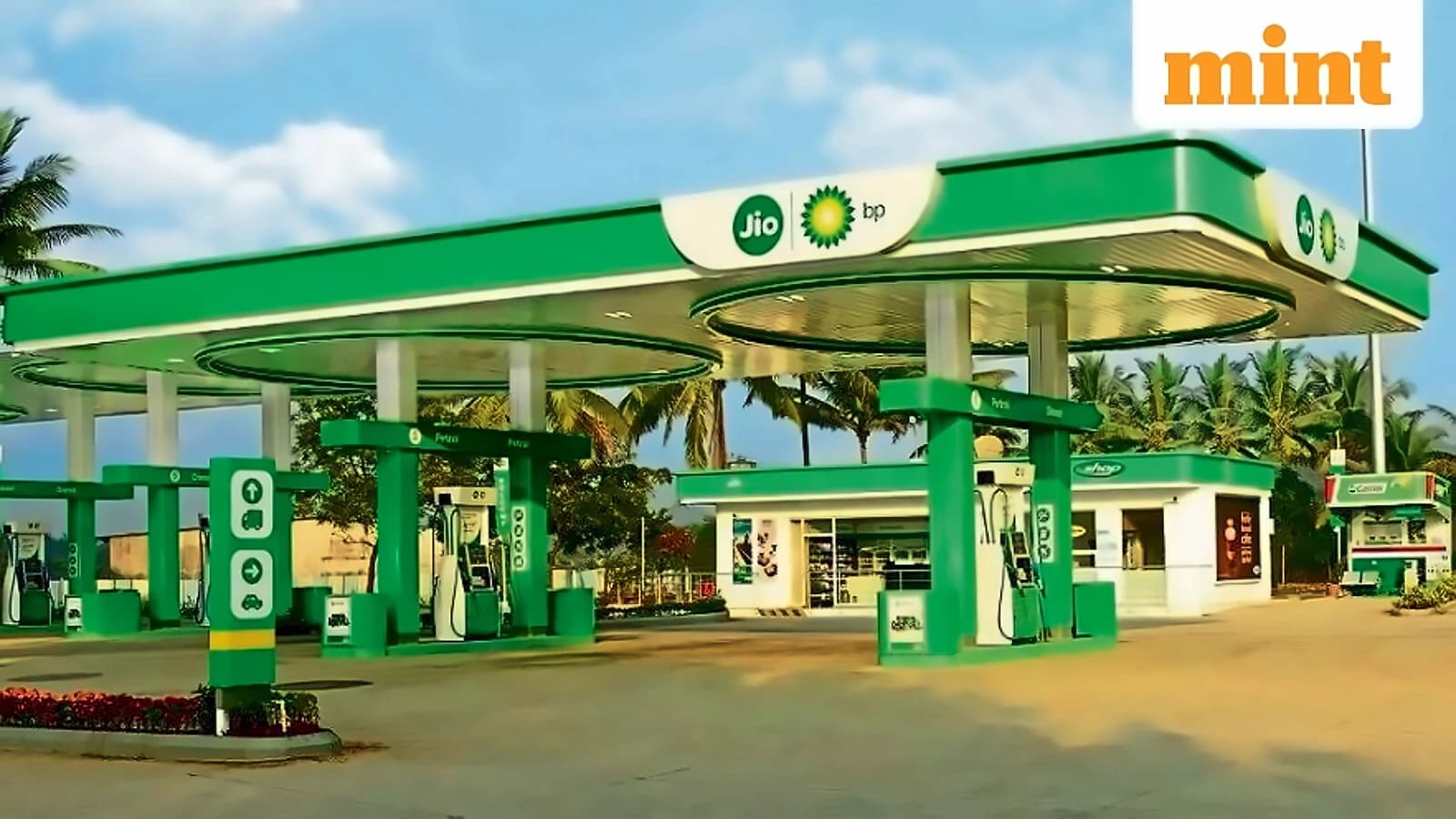
Jio-bp now limits sales to 50 litres per customer per day, while Nayara's restrictions range from 70 to 200 litres per transaction. These aren't nationwide rationing measures—there's no fuel shortage in India—but targeted moves to prevent bulk buyers from draining station-level inventories meant for individual motorists.
Why Retail and Bulk Prices Diverged
India officially deregulated petrol prices in 2010 and diesel in 2014, theoretically allowing oil marketing companies to set market-based rates. In practice, the story is different. When international crude prices rise, retail pump rates rarely move in tandem. PSU retailers often act in coordination after "informal" consultation with the government, effectively creating a soft price ceiling.
The current freeze has created a massive distortion. Public sector oil marketing companies—Indian Oil Corporation, Bharat Petroleum Corporation, and Hindustan Petroleum Corporation—are absorbing losses of approximately Rs 500 crore daily (Rs 9 per litre on diesel, Rs 8 per litre on petrol) to shield retail consumers from West Asia conflict-driven price spikes. This support extends to households, farmers, and small end-users, but not to industrial and bulk supplies, where pricing continues to track international markets.
For private retailers like Jio-bp and Nayara, there's no government backing. They face a brutal choice: match PSU prices and sell below cost, or maintain market-based pricing and watch customers migrate to cheaper competitors. During a similar crude surge in 2022, Nayara lost roughly Rs 700 crore in a single month, while Jio-bp lost over Rs 1,500 crore by holding back price increases. This time around, they're choosing a different path—protect margins by capping sales rather than engaging in destructive price competition.
The Margin Protection Strategy
The economics of rationing are straightforward. If bulk buyers purchase 400-600 litres per transaction at Rs 20-25 per litre below cost (the under-recovery level private retailers faced in 2022), that's a potential loss of Rs 8,000-15,000 per transaction. With a 50-litre cap, the maximum loss drops to Rs 1,000-1,250. The net benefit: Rs 7,000-13,750 saved per restricted bulk transaction.
This approach comes with trade-offs. Private retailers saw diesel sales decline 58% in May 2026 as bulk consumers shifted to PSU pumps, which saw their diesel sales grow 6.4% during the same period. However, this volume decline primarily consisted of loss-making bulk sales. The remaining volume—genuine retail customers—likely generates positive or break-even margins.
Jio-bp's Q1 FY27 results show this strategy in action. Despite the challenging environment, the company grew petrol and diesel volumes 2.7% year-on-year to 1.99 million kiloliters. More importantly, its outlets achieve 1.74x (petrol) and 2.38x (diesel) sales per outlet compared to competition, demonstrating superior operational efficiency that partially offsets margin pressure. InvestorPresentations +1
The Refining Cushion
What makes this strategy sustainable for private retailers is their integrated business model. Both Reliance Industries and Nayara Energy are major refiners with access to discounted Russian crude. During Q1 FY27, Reliance's Oil-to-Chemicals segment delivered record EBITDA of Rs 17,010 crore despite retail under-recoveries. Exceptional crack margins—gasoline at $25.6 per barrel (up 2.6x year-on-year), diesel at $63.0 per barrel (up 4.0x), and aviation turbine fuel at $62.9 per barrel (up 4.4x)—provided substantial cushioning. InvestorPresentations +1
Historically, private refiners have earned over $30 per barrel in refining margins by processing discounted Russian crude and exporting to Europe. Reliance's margins are expected to hold around $2 per barrel above benchmark Singapore refining margins due to blending cheaper Russian and Canadian crudes. This upstream profitability allows private retailers to accept lower retail volumes during price distortions without existential risk.
PSU OMCs lack this cushion. Their Q1 FY27 combined EBITDA losses are estimated at Rs 47,700 crore, with individual losses of Rs 17,300 crore for HPCL, Rs 17,200 crore for IOCL, and Rs 13,200 crore for BPCL. The weighted average auto fuel gross marketing margin declined to negative Rs 23.4 per litre in Q1 FY27 from positive Rs 0.7 per litre in Q4 FY26.
Competitive Dynamics and PSU Response
The current situation has created an unusual competitive landscape. PSU OMCs, with their 90% market share and over 90,000 outlets, continue selling without restrictions. This has accelerated volume migration to PSU pumps, but at tremendous financial cost. Private retailers, with roughly 9.3% market share collectively, are protecting margins but sacrificing volume.
However, this imbalance may not persist. Multiple sources indicate that IOC, BPCL, and HPCL are "likely to impose quantity restrictions" following Jio-bp and Nayara's lead. The government has already established a regulatory framework through the Motor Spirit and High-Speed Diesel (Temporary Regulation of Supply through Retail Outlets) Order, 2026, which caps diesel sales at 200 litres per customer per day for PSU OMCs and prohibits industrial users from procuring from retail outlets.
If PSU OMCs implement similar restrictions, the competitive landscape would level significantly. The price arbitrage advantage driving bulk consumers to PSU pumps would disappear, and competition would shift to legitimate factors like service quality, fuel quality, location convenience, and value-added services—areas where private retailers have traditionally excelled.
The Road Ahead
The sustainability of current pricing levels depends heavily on crude oil prices. Brent crude ranged from $71 to $144 per barrel during Q1 FY27, with current levels around $108 per barrel. Management has noted "huge premiums" with Middle East official selling prices reaching nearly $20 per barrel versus typical couple of dollars, freight rates rising to 10 times normal levels, and insurance costs increasing to multiples of historical levels. InvestorPresentations +1
If crude remains above $105 per barrel for an extended period without retail price increases, cumulative losses could become challenging even for private retailers with refining cushions. However, the current strategy appears viable for the medium term, particularly given private retailers' ability to rely on refining profits and their focus on high-margin customer segments.
Jio-bp is also accelerating growth in alternative fuels—E-Mobility (+52% year-on-year), CBG & CNG (+68% year-on-year)—which provide new revenue sources less sensitive to crude price volatility. Loyalty programs including "Trans-Connect" for fleets, "RewardMeter" for drivers, "4ever" for passengers, and the new "Mobility+" credit card are deepening customer engagement and reducing price sensitivity. InvestorPresentations
The broader question is whether India will move toward a rules-based fuel pricing mechanism that provides transparency and predictability for all market participants. Until then, private retailers like Jio-bp and Nayara will continue navigating the choppy waters between market forces and policy-driven pricing, using rationing as a tool to protect margins when the two diverge dramatically.