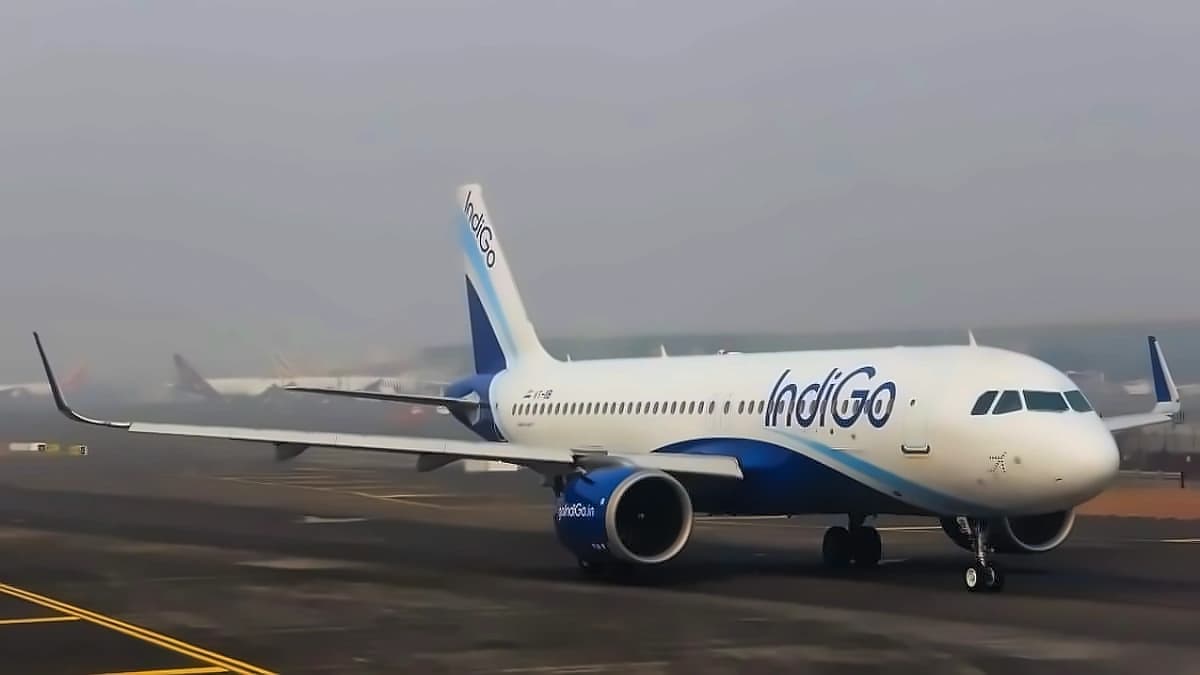
InterGlobe Aviation launched the 'IndiGo Lite' fare category on July 1, 2026, targeting passengers traveling with cabin baggage only (up to 7 kg). This entry-level fare offers the lowest base price among IndiGo's categories with auto-assigned seats, available for both domestic and international flights. The move represents a strategic shift toward unbundling services, aiming to drive ancillary revenue toward a 15% target while capturing price-sensitive demand.
Impact on Average Fare and Yield Metrics
The immediate effect on average fare per passenger will likely be negative. Lite fares are expected to be 5-10% lower than standard fares for light travelers. This dilution comes at a time when IndiGo already faces yield pressure—Q4 FY26 revenue was flat quarter-on-quarter and up only 1.3% year-on-year, with PRASK declining 4% YoY to INR 4.46. Transcripts
However, the strategy isn't just about lower base fares. By unbundling services, IndiGo aims to boost ancillary revenue, which typically carries higher margins than base seat fares. The target is a 15% ancillary revenue mix, with unbundling expected to improve ancillary margins by 2-3%. The net yield impact depends on the mix between fare dilution and ancillary uplift. At 10-15% Lite fare adoption, net RASK impact could range from -0.3% to +0.6%, depending on ancillary penetration and volume effects.
Revenue Trade-off: Lower Prices vs. Higher Volume
The core trade-off involves sacrificing base fare revenue for potentially higher passenger volumes and ancillary income. IndiGo's management has noted that the market currently appears inelastic to fare hikes, with fares "sticking" despite increases. This suggests there's room to capture additional demand through lower price points without significantly compromising overall yields. Transcripts
Demand uplift projections vary by adoption scenario. Conservative estimates (10-15% Lite fare adoption) suggest 5-8% passenger volume growth, while aggressive scenarios (25%+ adoption) could drive 21-31% volume increases through market expansion, competitive displacement, and modal shift from rail/bus to air travel. The key question is whether volume growth and ancillary revenue can offset the base fare reduction.
Ancillary Revenue Evolution
The shift to cabin baggage-only creates significant ancillary revenue opportunities. Passengers exceeding 7 kg cabin limits will pay for check-in baggage. Auto-assigned seats in Lite fare create upsell opportunities for preferred seating. Unbundled meals allow for additional revenue capture, and priority services like boarding can be monetized.
IndiGo's recent results show the importance of this diversification. FY26 revenue grew only 5.1% YoY to ₹849,619M despite fleet expansion, with the company facing significant headwinds including ₹89.8Bn forex losses. Ancillary revenue expansion toward the 15% target provides a crucial buffer against such cost pressures.
Operational Cost Reduction Potential
The elimination of check-in baggage for Lite passengers presents substantial operational cost savings. Every 1 kg of aircraft weight reduction saves approximately $4,210 annually in fuel costs. Assuming average check-in baggage of 15-20 kg per passenger and 10-15% Lite fare adoption across IndiGo's 2,100+ daily flights, annual fuel savings could reach ₹50-75 crore.
Turnaround times could improve by 3-5 minutes per flight as cabin baggage-only operations streamline boarding and deplaning. With 2,100+ daily flights, this could enable 6-10 additional flights per day or improve schedule reliability. Ground handling costs may drop by ₹15-25 crore annually through reduced check-in counter and ramp personnel requirements.
Total estimated operational savings range from ₹88-137 crore annually, directly addressing IndiGo's current cost pressures where CASK ex fuel ex forex increased 7.3% YoY to ₹3.15 in Q4 FY26. InvestorPresentations +1
Competitive Positioning and Market Share
IndiGo currently dominates with 63% domestic market share in FY 2025. The Lite fare strengthens this position by offering the lowest entry-level price point, making it harder for emerging low-cost competitors like Akasa Air (5.4% market share) to compete on price.
Air India Express already launched similar "Xpress Lite fares" in February 2024, while Air India introduced a "Basic" fare in June 2026 removing complimentary meals. IndiGo's response is likely to trigger similar unbundling across the industry, but the airline's scale advantages—172.4 billion ASKs, 441 aircraft, 97 domestic destinations—provide sustainable competitive moats. InvestorPresentations
The move could help IndiGo gain 1-6% additional market share among price-sensitive travelers, potentially reaching 68-70% total market share within 12-18 months.
Customer Segmentation and Demand
The Lite fare targets ultra price-sensitive travelers, light business travelers, and specific use-cases like weekend getaways and visiting friends/family. This aligns with IndiGo's evolution from a single-segment low-cost carrier to a comprehensive multi-tier strategy covering ultra-budget to premium segments.
While IndiGo currently enjoys strong pricing power with inelastic demand, the Lite fare specifically targets more elastic segments highly responsive to price changes. The risk of cannibalization is real but manageable—expected migration of 5-12% of existing passengers to Lite fares initially, stabilizing at 3-5% long-term. This is mitigated through service differentiation, ancillary revenue optimization, and clear segment positioning.
Operating Margin and Unit Economics Impact
IndiGo faces significant margin pressure currently. Q4 FY26 EBITDAR margin was 9.9%, down 21.4 percentage points YoY, though EBITDAR margin ex-forex was 28.7%. The Lite fare strategy presents a complex margin equation. InvestorPresentations +1
Net margin impact scenarios range from -2.5% (conservative) to +0.5% (optimistic), depending on ancillary revenue penetration and cost savings realization. The strategy becomes margin-accretive when ancillary revenue penetration exceeds 20% of Lite passengers and operational cost savings are fully realized.
Break-even load factors for Lite fares are estimated at 74-85%, depending on the scenario—2-7 percentage points higher than traditional economy's 75-78% break-even. This makes route selection critical, with high-demand, price-elastic routes best suited for Lite deployment.
RASK-CASK Dynamics
The mix shift toward Lite fares is projected to reduce CASK by 2.2-3.9% through operational efficiencies and volume benefits, while RASK impact ranges from -0.5% to +0.5% depending on penetration levels. The net effect is 2-5% improvement in unit margins (PRASK - CASK).
Current unit metrics show PRASK at ₹4.46 and CASK ex fuel ex forex at ₹3.15. Under moderate Lite fare adoption scenarios, unit margins could improve to ₹1.35, representing a 3.1% increase. Transcripts +1
Strategic Outlook
IndiGo's 'Lite' fare represents a calculated bet that the long-term benefits of market expansion, ancillary revenue growth, and operational efficiency will outweigh short-term margin pressure from fare dilution. The strategy aligns with management's focus on optimizing PRASK rather than maximizing load factors in the current fuel environment. Transcripts
Success will depend on execution excellence in ancillary revenue programs, maintenance of service quality across segments, and careful monitoring of cannibalization patterns. With disciplined execution, the Lite fare can contribute to margin recovery and strengthen IndiGo's competitive position while supporting its massive order book of nearly 1,000 aircraft through diversified fare products ensuring high utilization rates across passenger demographics.