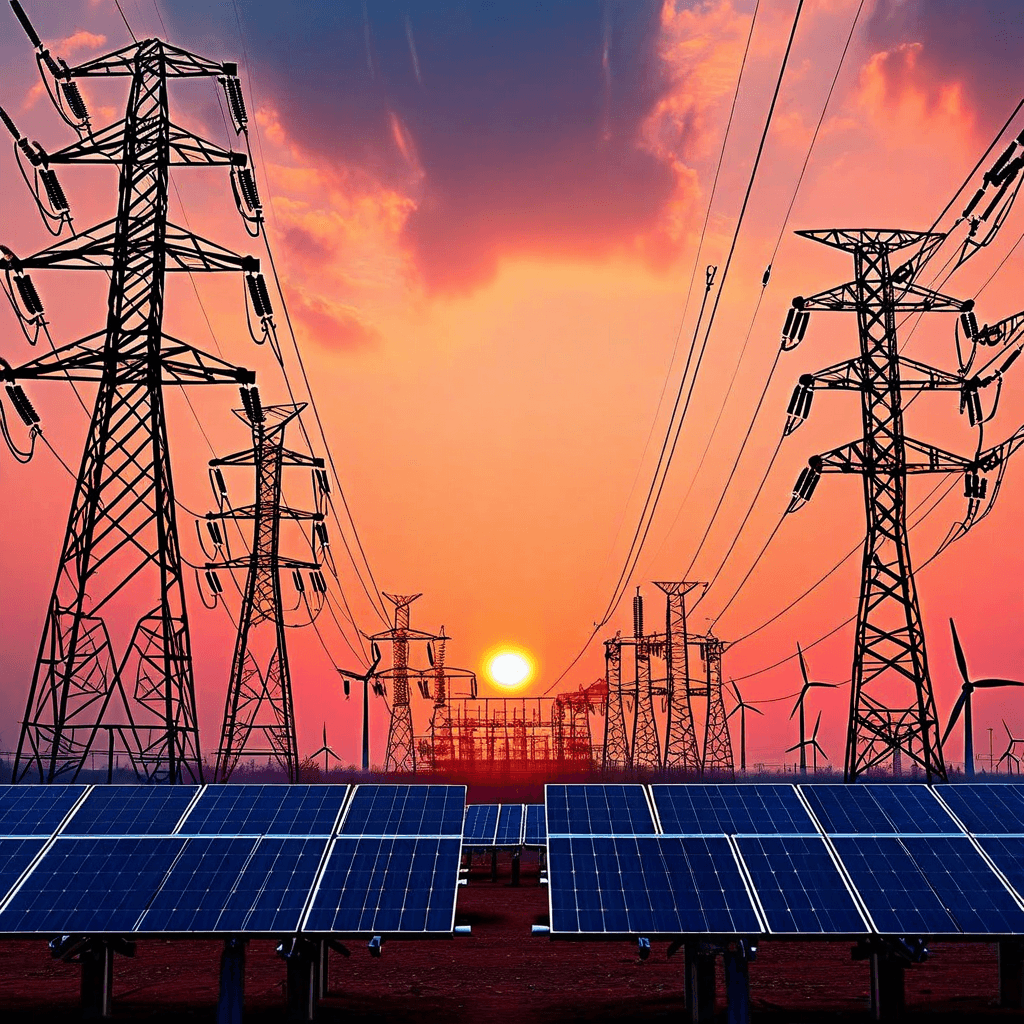
India's transmission and distribution (T&D) sector is experiencing a transformative growth cycle, backed by an estimated capital expenditure of around Rs 9 lakh crore through 2032. This massive investment program, outlined in the National Electricity Plan, represents one of the most significant infrastructure initiatives in India's power sector history. The current investment cycle, which began in FY22-23, has already driven sharp growth in order books, revenue, and margin profiles for industry participants across the entire value chain—from transmission line manufacturers to transformer producers and equipment suppliers .
The Rs 9 Lakh Crore Capex Engine
The Rs 9 trillion transmission investment is fundamentally driven by large-scale renewable energy integration requirements. India's target of achieving 500 GW of renewable energy capacity by 2030 (with 200 GW already connected) necessitates extensive transmission infrastructure for power evacuation and grid integration. This has created a structural acceleration in transmission orders over the past few years. The Green Energy Corridors (GEC) initiative, dedicated transmission infrastructure for evacuating renewable power from resource-rich regions to load centers, along with new Inter-State Transmission System (ISTS) schemes to evacuate 9 GW of RE power from Rajasthan and Karnataka, are key components of this expansion .
FY26 Slowdown: Temporary Constraint, Not Structural Crisis
Despite robust underlying demand, FY26 witnessed a moderation in ordering activity with 16 schemes awarded compared to 45 schemes in FY25. However, industry reports emphasize this slowdown is due to temporary bandwidth constraints rather than any structural demand deterioration. Domestic manufacturers are currently operating at high capacity utilization levels, leaving limited headroom to absorb new orders. The surge in demand has outpaced the industry's ability to expand capacity quickly enough. Additionally, the focus on higher-voltage transformers (220 kV, 400 kV, 765 kV, and even 800 kV ratings) involves significantly longer manufacturing cycles and testing timelines, extending lead times and creating execution bottlenecks .
High-Voltage Focus: Complexity Creates Capacity Pressures
The strategic shift toward higher-voltage equipment, while necessary for grid modernization and renewable energy evacuation, has directly contributed to extended lead times across the industry. Standard delivery timelines have stretched from 3-4 months to 6-12 months for many transformer categories, with ultra-high-voltage transformers potentially requiring 18+ months. This creates substantial working capital pressure as longer production cycles tie up capital for extended periods. Manufacturers face difficult decisions regarding capacity allocation, priority management, and customer expectation management. The testing requirements for high-voltage equipment are substantially more rigorous, with type testing, routine testing, special tests, and site commissioning tests all adding to delivery timelines .
Global Demand Surge Creates Export Opportunities
The United States and Europe are experiencing a historic surge in transformer demand due to multiple converging factors: renewable energy integration, data center expansion, industrial electrification, EV charging infrastructure, and urgent aging infrastructure replacement. This global surge has created a severe demand-supply mismatch internationally, with lead times doubling or tripling from historical norms and prices increasing 20-40% for expedited delivery. Indian manufacturers are uniquely positioned to benefit from this mismatch through their cost competitiveness (20-35% lower prices compared to Western counterparts), established manufacturing ecosystem, quality capabilities, and strategic advantages. The country's growing role within global OEM feeder factory networks provides additional momentum as international companies leverage India's manufacturing ecosystem for cost optimization and supply chain resilience .
HVDC Pipeline: Multi-Year Visibility
India's High Voltage Direct Current (HVDC) program represents a significant transmission infrastructure initiative with a substantial 32.3 GW pipeline of projects at various stages of development. Nearly 45% of this pipeline (14.5 GW) has already been tendered and awarded, providing strong visibility into near-to-medium term order flow. HVDC projects typically offer superior margins of 18-22% compared to 12-15% for conventional AC transmission projects, creating a margin premium of 6-10 percentage points. The expectation of 1-2 HVDC awards annually is based on technical complexity, manufacturing capacity constraints, financial considerations, and strategic planning needs. This steady project flow provides exceptional revenue visibility of 36-48 months, enabling strategic capacity planning, technology investment, and financial optimization .
Valuation Dynamics: Growth Priced In
The T&D sector has experienced significant valuation multiple expansion over the past 2-3 years, with average P/E multiples expanding from 14-16x in FY22-23 to 24-28x currently. This multiple expansion of approximately 60-75% reflects the market's recognition of the structural growth opportunity and has moved valuations from attractive to fair value territory. The market has priced in substantial earnings growth through FY25-28, including revenue growth expectations of 18-24% CAGR and margin expansion of 150-250 basis points. The sector now trades at a premium to traditional capital goods and infrastructure sectors but at a discount to high-growth consumer discretionary stocks, reflecting its positioning as a quality growth story within the industrial space .
Sustaining Valuations: The Path Forward
Despite rich valuations, several factors could drive further earnings upgrades and sustain current multiples. Export opportunities present significant upside potential, with total export revenue share projected to expand from 20-30% currently to 48-63% by FY28. This export expansion could drive 300-500 basis points of additional revenue growth beyond current expectations. Margin expansion could exceed current projections if operating leverage, product mix improvement, pricing power, and efficiency gains materialize more strongly than anticipated. Additional opportunities beyond the known pipeline could emerge from accelerated renewable deployment, energy storage integration, cross-border interconnections, and industrial electrification. Government policy support through PLI scheme expansion, domestic content requirements, and R&D support could provide additional tailwinds .
The Trade-off: Bandwidth vs. Margins
The industry faces fundamental trade-offs between bandwidth constraints, project execution delays, and margin expansion sustainability. High capacity utilization forces difficult choices regarding order selectivity, project prioritization, and quality versus speed balance. Execution delays have direct financial consequences including revenue recognition delays, cost overruns, penalty payments, and opportunity costs. Margin expansion requires careful cost management, optimal product mix prioritization, and strategic capacity investment. Companies must balance aggressive pricing with execution capability to sustain margins. The key to success will be identifying companies that can execute effectively despite capacity constraints, expand margins through operational excellence, capture export opportunities while maintaining domestic market position, and invest strategically in capacity and technology for long-term competitive advantage .
Conclusion: A Structural Growth Story
India's T&D sector stands at an interesting juncture where strong fundamentals meet elevated valuations. The Rs 9 lakh crore capex program, renewable energy integration targets, HVDC pipeline, and export opportunities provide a solid foundation for sustained growth through FY25-28 and beyond. However, current valuations already price in much of this growth, leaving limited margin for error. The sector's transition from cheap to fairly valued reflects the market's recognition of a structural growth opportunity rather than a cyclical upturn. Success will require careful navigation of capacity constraints, execution excellence, and strategic capital allocation. Companies that deliver on these fronts can sustain current valuations and potentially drive further re-rating, while those that stumble face valuation compression risk despite strong sector fundamentals .