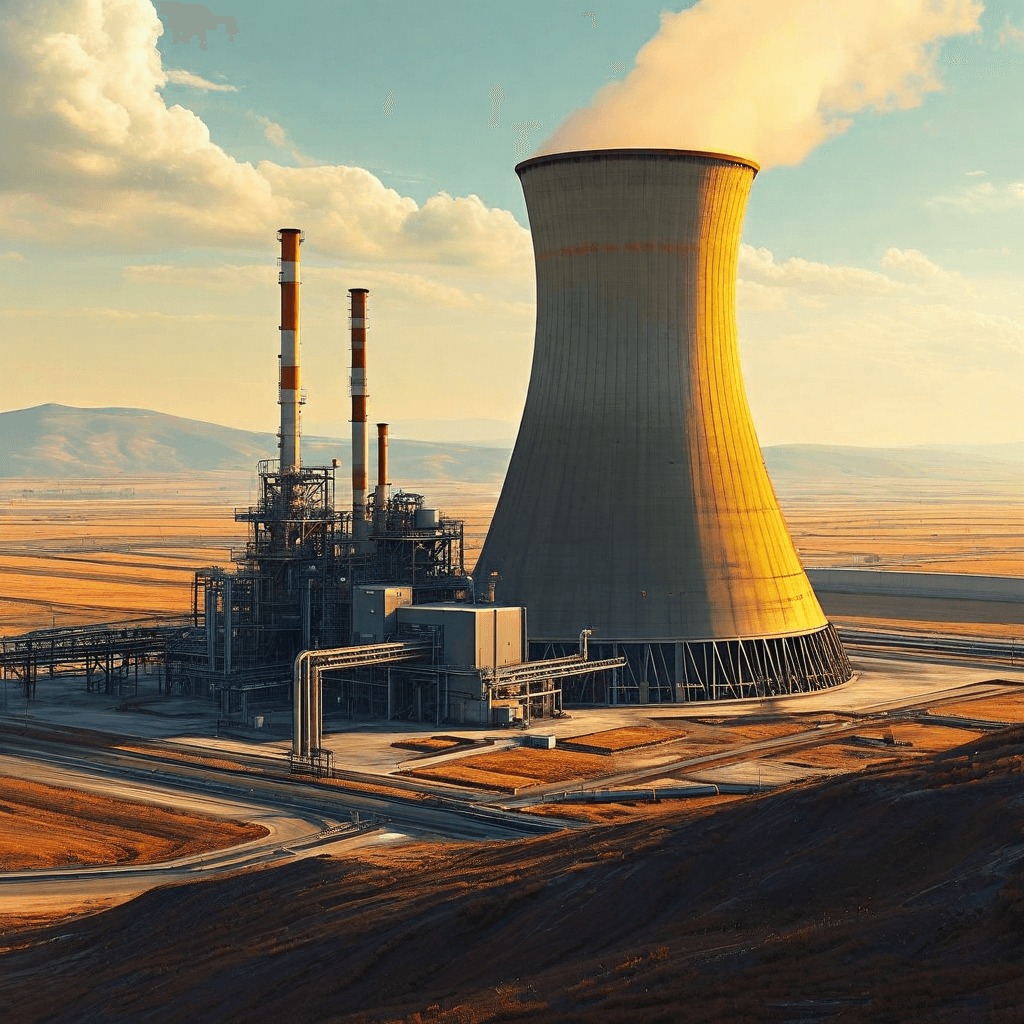
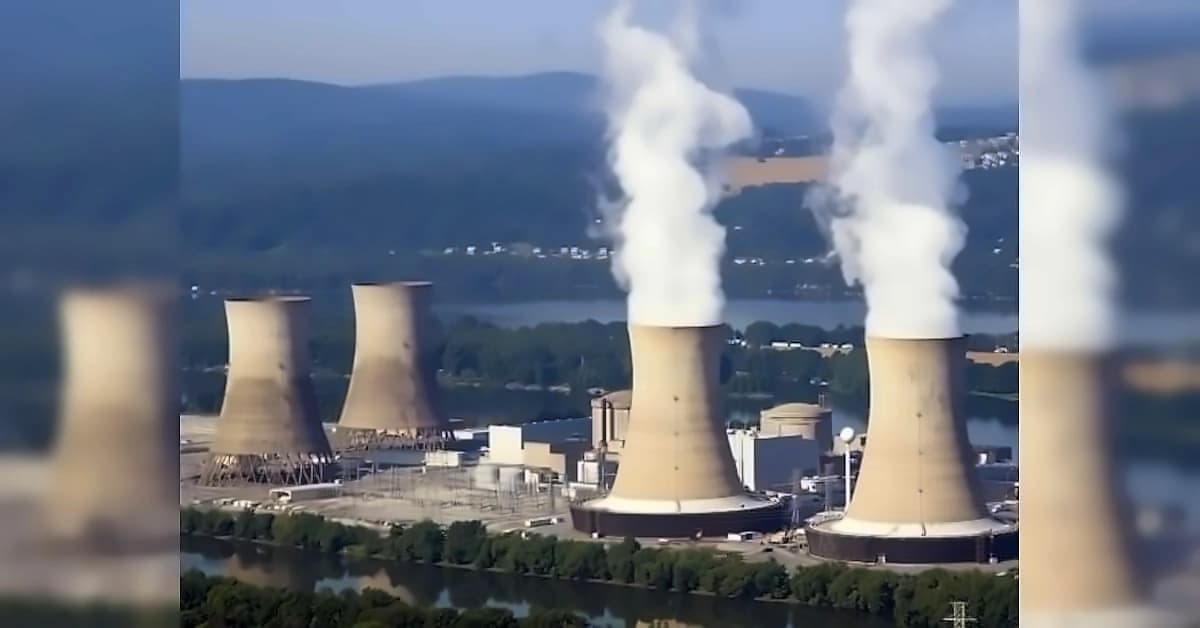
The Atomic Energy Regulatory Board (AERB) and Department of Atomic Energy (DAE) have approved reducing exclusion zones around nuclear reactors from 1 km to 500m for small reactors and 700m for large ones. This decision, discussed for nearly 18 months, represents a calculated bet that advanced safety technologies justify smaller buffer zones while enabling India's ambitious target of 100 GW nuclear capacity by 2047.
The reduction isn't arbitrary. It's grounded in radiation data showing that emissions from Indian nuclear plants are significantly lower than natural background levels in parts of Kerala and Tamil Nadu coastlines. A BARC study found natural background radiation in Kollam district, Kerala, reaches 9,562 nGy/hr (about 70 milliGray annually)—higher than what nuclear plant workers are exposed to. At plant boundaries, additional radiation adds only 1-25 micro-Sievert annually compared to 2,400 micro-Sievert from natural background.
Land Economics and Private Investment
The math behind this change is compelling.
Small reactors see a 75% reduction with 500m zones. A 10-reactor complex (700 MW each) can now be built on less than 700 hectares versus roughly 1,000 hectares under current rules.
This matters immensely for private players like Tata Power, Adani Power, and Reliance Industries, who are eyeing the nuclear sector. Land acquisition typically consumes 4-5 years and accounts for 15-20% of project costs. With capital costs for Pressurized Heavy Water reactors projected at Rs 14 crore per MW by 2026-27, land savings for a 700 MW unit could reduce project costs by Rs 150-200 crore.
The timeline advantages are equally dramatic. Traditional greenfield nuclear projects face 8-11 years of pre-construction delays. Reduced exclusion zones, especially for brownfield expansions and industrial zone placements, could compress this to 3-5 years. For Adani Power, which has already formed Adani Atomic Energy Limited and is discussing eight 200 MW SMRs in Uttar Pradesh, this acceleration is crucial.
Global Alignment and Technology Justification
India isn't pioneering this approach alone. The United States and France don't fix exclusion distances, instead using site-specific risk assessments. The US Department of Energy has established categorical exclusions for advanced reactors based on "decades of research and engineering" that have produced prototypes with passive safety mechanisms and improved physical architecture.
Modern reactors incorporate inherent safety features that don't require active intervention. The Kudankulam plant exemplifies this progress, with emissions dropping from 0.081 microsieverts a decade ago to just 0.002 microsieverts today. Kalpakkam shows similar improvement, with levels falling from 23.140 microsieverts in 2014 to 15.961 microsieverts in 2023.
A 20-year BARC study (2000-2020) of six nuclear plants found radioactive discharges were "minimal," with concentrations beyond 5 km radius below minimum detectable activity. Cancer prevalence among nuclear workers stands at 54.05 per lakh versus the national average of 98.05 per lakh.
The Industrial Zone Revolution
Perhaps the most transformative aspect is the ability to place Small Modular Reactors (SMRs) in industrial zones for captive use. This represents a paradigm shift from remote nuclear parks to co-location with demand centers. For energy-intensive industries like steel, petrochemicals, and data centers, SMRs offer reliable baseload power without transmission losses.
The 1,600 MW project would power industrial operations directly, leveraging existing infrastructure rather than building dedicated nuclear parks. This approach could accelerate deployment timelines from 14-20 years to 7.5-12 years while improving capital turnover ratios by 2-4 times.
The Trust Deficit Challenge
Despite strong technical justification, the reduction faces significant political and public resistance.
The SHANTI Act 2025, which enables private sector participation, was approved by Parliament despite these concerns.
The challenge stems from nuclear energy's unique risk profile. Unlike visible pollution from coal plants, radiation is invisible and its consequences potentially intergenerational. Exclusion zones serve as tangible safety assurances that the public can understand. Reducing them, even with technical justification, triggers anxiety about compromised safety.
The National Institute of Advanced Studies has noted that civilian nuclear power plants in India operate with significant secrecy, creating a trust deficit that undermines public acceptance. Without access to safety data and transparent decision-making, the public cannot independently verify claims that reduced zones are safe.
Oversight and Transparency Imperatives
As private sector participation expands, AERB faces the challenge of maintaining independent oversight. Currently under DAE administrative control, AERB may need statutory independence, dedicated funding through operator fees, and enhanced enforcement powers to regulate private operators effectively.
International cooperation offers a path forward. Enhanced engagement with the IAEA and World Association of Nuclear Operators (WANO) can provide independent validation of safety claims. Finland's deep geological repository model and Sweden's consensus-building approach offer lessons for transparent waste management.
The transparency gap must be addressed systematically. Real-time radiation monitoring data accessible to the public, independent verification by academic institutions, and genuine stakeholder engagement can build trust. France's transparency and information centers, which make nuclear operations visible to communities, provide a relevant model.
The Path Forward
India's nuclear expansion requires balancing efficiency with public acceptance. The exclusion zone reduction offers substantial economic benefits—halving land requirements, accelerating deployment timelines, and enabling private investment. But these advantages can only be realized through transparent implementation and robust oversight.
The success of this regulatory shift will depend on several factors: maintaining India's exceptional safety record during expansion, building genuine public trust through transparency, and demonstrating that reduced zones don't compromise safety.
The coming months will reveal whether India can navigate this complex terrain. Private investors are watching closely, opposition parties are mobilizing, and local communities are demanding answers. How the government addresses transparency and oversight concerns will determine whether this bold regulatory bet pays off or becomes another casualty of the trust deficit that has long plagued India's nuclear ambitions.