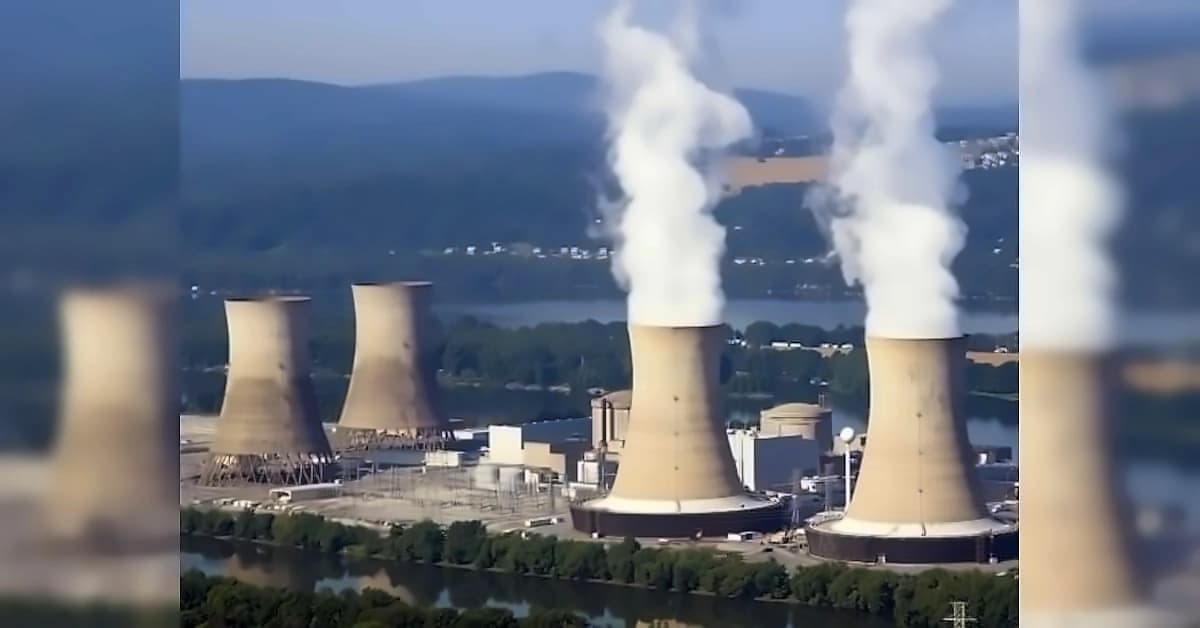
India has proposed tightly supervised approval rules for private nuclear power generation, opening the door to foreign reactor technologies with proven track records while maintaining strict regulatory control. According to the draft rules under the nuclear energy act, companies would secure approval in principle to engage vendors, undertake preliminary development work and secure land before obtaining a formal licence. Once licensed, projects would face stage-by-stage regulatory scrutiny covering design, siting, construction, commissioning and operation, with regulators including the ability to halt work at key project stages. The world's third-largest greenhouse-gas emitter aims to expand nuclear generation capacity 12-fold to 100 gigawatts (GW) over the next two decades, making private investment and foreign technology critical to meeting these ambitions. The draft regulations, circulated for public consultation, allow reactor designs with established overseas operating records, requiring developers to submit licensing and operating experience in their home markets.
India is pursuing an ambitious plan to develop and operationalise at least five indigenous small modular reactors (SMRs) by 2033, as part of its comprehensive nuclear expansion strategy, according to Minister of State Jitendra Singh's latest parliamentary statement. The Nuclear Energy Mission (NEM), announced in the Union Budget 2025-26, is targeting 100 GWe of nuclear capacity by 2047, with SMRs specifically designed for retiring fossil-fuel plants, supplying captive power to energy-intensive industries, and providing electricity in remote, off-grid locations. The Bhabha Atomic Research Centre (BARC) is developing three indigenous designs: the 220-MWe Bharat Small Modular Reactor (BSMR-200), the 55-MW SMR-55, and High-Temperature Gas-Cooled Reactors (HTGCR) of up to 5 MWth capacity, with the HTGCR capable of being coupled with suitable thermochemical cycles for hydrogen production. This two-pronged strategy combines large reactor deployment at greenfield sites with SMR development for brownfield locations and specialized applications.
The Department of Atomic Energy (DAE) is actively engaging industries through knowledge sharing and handholding for new technology development in small modular reactors (SMRs), according to Minister of State Jitendra Singh. This initiative aims to develop nuclear vendors in the field of nuclear technology while encouraging greater participation by the private sector in nuclear manufacturing, engineering services, research and development, and supply chains. Singh emphasized that Indian industries play a key role in the manufacture of equipment for these reactors, strengthening indigenous capabilities and the domestic nuclear supply chain. The DAE is working with the Indian industry on SMR technology through knowledge sharing and handholding, with critical components including low-alloy steel forgings for reactor pressure vessels and reactivity-control drive mechanisms already developed domestically, while work on other critical equipment has begun with Indian industry and start-ups. The initiative was announced in a written reply to Parliament on Wednesday, demonstrating the government's commitment to industrial collaboration in nuclear technology development.
India's nuclear industry has remained largely under state control, with access to foreign fuel and technology constrained for decades after its 1974 nuclear test explosion triggered international restrictions. However, last year, the country amended the nuclear energy act to allow private companies to build and operate projects, while retaining control over licensing and strategic nuclear materials. The changes included capping liability of nuclear equipment suppliers in accidents, a longstanding concern that was aimed at reviving interest from foreign vendors such as General Electric, Westinghouse Electric and EDF. Nuclear power developers would be required to maintain financial security for nuclear liability, decommissioning and waste-management obligations, and submit plans for management of radioactive waste. Reuters reported that India invited domestic private conglomerates including Adani Green, Tata Power and Reliance Industries to invest in nuclear power, demonstrating the government's commitment to bringing private companies deeper into reactor manufacturing, engineering, research and development and supply chains.
India is pursuing its Three-Stage Nuclear Power Programme, based on a closed fuel cycle, to optimise utilisation of its uranium resources and progressively harness its abundant thorium reserves, according to Singh's latest statements. Thorium, being a fertile material, needs to be converted into fissile uranium-233 in a nuclear reactor before it can be used for energy generation. Under the first stage, natural uranium is used as fuel in PHWRs, followed by reprocessing of spent fuel to extract plutonium. In the second stage, Fast Breeder Reactors utilise plutonium to generate additional fissile material. The third stage envisages large-scale utilisation of thorium through uranium-233 bred from thorium, after adequate capacity of Fast Breeder Reactors has been established. Thorium oxide pellets have been used in the initial cores of operating PHWRs, while thoria-based fuels have been irradiated in BARC reactors, with irradiated thoria pins reprocessed to obtain uranium-233, which has subsequently been fabricated as fuel for the KAMINI reactor at IGCAR, Kalpakkam. The government continues development of fast breeder reactor technology and associated closed fuel-cycle facilities through IGCAR, while expanding domestic isotope production through an Isotope Production Reactor to reduce dependence on imports of medical isotopes.