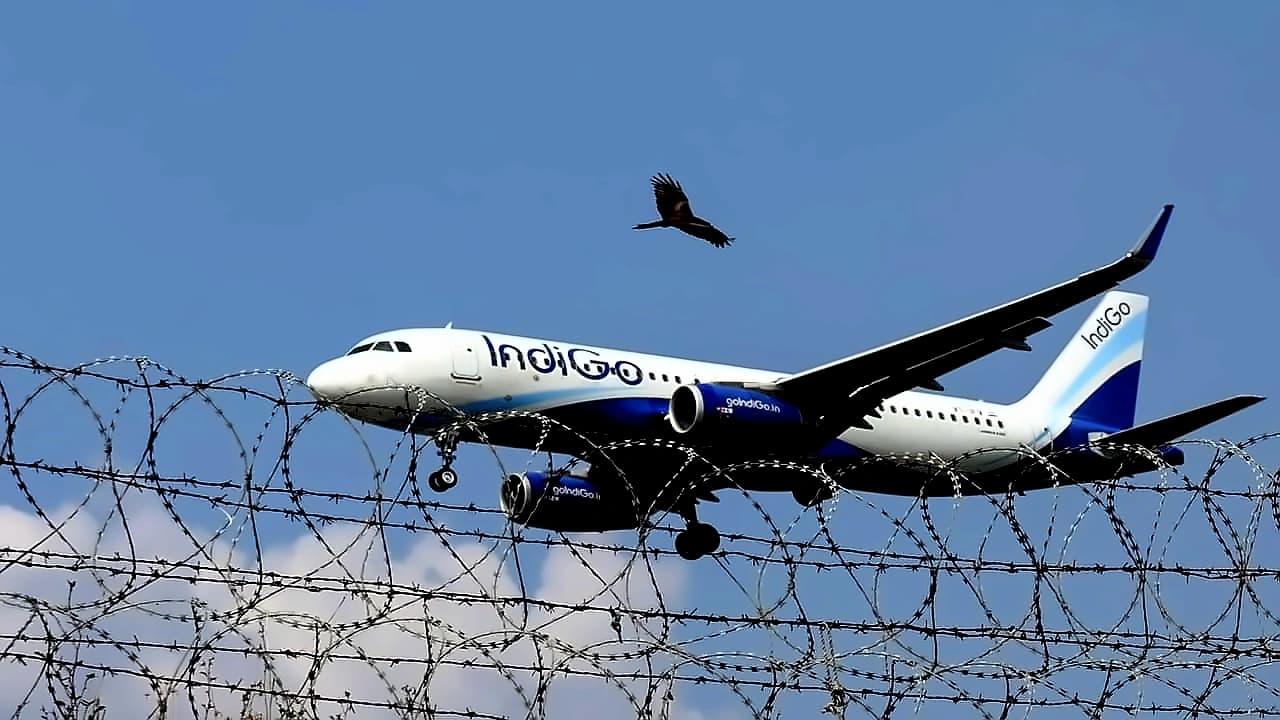
India is not about to start dictating what you pay for a plane ticket. The government has made it clear: there are no plans to regulate or cap airfares in a free market. However, new rules under the Bharatiya Vayuyan Adhiniyam 2024, expected to be published soon, introduce a different kind of constraint. Airlines like InterGlobe Aviation (IndiGo), Air India, and Akasa Air will likely need to submit their fare structures to the Directorate General of Civil Aviation (DGCA) a month in advance. The highest fare bucket they file becomes a hard ceiling—no charging above it, period.
This isn't a return to the pre-1994 era of government-set tariffs.
The new framework keeps that freedom but adds a transparency layer. The government retains power to impose temporary caps only in "exceptional and extraordinary" situations, such as a natural calamity causing sudden demand spikes. For now, the Supreme Court is keeping a close watch, directing the government to place the finalised rules before it by November 16.
The Fuel Squeeze: Surcharges vs. Base Fares
The immediate pressure on airlines isn't regulation—it's fuel. Aviation Turbine Fuel (ATF) prices have surged, driven by the ongoing West Asia crisis.
Fuel typically accounts for 30–40% of an airline's operating costs.
IndiGo, Air India, and Akasa Air have all responded by hiking fuel surcharges. IndiGo's domestic surcharge now ranges from ₹375 to ₹1,300 depending on distance, while international charges go up to ₹10,000 for Europe. Air India and Akasa followed with similar increases. But here's the catch: these surcharges are flat amounts by distance band. They cannot fully explain the massive fare jumps travelers are seeing.
Consider the numbers. Average one-way fares between September 1 and November 10 have soared 68% on Delhi-Hyderabad, 51% on Mumbai-Kolkata, 39% on Delhi-Goa, and 37% on Mumbai-Bengaluru. A ₹600–1,300 surcharge is a fraction of that increase. This means most of the pain is being passed through via higher base fares and aggressive yield management.
The airline swung from a ₹21.8 billion profit to a ₹2.4 billion net loss, with EBITDAR margins collapsing from 28% to 15.6%. Transcript
Why Some Routes Soar More Than Others
Why did Delhi-Hyderabad fares jump 68% while Mumbai-Bengaluru rose only 37%? The answer lies in capacity, not just fuel. OAG data shows airlines have cut domestic flight frequencies by 5% for the October-December quarter, even as total seat capacity is down only 1.2% because they're using larger aircraft. Where demand is strong but frequencies are limited, fares spike faster.
Capacity cuts are not uniform. Hyderabad-Jaipur capacity is down 33.1%, and Ahmedabad-Kolkata has fallen 20.9%. In contrast, Delhi-Navi Mumbai capacity has exploded from 8,158 seats to 142,600. This route-specific scarcity explains the divergent fare inflation. Mumbai-Bengaluru, a competitive trunk route with many frequencies, saw a more modest rise. Delhi-Hyderabad, facing tighter supply, saw the steepest hike.
IndiGo, with a 67.4% domestic market share as of July 2026, has the most influence over route supply. Air India Group holds about 24%, while Akasa Air sits at 5.5%. Earlier this year, IndiGo and Air India cut hundreds of flights citing high fuel costs and operational constraints. Akasa, meanwhile, expanded capacity by 13.2% in March-April, grabbing share from a smaller base. This is the core trade-off: cut capacity to protect yields, or grow to defend market share.
The Liquidity and Hedging Gap
Fuel volatility exposes the stark differences in balance sheet strength. IndiGo ended Q1 FY27 with total cash of ₹528.8 billion and free cash of ₹390.4 billion. It has the buffer to absorb shocks. Air India, however, is bleeding. Reports estimate its FY26 loss exceeded ₹22,000 crore, more than double the previous year, driven by the Pakistan airspace closure, ATF spikes, and costs from the tragic AI171 crash. Akasa Air, while operationally efficient with a 92.2% load factor, continues to incur cash losses and relies on aircraft sale-and-leaseback transactions for liquidity. Investor Presentation
Hedging is another weak spot.
Akasa does not hedge its forex exposure. This leaves airlines fully exposed to spot fuel prices and currency swings—the rupee depreciated over 11% in Q1, inflating dollar-denominated costs. Transcript +2
The government is aware of the pain. Civil Aviation Minister Ram Mohan Naidu has held discussions with airlines and oil marketing companies (OMCs) to explore relief, including a potential ATF price stabilisation fund. A ₹10,000 crore support package for OMCs was approved in June but reportedly went unused. Until such measures materialise, airlines must rely on surcharges and fare hikes to survive.
Market Reaction: Stocks and Sentiment
When the Supreme Court was informed that airfare rules had been finalised, InterGlobe Aviation shares fell nearly 2%. The market feared a return to price regulation. The government's clarification—that it will not interfere in free market pricing—has likely eased some of that anxiety, but uncertainty remains until the rules are published in detail.
However, valuation multiples and earnings estimates are in flux. The 68% fare hikes on some routes might look like a revenue boon, but with fuel costs up 80% and traffic volumes softening, the net impact on earnings is far from clear. The Q2 FY27 results, due soon, will be critical in showing how much of the recent surcharge hikes actually stuck to the bottom line.
What Lies Ahead
The new regulatory framework under the Bharatiya Vayuyan Adhiniyam 2024 represents a delicate balance. It preserves market-driven pricing but introduces a transparency and surveillance regime that could curb the most egregious surge pricing. For IndiGo, Air India, and Akasa Air, the challenge is twofold: managing the relentless pressure of fuel costs while navigating a stricter compliance environment.
The 30-day fare filing requirement will force airlines to become better forecasters. Getting the ceiling wrong means either leaving money on the table or inviting regulatory scrutiny. In "exceptional circumstances," the government's power to impose caps adds another layer of risk, particularly for yield-heavy peak periods.
Ultimately, the Indian aviation story is still one of growth. Domestic passenger traffic for January-July 2026 was up 0.64% year-on-year despite the turbulence. But the path to profitability has become steeper. Airlines that can combine efficient operations, smart capacity deployment, and disciplined pricing will be the ones that soar. The rest risk being grounded by the very headwinds they're trying to fly through.