The investment will significantly impact return metrics and working capital across Indian Oil, Bharat Petroleum, and Hindustan Petroleum.
Storage Technology Trade-offs
The choice between underground cavern storage and overground tankage represents a critical strategic decision.
Overground tankage requires ₹15-20 crore per thousand tonnes but carries higher maintenance expenses and limited strategic reserve capability. Hindustan Petroleum has emerged as the cavern storage leader, operating India's only operational facilities—a 60,000-tonne Visakhapatnam cavern and an 80,000-tonne Mangalore facility. Bharat Petroleum focuses on cryogenic storage augmentation at Uran Terminal, while Indian Oil maintains extensive traditional storage networks.
Capital Requirements and ROCE Impact
Building 30-day strategic reserves requires 2.26 million tonnes of additional capacity beyond existing 140,000 tonnes. The incremental capital requirement ranges from ₹16,000-22,000 crore per company depending on technology choices.
Indian Oil faces the largest absolute ROCE dilution due to its smaller capital base, while Hindustan Petroleum's higher leverage creates the greatest relative pressure. Bharat Petroleum's strong current ROCE of 17.51% provides the most buffer for investment impact .
Supply Chain Margin Erosion
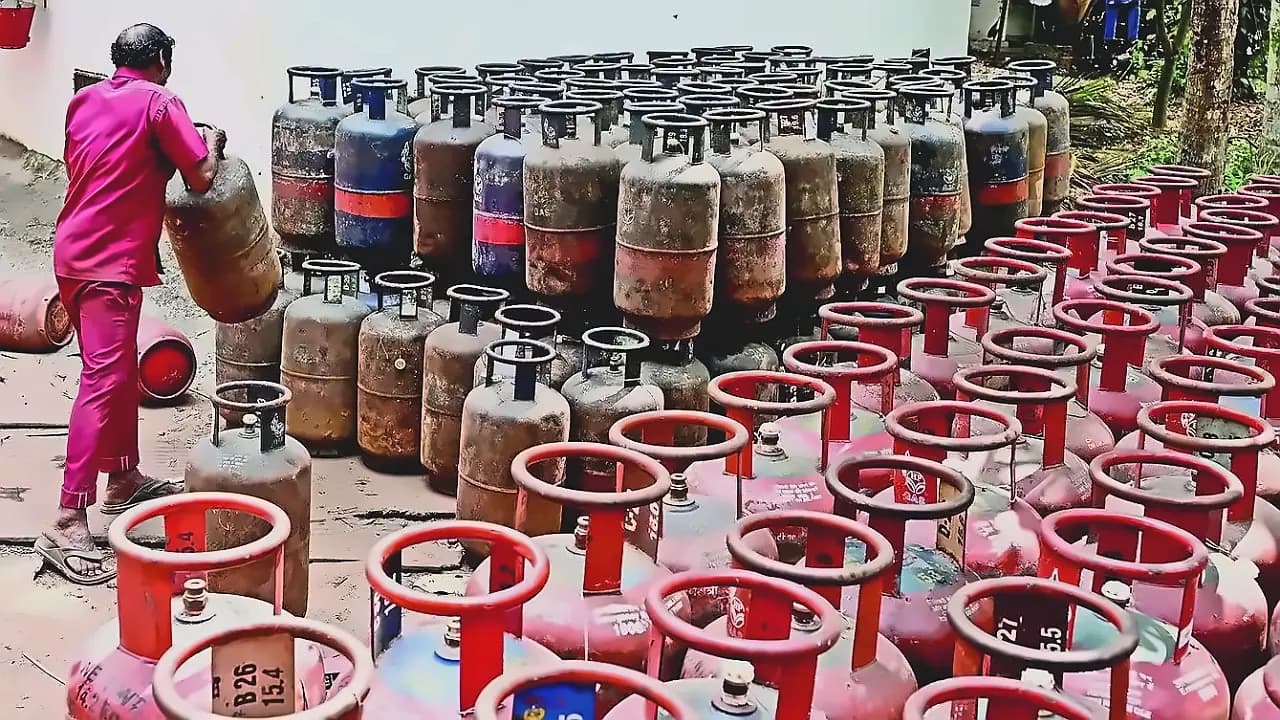
The 90% dependency on Strait of Hormuz for LPG imports has severely strained supply chain margins. Weekly LPG inflows fell 30% during the crisis, while war-risk insurance premiums surged over 1,000%. Freight costs increased from $94 to $207 per tonne. Alternative sourcing from the US Gulf Coast adds ₹184-209 per tonne in costs, while Australian sourcing adds ₹101-176 per tonne. Russian supplies offer ₹9-14 per tonne savings but carry geopolitical risks. The combined impact has created ₹20,400-23,500 crore in annual incremental costs across all three companies.
Domestic Production Expansion
The government's directive to increase domestic LPG production from 40% to 70% of demand represents a fundamental shift. Emergency refinery rerouting has already boosted production by 25-30%. This expansion could improve refining margins by 2.5-4.5% across all OMCs while reducing working capital cycles by 4-8 days. Indian Oil's refinery expansion pipeline—Panipat (15 to 25 MMTPA), Gujarat (13.7 to 18 MMTPA), and Barauni (6 to 9 MMTPA)—positions it best to capture this opportunity. Bharat Petroleum leads in distillate yield efficiency at 84.54%, while Hindustan Petroleum demonstrates the fastest production growth at 5.2%. InvestorPresentations +2
Commercial Segment Rationing Impact
Government-mandated rationing has fundamentally altered revenue mixes. Industrial LPG consumption declined 82% year-on-year to 11.9 thousand tonnes in April, while commercial cylinder sales fell 10% to 187 thousand tonnes. This has eliminated high-margin bulk LPG business, creating ₹5,800-6,800 crore in monthly revenue losses. Indian Oil faces the largest absolute impact due to its market leadership, while Bharat Petroleum's commercial segment focus amplifies its margin pressure. The 20% decline in daily consumption from 90,000 to 72,000 tonnes has created severe fixed cost absorption challenges across distribution networks.
Working Capital Strain
Extended household LPG refill booking periods have significantly impacted working capital cycles. Indian Oil's cash conversion cycle expanded by 8-12 days, Bharat Petroleum's by 5-8 days, and Hindustan Petroleum's by 4-6 days. The combined working capital impact reaches ₹9,100-11,300 crore annually. Indian Oil's massive consumer deposit base of ₹31,952 crore creates the largest absolute strain, while Hindustan Petroleum's efficient working capital management provides relative resilience. The OMCs are collectively absorbing ₹550 crore daily losses across petrol, diesel, and LPG. AnnualReports
Regulatory Compliance Burden
The Petroleum Ministry's directive for 30-day strategic reserves will impose ₹4,500-5,550 crore in additional annual regulatory compliance costs. Strategic reserves require separate storage from commercial stocks, creating dual tracking systems and enhanced reporting requirements. Inventory carrying costs will increase 80-85% to ₹4,500-5,500 per tonne annually, while insurance premiums will double to 2.3-3.3% of inventory value. The absence of strategic LPG reserves—unlike crude oil's 9.5-day SPR coverage—exposes India to heightened sovereign risk and could negatively impact credit ratings.
Financial Capacity Assessment
Its ₹203,261 crore market capitalization, strongest free cash flow generation at ₹29,594 crore, and conservative 0.77x debt-to-equity ratio provide substantial capacity . Bharat Petroleum maintains the strongest balance sheet with 0.74x leverage but faces dividend pressure from its 17.4% payout ratio. Hindustan Petroleum's exceptional 30.88% ROE and cavern expertise are offset by challenging 1.40x leverage and smallest scale at ₹85,730 crore market cap.
Market Share Dynamics
Differential execution timelines for strategic reserves could significantly impact household LPG market shares during prolonged disruptions. Hindustan Petroleum's cavern expertise and accelerated implementation timeline could deliver 2-3% market share gains. Indian Oil may face 1.5-2.5% market share erosion due to slower strategic reserve execution despite its financial strength. Bharat Petroleum is likely to maintain relatively stable market share around 27% through operational excellence. Supply reliability has emerged as the primary competitive differentiator, with 15-20% of customers willing to switch brands for guaranteed supply during crises.
The path forward requires each OMC to leverage distinct competitive advantages: Indian Oil's financial strength for accelerated implementation, Bharat Petroleum's operational efficiency for differentiated approaches, and Hindustan Petroleum's cavern expertise for first-mover advantage. Strategic reserve investment represents not just a regulatory requirement but a critical competitive differentiator in India's evolving energy security landscape.