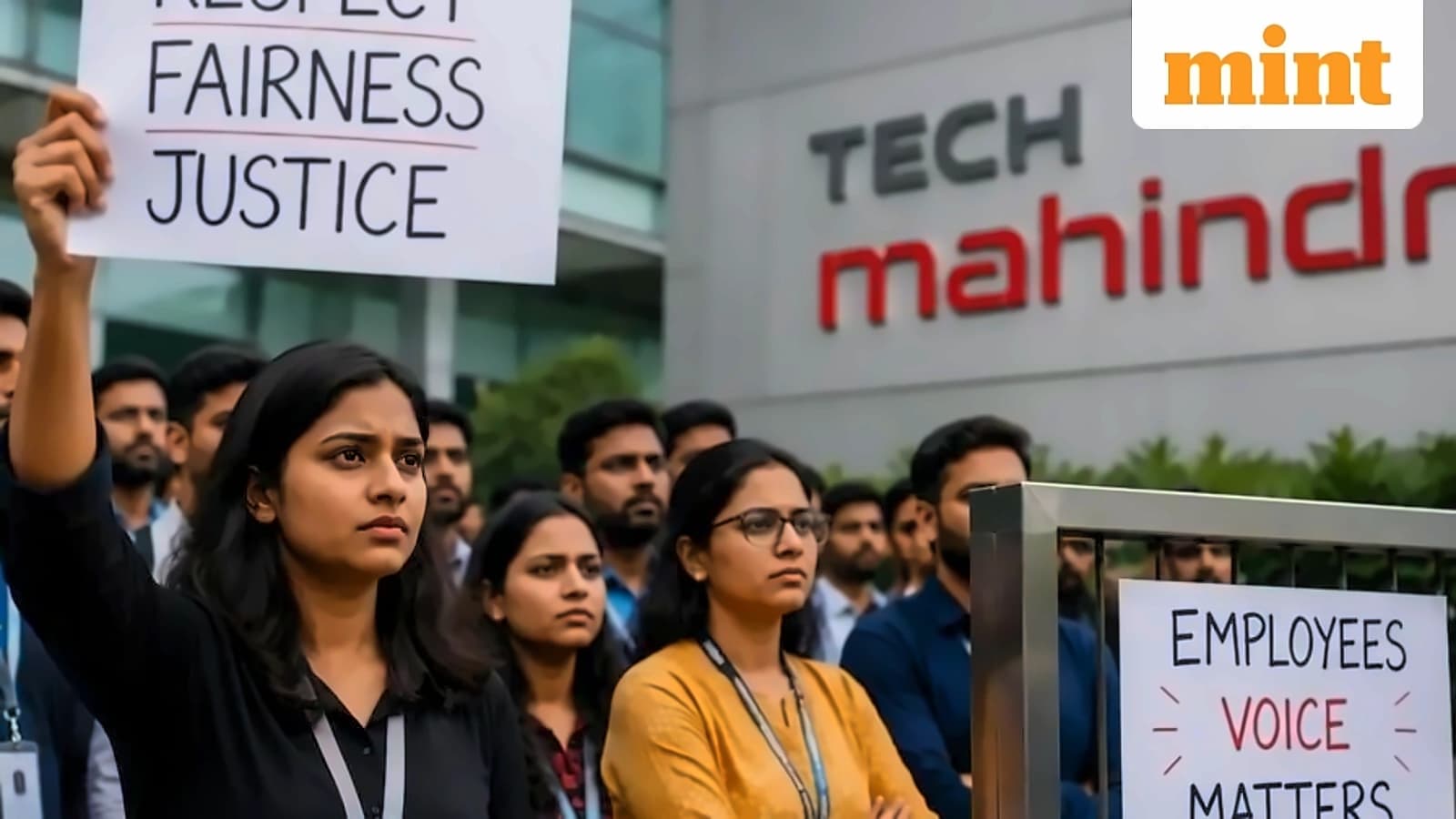
India's $300 billion IT services industry faces its most severe crisis in decades. Between 2021 and March 2026, the sector lost approximately $115 billion in market capitalization, with Tata Consultancy Services seeing its valuation plummet 36%, Infosys dropping 29%, and Wipro suffering a staggering 42% decline . This rout occurred despite these companies collectively deploying about ₹1.24 lakh crore in share buybacks — capital that now appears to have been deployed at peak-cycle valuations rather than creating sustainable shareholder value .
The Nifty IT Index has declined nearly 25% year-to-date in 2026, yet remarkably appreciated 8.86% over the five-year period when the top three IT majors were losing value . This divergence reveals that the pain is concentrated in large-cap legacy IT players rather than being a broad-based sector decline. The fundamental driver? Artificial intelligence is rewriting the economics of IT services delivery, and investors are rapidly repricing growth expectations for companies built on headcount-based revenue models.
The AI Deflation Challenge
The scale of AI disruption is unprecedented. HSBC Global Research estimates India's IT sector faces 14-16% AI-driven deflation, while industry commentary suggests traditional services revenues could see 2-3% annual deflation over the next couple of years as automation improves delivery efficiency . Approximately 25-40% of routinized and headcount-determined tasks — areas where the industry derives nearly one-third of its revenues — are vulnerable to generative AI automation .
This isn't merely a cyclical downturn. As industry leaders note, this represents "a structural realignment" where markets are repricing the services model not because demand has vanished, but because the economics of delivery are being rewritten . The trigger came in February 2026 when AI startup Anthropic introduced advanced plugins for its Claude Cowork tool, triggering panic selling and the Nifty IT index's steepest fall since March 2020 .
Tepid Growth Projections and Valuation Reset
The growth outlook has deteriorated dramatically. Infosys provided FY27 constant currency growth guidance of just 1.5-3.5%, causing shares to fall 6% on announcement . TCS guided for 0-3% growth, while Wipro projected Q1 FY27 sequential growth of -2% to 0% . These figures represent a fundamental reset from the 7-8% historical growth averages and double-digit expansion of the 2010s .
Investors are reassessing valuation multiples aggressively. TCS, which bought back shares at trailing P/E multiples of 34x, 39x, and 30x between 2020 and 2023, now trades at approximately 18x earnings — implying shares were retired when valuations were roughly double current levels . Infosys, with buybacks at 23x-30x P/E, now trades around 16x . This 50% multiple compression reflects a permanent repricing of growth prospects rather than temporary market sentiment.
Strategic AI Transformation Responses
India's top five IT companies are pursuing distinct AI transformation strategies to counter these headwinds.
Tata Consultancy Services employs a bi-modal strategy: Mode 1 focuses on improving current value through AI-enhanced productivity, while Mode 2 aims to redefine value through AI-first business architecture InvestorPresentations. The company has generated annualized AI services revenue exceeding $2.3 billion, with delivery cycles of 12-16 weeks for high-impact solutions Transcripts +1. TCS expects AI to be net accretive over time, with AI revenue growing faster to eventually overcompensate for deflation in traditional service lines Transcripts +1.
Infosys has developed its "AI First" Value Framework centered on six core segments: AI Trust, AI Strategy & Engineering, Process AI, Agentic Legacy Modernization, Physical AI, and Data for AI InvestorPresentations +1. The company identifies a $300-400 billion AI services opportunity by 2030 and is working with over 90% of its largest 200 clients on AI initiatives InvestorPresentations +1. Notably, Infosys reports that pricing has been consistently accretive, including from AI projects, challenging the narrative that AI inevitably leads to margin compression Transcripts +1.
Wipro is making a strategic pivot to an AI-native business model, creating a dedicated unit with a distinct operating model to accelerate enterprise-grade agentic AI solutions Transcripts +1. The company is moving toward a "services-as-a-software" approach, expanding beyond traditional services-only models. Wipro's delivery platforms — WINGS for operations and WEGA for the SDLC lifecycle — represent its bet on platform-based revenue models Transcripts +1.
HCL Technologies positions AI as core to enterprise innovation rather than an overlay, with a full-stack AI ecosystem moving enterprises beyond automation toward autonomous operations . The company's AI Force platform automates workflows across software and data engineering, while its global network of AI Labs fosters co-innovation and rapid prototyping .
Tech Mahindra centers its AI strategy on Makers Lab, its innovation center focused on conceiving disruptive solutions . Key initiatives include Project Indus, an open-source large language AI model for Indic languages, and research in IoT, robotics, and quantum computing. The company was recognized as CIO Choice 2026 for enabling Mahindra & Mahindra's enterprise-wide data and AI transformation .
Pricing Model Evolution
The most critical shift occurring across the industry is the transition from traditional pricing models to outcome-based structures. The long-discussed shift away from FTE (full-time equivalent) billing is becoming unavoidable as automation lifts productivity . Outcome-based pricing and gain-share models are moving from theory to practice, with hybrid delivery — human expertise layered with AI agents — likely to dominate in the near term .
This transformation creates a fundamental challenge: when AI reduces effort required for tasks, revenue linked to manpower hours comes under pressure before new AI-led work becomes large enough to offset the decline . The companies that successfully navigate this transition will be those that can capture value through strategic partnerships, preferred AI partner status, and measurable business outcomes rather than hours worked.
Market Share vs. Profitability Trade-offs
In this slowing demand environment, companies face difficult strategic choices between maintaining market share and protecting profitability.
TCS management firmly rejects the notion that margins and growth are conflicting, stating "we don't lose deals on pricing" and emphasizing that strong margins provide greater flexibility to approach new deals competitively Transcripts +1. The company remains at the highest margin level in the sector while competitors face a 5-6 percentage point gap, with no indication of willingness to compromise margins for growth Transcripts.
Infosys draws parallels to previous technology waves, noting that companies ahead of the curve see productivity increases that translate into better pricing, while those behind experience pricing dips Transcripts. The company has positioned itself as AI strategic partner for 15 of its top 25 clients in Financial Services and Energy sectors, enabling value capture through preferred positioning Transcripts +1.
Wipro acknowledges operating in a "very competitive landscape" with "intense competition" but reports no unusual client pricing pressure Transcripts +1. The company is maintaining target margins while pursuing strategic deals, including vendor consolidation opportunities Transcripts +1.
The Path Forward
The Indian IT sector's current challenges represent a transition risk rather than terminal decline. The industry may create 170 million new jobs while displacing 92 million traditional jobs, with peak impact expected during FY26-FY28 and recovery projected from FY28-end or FY29 onward . The incremental AI-led total addressable market could reach $300-400 billion by 2030 InvestorPresentations.
However, the divergence between winners and losers will likely accelerate over the next two years. Companies that adapt pricing models, invest in AI capabilities, and protect margins will emerge stronger, while those struggling to reset contracts built on headcount economics face prolonged pressure. The $115 billion market rout is not merely a correction — it's a down payment on a structural transformation that will determine which of India's IT giants survive the AI era and which become historical footnotes.