On March 2, 2026, Iranian drone strikes struck QatarEnergy's Ras Laffan Industrial City, forcing a complete halt to LNG production. QatarEnergy declared force majeure, effectively removing approximately 20% of global LNG export capacity from the market in one geopolitical event. For India, this wasn't just a supply disruption—it was an economic emergency. Qatar supplies 10-11 million tonnes per annum (MTPA) of LNG to India, representing roughly 45% of the country's total LNG import requirement. The immediate impact was brutal: Asian spot LNG prices surged from around $10/MMBtu to $24-$25/MMBtu, a near-doubling that fed directly into higher costs across India's gas-dependent industries.
The ripple effects were swift and severe. India's natural gas demand fell nearly 20% versus February 2026 in March alone. Qatar's share in India's LNG imports collapsed from 41% in January 2026 to just 3% in March—a staggering 94.3% decline. Supply cuts ranged from 10% to 40% for industrial consumers and city gas distribution (CGD) companies. The Strait of Hormuz closure compounded the crisis, with Petronet LNG's vessel "Disha" loaded with LNG but stranded, unable to transit through the critical waterway. This perfect storm of supply constraints, price spikes, and logistical bottlenecks set the stage for a challenging Q1 FY27 earnings season across India's gas value chain.
GAIL and Petronet LNG: Volume Pressures and Strategic Responses
GAIL (India), India's largest gas transmission and marketing company, faced significant headwinds from the supply disruption. While specific Q1 FY27 results weren't yet available as of July 2026, management had provided guidance indicating the scale of the impact. GAIL's gas marketing segment PBT guidance for FY27 stood at ₹4,000 crore if the West Asia crisis persisted, or ₹4,500 crore if normalized by mid-Q2. Natural gas transmission volumes were expected to average 119 MMSCMD if the crisis normalized by July 2026, or 115 MMSCMD if it continued. The company's FY26 standalone PAT had already declined to ₹6,968 crore from ₹11,312 crore in FY25, primarily due to one-time settlements, higher input costs, and provisions.
Petronet LNG, India's largest LNG importer, saw its terminal utilization plummet during the crisis. March utilization was severely impacted, with the Dahej terminal operating at around 53% and Kochi terminal slightly above 20%. The company, which holds a long-term contract for 7.5 MTPA with QatarEnergy (now under force majeure), reported that no cargoes arrived in March or April, with May also expected to be affected. However, Petronet demonstrated resilience through its diversified sourcing strategy. April showed steady improvement through third-party cargoes from GAIL, IOCL, BPCL, GSPC, and Torrent. Spot prices had moderated significantly from $25/MMBTU immediately after the crisis to $15-$17/MMBTU by June, driving increased utilization. Management expected Qatar to resume supplies within 3-4 weeks after the conflict ended, with confidence that from the first week of June, entire supply would normalize as per the annual delivery plan. Transcripts +3
City Gas Distribution: Margin Compression and Divergent Impacts
The CGD sector bore the brunt of the procurement cost shock, but the impact varied significantly across players. Analysts estimated that Mahanagar Gas Ltd (MGL) faced a 48% EBITDA decline in Q1 FY27, driven by higher spot LNG procurement costs and rupee depreciation. The company's historical vulnerability stemmed from its higher exposure to spot market sourcing and APM gas allocation that had fallen to around 69% in recent quarters, down from nearly 90% in previous years. With spot LNG prices averaging $13.2/MMBtu in Q4 FY26 (up from $10.9/MMBtu in Q3 FY26) and the rupee depreciating approximately 2.8% quarter-on-quarter, MGL's cost structure came under severe pressure. Transcripts
Indraprastha Gas Ltd (IGL), however, managed to limit its estimated EBITDA decline to 28% despite facing similar gas procurement cost pressures. Several factors contributed to this relative outperformance. IGL's larger geographic footprint across Delhi NCR, Uttar Pradesh, Haryana, and Rajasthan provided better volume leverage and cost spreading. The company had historically maintained better APM gas allocation percentages than MGL, with priority sector access due to Delhi's political importance. IGL also benefited from stronger volume growth trajectory, having guided for 10% volume growth in FY26, and better regulatory alignment with VAT reduction providing a ₹1/scm tailwind. The company's portfolio diversification into non-gas businesses like EV charging and biogas provided additional offset during the crisis.
Gujarat Energy's Merger: A Transformational Play
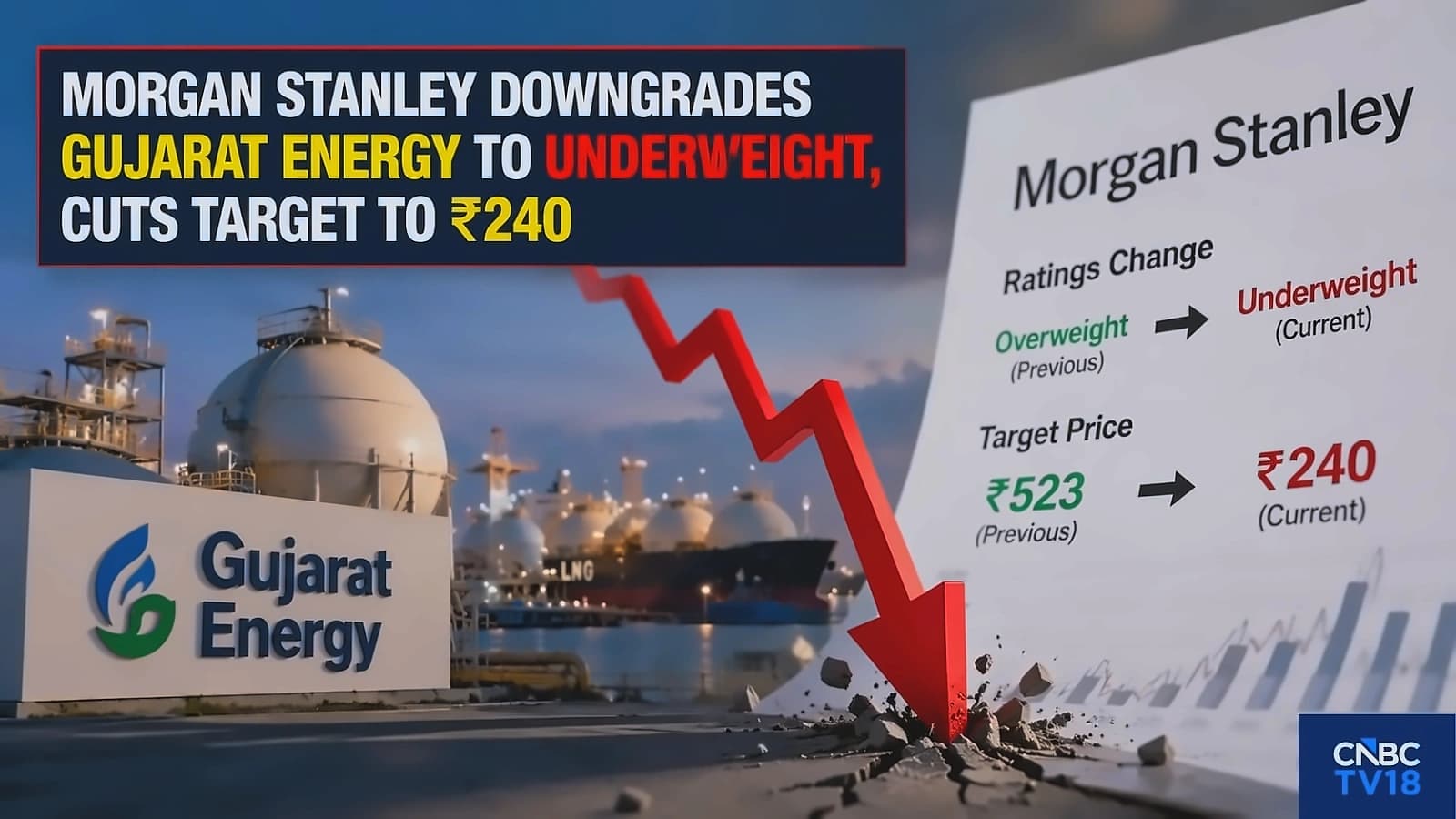
While most gas companies struggled, Gujarat Energy Ltd (formerly Gujarat Gas Ltd) demonstrated how strategic restructuring could build resilience even amid sector headwinds. The company completed a historic merger of GSPC, GSPL, and GSPC Energy, effective May 1, 2026, creating India's first integrated energy major. The transformation was reflected in the numbers: FY26 consolidated EBITDA reached ₹3,772 crore (up 16% YoY), with the board recommending a dividend of ₹8.90 per share—a 53% increase from ₹5.82 in FY25.
The merger delivered immediate synergies. The gas trading segment (from GSPC) contributed approximately ₹1,300 crores to EBITDA, with trading volumes of 10.2 mmscmd. The company brought approximately ₹7,200 crores of tax losses into the merger, with around ₹2,800 crores absorbed in FY24-25 and ongoing utilization continuing. Perhaps most impressively, Gujarat Energy demonstrated remarkable operational resilience in its industrial business. The Morbi ceramic cluster, India's largest ceramic hub, saw gas consumption jump more than 20-fold in less than three months between March-May 2026—from 0.36 MMSCMD in March to 8 MMSCMD by late May. The number of gas-consuming units in Morbi increased eight-fold, rising from 83 to 710 during this period. This dramatic recovery showcased the benefits of vertical integration, as Gujarat Energy could source fuel from alternative markets outside the Middle East to maintain uninterrupted supply during the crisis. Transcripts
Building Resilience: Storage Investments and Long-Term Growth
The crisis exposed critical vulnerabilities in India's LNG infrastructure, prompting strategic responses. Petronet LNG announced plans to add seven new LNG storage tanks across its network, including two at Gopalpur in Odisha, one at Kochi in Kerala, and further expansion at Dahej in Gujarat. India currently operates 23 LNG storage tanks, with Petronet operating 10 of them. The Dahej terminal has eight tanks with 22.5 MMTPA annual capacity, while Kochi has two tanks with 5 MMTPA capacity. These facilities were designed for routine operations rather than extended supply interruptions. The additional storage, expected to take about three years to complete, would provide a larger supply buffer and support continuity during periods of supply disruption or global shipping delays.
Looking beyond the immediate crisis, structural growth drivers remain intact for the CGD sector. The government launched National PNG Drive 2.0 in January 2026, targeting 30,000 PNG connections per day by June 2026. The initiative was already showing results—CGD companies activated over 3.1 lakh new connections across homes, hostels, commercial establishments, and canteens in March 2026 alone, the highest monthly number on record. A government mandate under the Natural Gas and Petroleum Products Distribution Order 2026 required LPG supply to be discontinued within three months for households in PNG-served areas, creating a structural demand trigger. MGL reported strong execution on household connections during FY26, connecting 3,42,157 domestic households and reaching 3.21 million total. The company added 1,18,590 CNG vehicles during the year, bringing total CNG vehicles to 12.84 lakh. Transcripts +1
The Path to Recovery
As the crisis abates, the recovery trajectory is taking shape. Qatar has indicated it can restore about 50% of its production capacity within a month after safe navigation through the Strait of Hormuz is restored, and 80% within two months. The June 15 formal US-Iran peace deal and June 19 Strait reopening provided the permanent clearing of this pathway. Nomura estimates up to 28% upside on 11 oil and gas stocks post the peace deal. For the CGD companies, margin recovery is expected as spot prices moderate and supply conditions improve. MGL management indicated an endeavor to maintain more than ₹8 EBITDA per SCM in FY27, supported by Henry Hub prices stabilizing below $3 and higher Brent prices ($90-100 vs $65-70 earlier) helping industrial/commercial realizations. Transcripts +1
The current 8-14% decline in share prices across the gas sector since February 2026 may present opportunities for long-term investors. The crisis has accelerated structural changes—faster PNG adoption, strategic mergers like Gujarat Energy's, and increased focus on supply security through storage investments. While the near-term remains challenging with ICRA noting that return to normalcy may take a couple of quarters, the long-term fundamentals of India's gas story remain intact. The government push for 15% natural gas in the energy mix by 2030, the expansion of CGD networks to 400+ geographical areas, and the inherent cost advantages of CNG over liquid fuels provide a solid foundation for growth. The companies that navigate this crisis successfully—through vertical integration, strategic sourcing, and operational efficiency—will emerge stronger in the post-crisis landscape.