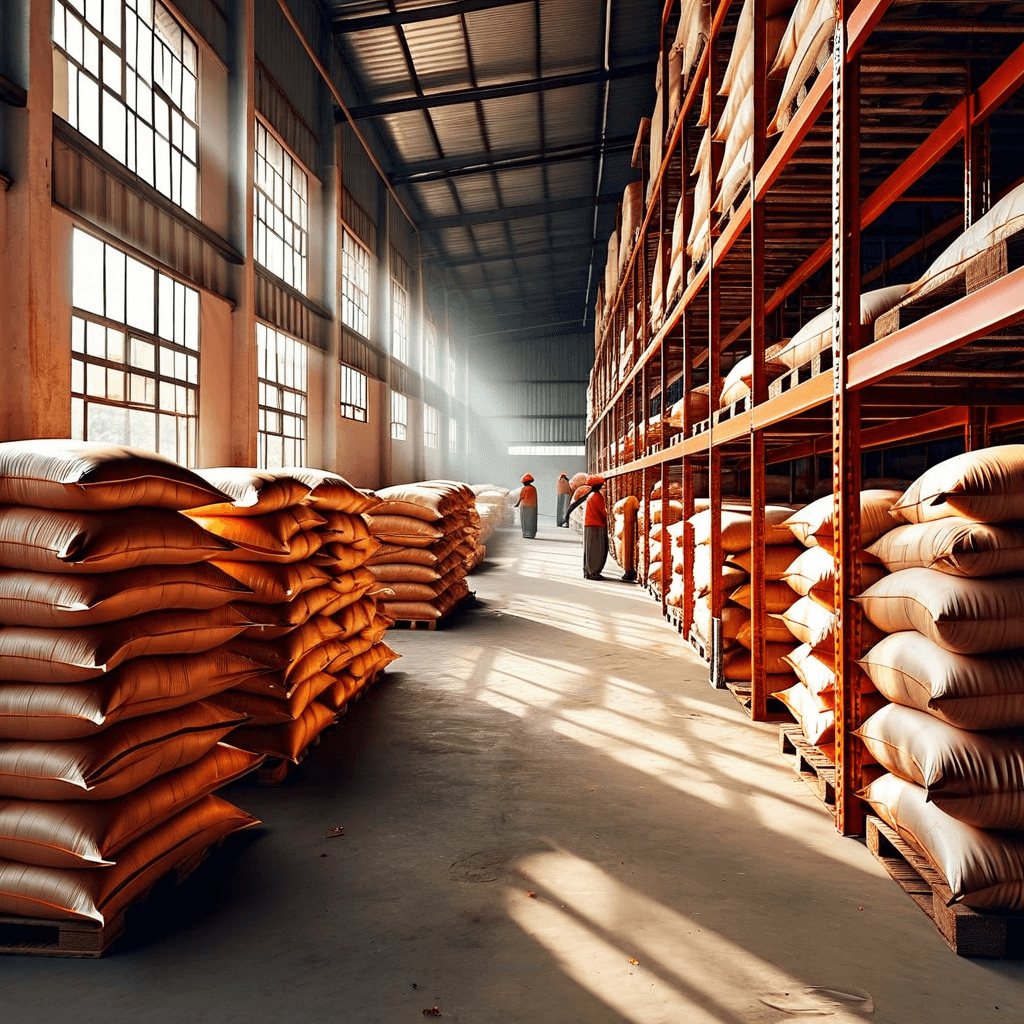
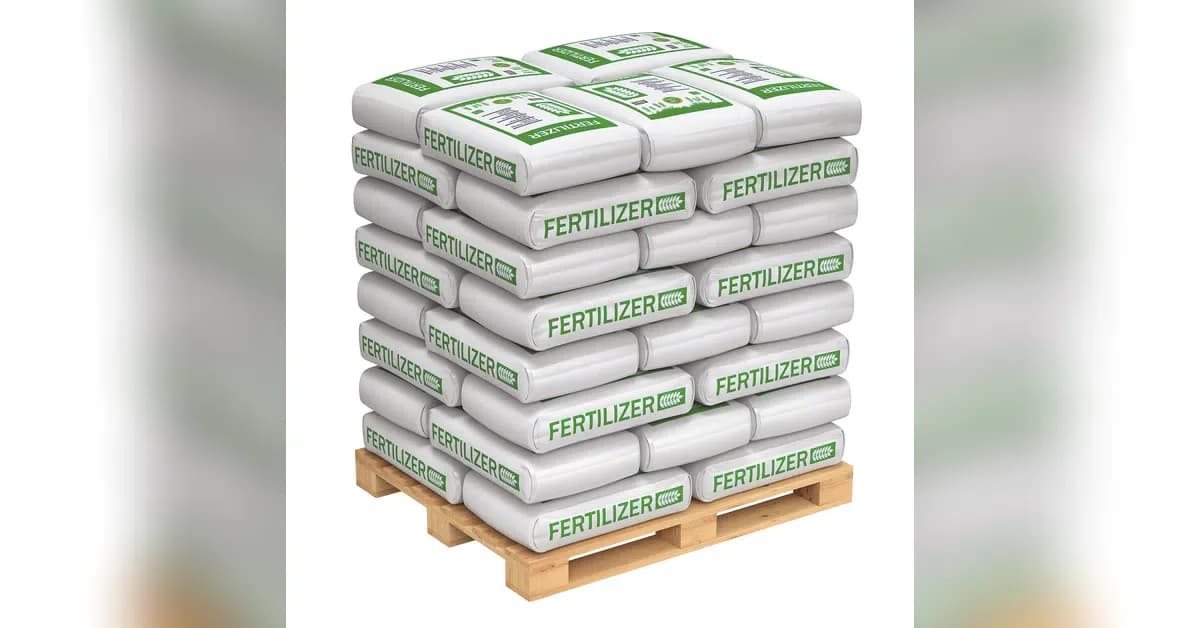
Global phosphate fertilizer prices have surged 40% above pre-war levels, with India's latest DAP procurement landing at $930-935 per ton—up from $667.50 just months earlier. This isn't just a number on a spreadsheet. For Indian agriculture, which depends on timely fertilizer availability for the monsoon sowing season, these price spikes create immediate pressure on both farmers and government finances. The situation is even more severe for urea, where prices have nearly doubled compared to pre-war baselines. India, as the world's largest DAP buyer, finds itself at the mercy of geopolitical disruptions in the Middle East, sulfur supply constraints, and elevated freight risks—all converging just as farmers prepare for the critical Kharif planting window.
How the ₹15,000 Crore Monthly Subsidy Works
The government's response comes through the Nutrient Based Subsidy (NBS) scheme, which provides fixed per-kilogram subsidies for phosphatic and potassic fertilizers. In March 2026, the Finance Ministry sought Parliament approval for an additional ₹19,230 crore for fertilizer subsidies—₹15,000 crore specifically for the NBS Policy, including ₹9,000 crore for imported P&K fertilizers. For Kharif 2026, the Cabinet approved ₹41,534 crore, a 12% increase from the previous year. This massive fiscal intervention ensures fertilizers reach farmers at subsidized, affordable prices despite global volatility. Unlike urea, which has a government-fixed maximum retail price of ₹242 per 45 kg bag, P&K fertilizers operate under a decontrolled MRP system where companies set "reasonable" prices while the government fixes subsidy rates per nutrient.
The Fiscal Burden: When Every $100 Costs ₹29,000 Crore
The mathematics of this subsidy system are unforgiving.
The recent IPL urea tender alone, booked at more than $400 per tonne above February prices, added roughly ₹9,000 crore to FY27 obligations. The DAP tender added several thousand crore more. Two procurement decisions in two weeks committed the equivalent of a small Union ministry's annual budget. Historically, the total fertilizer subsidy bill was around ₹81,000 crore pre-pandemic.
While it normalized to around ₹1.9 lakh crore in FY24-25, FY27 projections suggest another overshoot above ₹2 lakh crore as the government absorbs costs to shield farmers.
Working Capital Squeeze on Manufacturers
The subsidy system creates its own set of challenges for fertilizer companies. Under the Direct Benefit Transfer (DBT) framework, 100% of subsidy is released to companies only after actual sales to farmers via Point of Sale systems. This improved transparency but extended cash conversion cycles significantly. When subsidy payments are delayed, companies must rely on short-term borrowing to fund operations, creating a disconnect between accounting profitability and actual cash generation. Even in years of healthy reported profitability, interest costs can rise due to working capital pressures. The government has established a Special Banking Arrangement—an off-budget facility through public-sector banks that finances subsidy arrears at concessional rates—to help producers avoid working capital crises when payouts lag. This mechanism proved critical in absorbing the March 2026 production shock without causing bare shelves in April.
The Bare-Breakeven Reality for DAP Importers
Rising raw material costs have squeezed margins to razor-thin levels. The rating agency ICRA estimates that without the special DAP package—an additional ₹3,500 per tonne subsidy introduced in July 2024 and made open-ended in January 2025—DAP importers would be losing money on every tonne they sell. With it, they break even—barely. The government has responded to rising input costs by adjusting NBS rates upward by 10% for nitrogen, phosphate, and sulfur nutrients for Kharif 2026, raising the DAP subsidy to approximately ₹32,787 per tonne. However, market participants expect the government to maintain additional financial support beyond NBS, as even these increased rates may not fully cover the gap between landed costs and retail prices.
Why Urea and Phosphate Face Different Pressures
The pricing dynamics differ significantly between urea and phosphate fertilizers. Urea's primary cost driver is natural gas, which accounts for 70-80% of production costs. India's domestic urea production was curtailed by 25% in March 2026 due to natural gas shortages exacerbated by the Strait of Hormuz closure. Moreover, Gulf countries account for around 75% of India's urea imports, creating concentrated geopolitical exposure. Phosphate fertilizers face a different set of pressures: sulfur input constraints (the Middle East supplies nearly half of global sulfur output), phosphoric acid costs, and freight risk premiums. This explains why urea prices have nearly doubled while DAP is up 40%—yet urea consistently accounts for 65-70% of total fertilizer subsidy allocations due to its volume dominance and complete price control.
The Strategic Calculus: Oversubscribing at Peak Prices
India's procurement strategy reveals a calculated trade-off between cost optimization and supply security. In May 2026, India contracted 1,346,500 tons of DAP—12% more than the 1.2 million tons originally sought—at elevated prices of $930-935 per ton. This oversubscription at peak prices signals urgency to international suppliers and reinforces their pricing power. However, it also ensures adequate pre-monsoon inventory and provides a buffer against further supply chain disruptions. The results are visible: DAP stocks have more than doubled to 24.24 lakh metric tons from 11.85 LMT a year ago, while NPK stocks rose to 57.21 LMT from 34.44 LMT.
This supply security-first approach accepts higher fiscal costs to prevent agricultural production losses during the critical sowing window.
The Path Forward: Self-Sufficiency and Backward Integration
The long-term solution lies in reducing import dependency through domestic capacity expansion. For urea, six new mega-plants have added 76.2 lakh metric tons per annum capacity, with record production of 31.4 MMT achieved in 2024-25. The goal is to eliminate urea imports by the end of 2026. Once the long-delayed Talcher plant in Odisha commissions in late 2027, the urea subsidy bill could fall by 20% or more as more supply comes from regulated domestic cost rather than imported spot. For phosphate fertilizers, complex fertilizer capacity is projected to jump ~25% over the next three fiscals, adding ~4 MTPA to the current ~16 MTPA base. Backward integration in sulfuric and phosphoric acid is expected to improve to ~60% in fiscal 2029 from ~50% in fiscal 2025, reducing exposure to volatile intermediate prices.
What This Means for the Future
India's fertilizer subsidy system represents a massive fiscal commitment to food security—projected at over ₹4.1 lakh crore for FY27, higher than the combined allocation for agriculture, education, and health. The government has demonstrated capacity to absorb these costs, as evidenced by the FY23 peak of ₹2.54 lakh crore being absorbed without macro disruption. However, the current approach commits substantial resources to inventory management and subsidy absorption rather than productive investment. As India pushes for Atmanirbhar (self-reliant) fertilizer production and introduces nano-fertilizers and specialty nutrients, the sector is evolving.
The sector is best viewed as a strategic utility offering demand stability but persistent earnings volatility—anchored by policy rather than pure market forces.