The Regulatory Shockwave
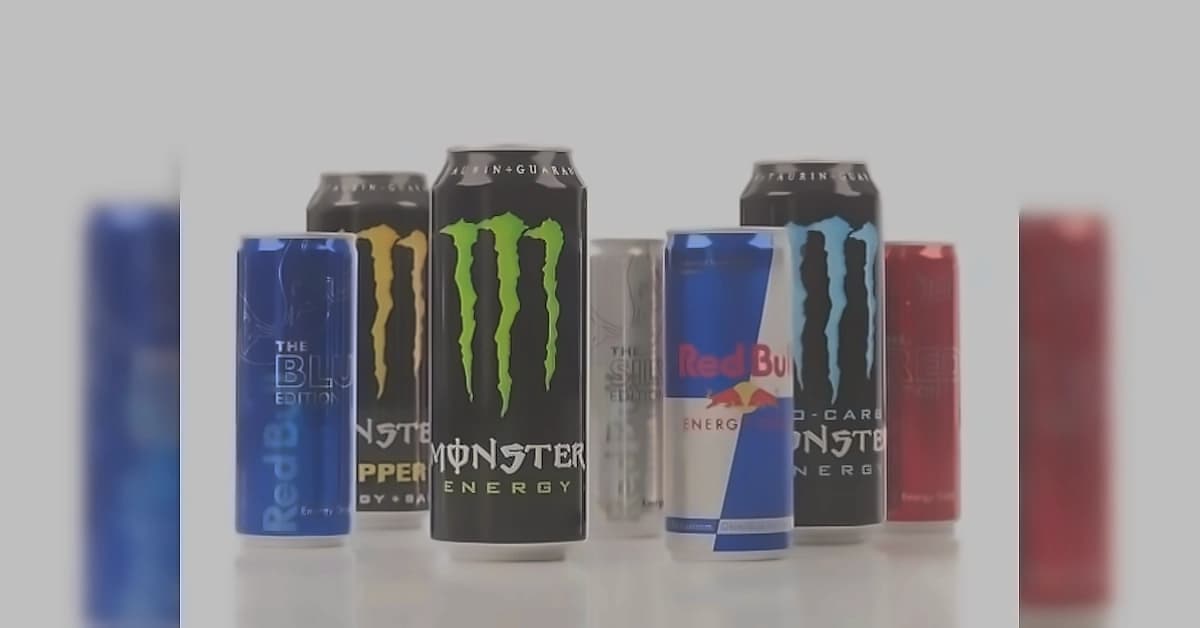
India's food safety regulator has dropped a bombshell on the country's booming energy drink market. The Food Safety and Standards Authority of India (FSSAI) has ordered beverage companies to stop using the term "energy drink" on labels within 90 days, rejecting objections from major brands including Pepsi, Red Bull, Monster Beverage, Reliance, and Hell Energy. The regulator's rationale is straightforward: there are no Indian standards for products marketed as "energy drinks," and claims like "vitalizes body and mind" or "helps in general weakness" could mislead consumers.
This isn't a minor paperwork adjustment. India's energy drink market is projected to reach $1.6 billion by 2028, growing at 12.6% annually—faster than in the United States and China. Volumes rose nearly 100% annually between 2018 and 2023. The regulatory intervention hits a sector that has exploded since Pepsi launched Sting in 2017, with its affordable 20-rupee ($0.21) plastic bottles becoming popular among teenagers and rural consumers. The question now isn't just about compliance costs—it's about who survives the transition and who gets left behind.
Pepsi's Sting: The Biggest Target
Pepsi's Sting finds itself squarely in the regulatory crosshairs, and for good reason. Sting isn't just another energy drink—it's the market leader, having captured a staggering 86% volume share by 2021, up from just 2.5% in 2017. This dominance was built on a disruptive pricing strategy: while Red Bull cost around $1.38 per 250ml can at launch, Sting entered at $0.63 and later dropped to $0.25, making it accessible to mass-market consumers. The brand's "Energy Bole Toh Sting" (Energy Means Sting) tagline and campaigns featuring Akshay Kumar showing "electrifying energy" sending lightning through one's body became cultural touchstones for young Indians.
The labeling mandate strikes at the heart of Sting's value proposition. The brand's entire identity is built around the "energy drink" category—remove that descriptor, and you remove the mental shortcut consumers use to understand what the product does. For the 15-19 age demographic that drove Sting's initial success, this creates immediate confusion. Research shows that 68% of Indian consumers prioritize affordability when choosing energy drinks, with Sting dominating Tier 2/3 cities due to its ₹25 price point. These price-sensitive consumers are also the most likely to switch brands when faced with category confusion. The impact on Sting's revenue growth could be severe: with volumes rising nearly 100% annually between 2018 and 2023, any disruption to brand recognition could significantly slow this momentum.
The compliance costs alone are substantial. Packaging redesign costs range from $20,000–$50,000 for multi-SKU systems from specialist agencies. Given Pepsi's extensive Sting portfolio across multiple flavors and pack sizes, total redesign costs could reach ₹2–5 crore ($240,000–$600,000). Per-unit printing costs add approximately ₹0.50–₹1.00, while regulatory testing adds another ₹0.25–₹0.50 per unit. For a company producing millions of units annually, these incremental costs could reach ₹5–8 crore ($600,000–$960,000) in the first 90 days alone.
Red Bull: Premium Brand as Armor
Red Bull faces the same regulatory requirements but enters the transition with fundamentally different advantages. The company's premium positioning—charging INR 125 for 250ml versus Sting's INR 20—has always been about selling performance credibility, not volume. This premium pricing provides margin cushion to absorb compliance costs and marketing adjustments that mass-market players simply don't have.
More importantly, Red Bull's brand equity runs deeper than category labels. The iconic "Gives You Wings" slogan and distinctive slim can create brand recognition that transcends regulatory terminology. Red Bull built its market position by creating and owning the "energy drink for performance/active/adventure lifestyle" segment. While FSSAI's prohibition of "vitalizes body and mind" claims directly attacks this positioning, Red Bull's lifestyle marketing—extreme sports sponsorship, events, cultural integration—provides alternative communication channels. The company spends an estimated 25% of revenue on marketing, much of it on experiences rather than product claims.
However, Red Bull isn't immune to the damage. The regulatory action creates a disconnect between the brand's promise and permissible communication. When you can't say your product "vitalizes body and mind" or "gives you wings," you force consumers to question the brand's authenticity. For urban professionals and fitness-focused consumers who pay premium prices, this cognitive dissonance could erode the perceived value proposition. Red Bull's challenge will be maintaining its premium positioning while communicating benefits through lifestyle and experience rather than functional claims.
Reliance's Campa Energy: The Newcomer's Dilemma
Reliance Consumer Products launched Campa Energy as part of its broader beverage strategy, with accessible pricing points of Rs 10, 20, 30, and 50 across different pack sizes. The company's overall FMCG business doubled to Rs 22,000 crore in FY26, with Campa contributing significantly. But as a relatively newer entrant compared to established players, Campa Energy has less entrenched brand recognition to withstand labeling changes.
The 90-day compliance period creates unique operational challenges for Reliance. The company must manage existing inventory with non-compliant labels while transitioning to new packaging. With Campa Energy achieving Rs 4,700 crore sales in FY26, inventory write-offs could reach Rs 50–100 crore ($6–12 million) depending on stock levels. Supply chain disruption adds another layer of complexity—managing dual inventory streams (compliant and non-compliant) increases warehousing costs by 25–30%.
Reliance does have structural advantages that could help. The company's investment of Rs 40,000 crore in food parks provides vertically integrated operations that can adapt quickly to regulatory changes. Access to Reliance Retail's network of over 18,000 stores provides owned distribution channels where product education and positioning can be controlled directly. Campa's "India Ka Thanda" (India's Cold Drink) positioning can potentially evolve without the "energy drink" descriptor, leveraging the brand's nostalgic heritage from the 1970s-1980s.
Monster's India Entry: Timing is Everything
Monster Beverage faces the most precarious position of all major players. The company entered India later than Red Bull (2007) and has been pursuing a dual-brand strategy with premium Monster Energy and affordable Predator (60 rupees, half the price of Monster) targeting the emerging middle class. Monster's India expansion coincides with regulatory uncertainty, potentially delaying investment decisions and market penetration strategies.
The timing couldn't be worse. Monster has been leveraging Coca-Cola's distribution network following their strategic partnership, but regulatory restrictions on "energy drink" promotion may limit the effectiveness of this partnership. The company's strategy of creating a "price pack architecture" unique to India—where Predator at 60 rupees targets consumers who "cannot afford a Monster"—becomes more challenging when the category itself is under attack.
Monster's global experience provides some buffer. The company operates in 160 countries worldwide and is growing particularly across Southeast Asia, China and India. International sales represent 45% of revenue, with all regions reporting double-digit growth in Q1 2026. This global diversification means Monster can absorb India-specific setbacks better than domestic players. But India represents too strategic a market to abandon—the company has explicitly stated that with half the world's population, Asia represents a big opportunity, with energy drink consumption averaging just 5 servings per year in India compared to 54 in the United States.
The Compliance Cost Divide
The regulatory action exposes a stark divide between large-scale manufacturers and smaller players. Manufacturing MSMEs in India face annual compliance costs of Rs 13–17 lakh ($15,600–20,400) for over 1,450 regulatory obligations. The FSSAI mandate adds 25–30% to this burden. Small players "often lack specialised legal or quality assurance teams", forcing them to rely on expensive external consultants for compliance implementation.
For large players like Pepsi, Red Bull, and Monster, compliance represents a manageable operational challenge. Pepsi's high-volume production reduces per-unit compliance costs significantly. Red Bull's premium pricing provides margin cushion. Monster's global resources enable investment in compliance infrastructure. But for smaller players like Hell Energy, the compliance burden could represent 5–10% of revenue versus less than 1% for large players.
This differential impact creates competitive implications that extend beyond the 90-day transition period. The compliance burden differential could accelerate market consolidation, with large players gaining market share as smaller competitors struggle with transition costs. With 29% of compliance obligations carrying criminal provisions including imprisonment, small players may exit the market rather than risk regulatory violations.
The Road Ahead
The FSSAI mandate represents a structural shift in India's energy drink market that will fundamentally reshape competitive dynamics. Companies with strong brand equity, premium positioning, and diversified portfolios are better positioned to weather the transition. The 90-day compliance window provides a short period for adaptation, but the longer-term implications suggest sustained regulatory scrutiny of functional beverage categories.
The market growth projection to $1.6 billion by 2028 remains achievable but may require a 6–12 month extension due to transition-related growth deceleration. The regulatory action may accelerate category evolution from traditional energy drinks toward functional beverages, potentially supporting long-term growth through innovation. Companies that approach compliance as an innovation opportunity rather than merely a regulatory burden will be best positioned to capture market share from competitors and drive long-term growth in India's evolving functional beverage market.
The winners will be those who can maintain brand recognition without category labels, leverage broader portfolios to absorb disruption, and innovate within regulatory constraints. The losers will be those who depend too heavily on functional claims, lack the resources for rapid adaptation, or operate in price-sensitive segments where consumer confusion drives switching. In India's $1.6 billion energy drink market, the regulatory reset has just begun.