Under CAS, continuous trading for F&O stocks halts at 3:15 PM, followed by a 15-minute auction where orders are pooled and matched at a single equilibrium price. This replaced the previous Volume-Weighted Average Price (VWAP) method used for closing prices and derivatives settlement.
The disruption was immediate. Equity options contracts traded fell 30% month-on-month in August, while index options premium Average Daily Turnover (ADTO) dropped 20% to Rs 53,900 crore—the lowest level since February 2025. The culprit? Uncertainty around expiry-day trading and thin liquidity during the auction window. On September 3, the BSE Sensex fell approximately 2,100 points during the first five minutes of the auction before recovering, highlighting the volatility injected into the system.
Yet by September, the market demonstrated remarkable resilience. Industry-wide index options premium ADTO recovered to Rs 68,100 crore, broadly matching July levels before CAS implementation. This rebound was driven by two factors: market participants adapting to the new framework and a spike in the India Volatility Index (VIX). Higher VIX levels lead to increased option premiums as the market factors in greater uncertainty and potential price swings. When VIX rises, option premiums increase because the market anticipates larger movements in either direction, adding extra value to options contracts.
NSE vs BSE: The Expiry Day Battle
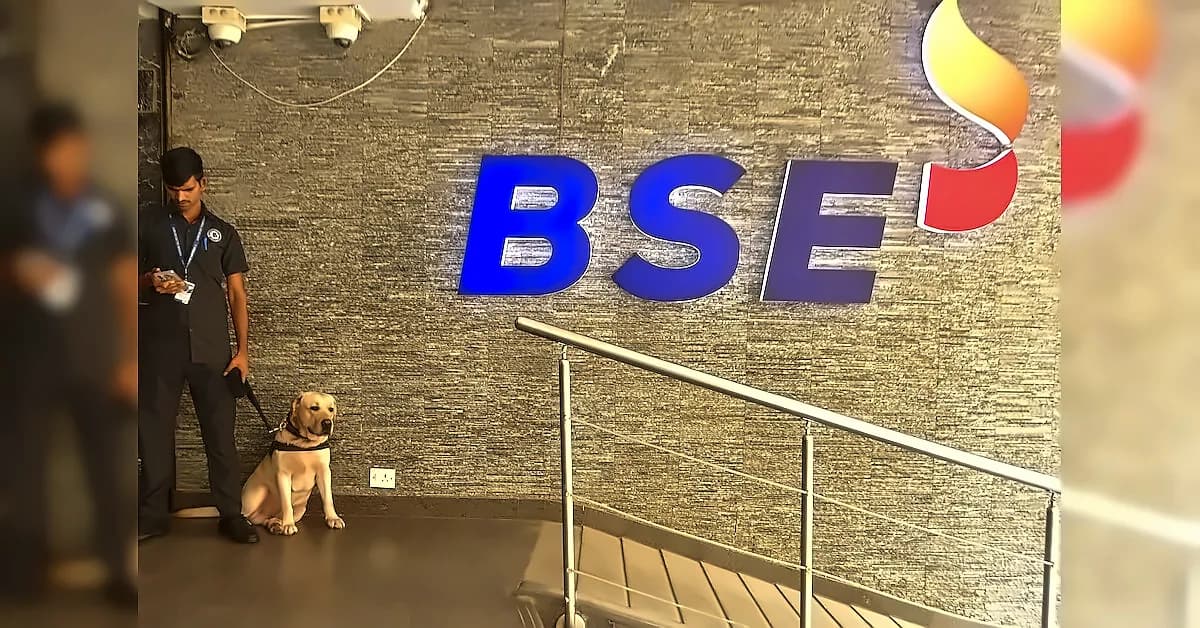
The recovery hasn't benefited exchanges equally. BSE's options market share actually declined to 34.1% in September from 34.7% in August, despite its ADTO increasing 24% month-on-month to Rs 23,200 crore. The paradox is explained by NSE's structural advantage: an additional expiry day.
Following SEBI's September 2025 reforms, NSE shifted its entire derivatives segment to Tuesday expiry, while BSE adopted Thursday expiry. NSE's Tuesday cycle provides traders with three sessions (Friday, Monday, Tuesday) to strategize and offset positions before expiry—a "theta-play" advantage that's notably stronger on NSE. BSE's Thursday expiry offers only two sessions (Wednesday-Thursday grouped post-NSE expiry), making it tougher to attract traders.
Bernstein's analysis shows the CAS impact hit BSE harder. During August 1-28, BSE's options premium ADTO fell 22%, compared with a 14% decline at NSE. BSE also saw contracts traded decline 30%, against a 7% fall at NSE. The brokerage expects BSE's market-share gains to continue through FY27, but notes most gains should accrue by Q4FY27, after which revenue growth will increasingly mirror overall market-volume growth.
MCX: The Commodities Powerhouse
While equity derivatives faced headwinds, MCX delivered a standout performance. The exchange achieved a 44% month-on-month rise in energy options ADTO in September, while futures ADTO fell 7%. This divergence reflects structural advantages in the commodities segment.
MCX's dominance is nearly absolute in key categories: 99.97% market share in energy (crude oil and natural gas), 100% in base metals, and over 98.8% in overall commodity futures. Gold alone makes up more than half of MCX's business (51.7%), with silver adding another 23%. This quasi-monopoly position creates powerful network effects—liquidity attracts more liquidity, making it difficult for competitors to catch up.
The energy options surge was driven by geopolitical volatility. The joint US-Israel military strikes on Iran (Operation Epic Fury, February 28, 2026) and Iran's consequent closure of the Strait of Hormuz drove energy commodity prices higher. This created increased demand for hedging instruments and higher option premiums due to elevated uncertainty. MCX's complete energy hedging suite—including crude oil futures and options, natural gas futures, and India's first electricity futures contract—provides participants with transparent, liquid, INR-denominated tools to manage price risk.
Groww: Margin Trading Recovery and Commodity Diversification
For brokers, the CAS disruption created both challenges and opportunities. Groww's Margin Trading Facility (MTF) book plateaued in August, reflecting broader market uncertainty and risk aversion during the initial CAS implementation. The platform had tightened risk controls across MTF and intraday trading following heightened volatility in Q4 FY26.
Yet by September, Groww's MTF book recovered 10% to Rs 4,300 crore. This rebound reflects market adaptation to CAS mechanics and the fundamental demand for leverage. MTF allows investors to buy stocks by paying only 20-30% of the total value upfront, with the broker funding the balance. Despite CAS disruption, this capital efficiency feature continues to attract investors seeking to optimize their deployment.
More significantly, Groww achieved a 26% sequential jump in commodity turnover in Q2 FY27. The platform launched commodity trading in October 2025 and rapidly expanded its offerings. By February 2026, it had added NSE commodity derivatives across multiple products including Crude Oil, Natural Gas, Gold, Silver, Copper, and Aluminium, along with Electricity futures on both NSE and MCX.
This commodity expansion strategically reduces Groww's dependence on equity derivatives volumes. Stocks and equity derivatives together accounted for 75.7% of Groww's total income in Q1 FY26, but their combined contribution fell to 68.4% by Q1 FY27. This decline reflected not a contraction in core businesses, but faster growth of newer revenue streams including commodities and MTF.
IPO Ecosystem: Depositories and Merchant Bankers
The IPO market recovery creates synergistic revenue opportunities across intermediaries. Mainboard IPOs increased to 18 in August from 13 in July, demat account additions rose to 29 lakh in July from 26 lakh in June, and average delivered quantities increased 10% month-on-month in August.
KFIN Technologies, India's largest investor solutions provider to mutual funds (servicing 25 out of 42 AMCs with 60% market share), has partnered in over 1,700+ IPOs—over 50% of IPOs in India. IPO activity drives multiple revenue streams for KFIN: registration services for managing investor applications, corporate action processing post-IPO, and demat account maintenance fees for new investors.
Nuvama Wealth Management, a SEBI-registered merchant banker, has advised on landmark transactions including the First Stock Exchange IPO in India, First Power Transmission InvIT IPO, and First General Insurance & First Life Insurance IPO. With presence in 24 States & Union Territories and a network of more than 19,500+ sub-brokers, Nuvama is consistently amongst the top-ranked brokers in Retail and HNI distribution for IPOs.
Jefferies' Top Picks and the Competitive Landscape
Jefferies selected Groww, MCX, KFIN Technologies, and Nuvama Wealth Management as top capital market picks with 'Buy' ratings, based on their collective exposure to three key recovery themes: recovering derivatives volumes, IPO activity, and commodities trading.
The easing of CAS-related disruption is altering competitive dynamics between discount brokers like Groww and full-service brokers like Nuvama. Discount brokers run on execution delivery systems with high-throughput matching engines and leaner technology stacks, enabling faster adaptation to market structure changes like CAS. Full-service brokers operate on advisory delivery systems requiring suitability workflows and deeper client relationships—infrastructure that creates slower adaptation but offers resilience in uncertain periods.
Groww demonstrated this resilience during CAS disruption, adding approximately 70,000 active NSE clients in July while the broader industry lost clients. Its share of active NSE clients rose to 29% from 26% a year earlier. Total transacting users increased 1.4% month-on-month to 2.3 crore in August, and total customer assets rose 3.8% to Rs 3.76 lakh crore.
Systemic Interdependencies and Future Outlook
The recovery of exchange-level volumes creates powerful feedback loops with broker-level revenue growth. Exchange volume recovery drives broker transaction fees, data services demand, clearing revenues, and ancillary services like MTF. Conversely, broker technology investment and client acquisition drive exchange volumes.
However, these interdependencies also create systemic risks. NSE accounts for approximately 93% of India's cash-equity market, creating single-point-of-failure risks. Indian exchanges derive 70-80% of revenue from transactions, compared to international peers like LSEG and ICE which obtain 45-70% from tech and data services. This heavy dependence on trading volumes creates vulnerability to regulatory changes or market structure shifts like CAS.
The next few expiry cycles will show whether trading activity recovers further as participants become more accustomed to CAS or whether changes are needed to the mechanism. For now, expiry-day uncertainty and shallow auction liquidity remain the key issues weighing on equity derivatives. But the September recovery suggests the market is adapting—and the winners in this new structure are already emerging.