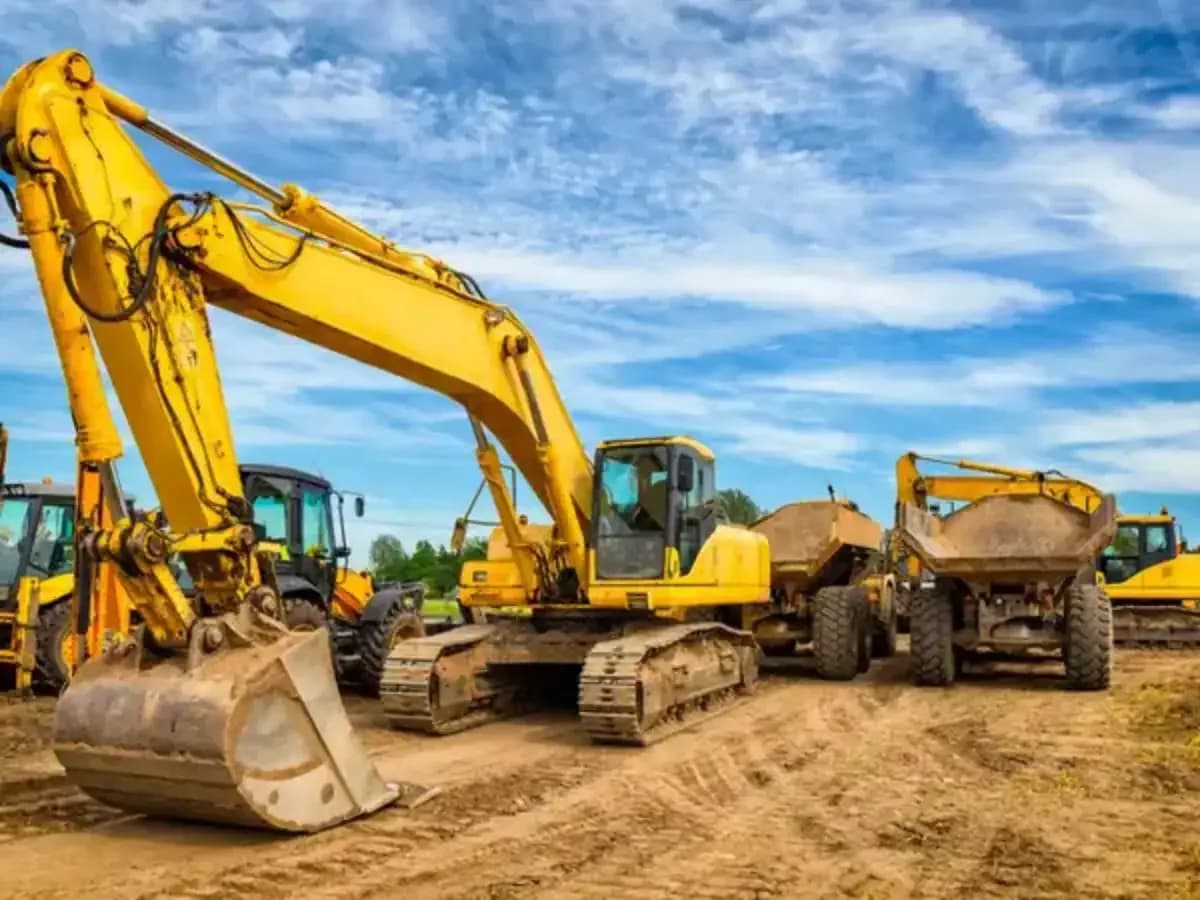
Last year, a critical shipment of German tunnel boring machines (TBMs) got stuck in China. These weren't just any machines—they were destined for India's flagship Mumbai-Ahmedabad bullet train project. When Chinese export clearances dragged on, billion-dollar infrastructure projects faced uncertainty. The episode exposed a harsh reality: India's massive infrastructure ambitions remain tethered to supply chains it doesn't control. This wasn't merely about delayed machines. It highlighted how geopolitical tensions, export restrictions, or supply chain disruptions can directly derail project timelines. As India ramps up spending on metros, railways, highways, ports, airports, and mining, the question has become urgent: who will build the machines that build India?
The $1.2 Billion Answer
The program targets high-value, technologically advanced equipment where import dependence is most acute—tunnel boring machines, firefighting systems, elevators for high-rise buildings, ropeway systems, backhoe loaders, tower and crawler cranes, engines, and transmission systems. At its core lies a performance-linked incentive (PLI) structure: manufacturers get rewarded for incremental production and output, not just for setting up shop. Crucially, the scheme mandates a 50% domestic value addition (DVA) threshold, compelling companies to source at least half their components locally—engines, sensors, specialty steel, and control systems. This isn't just about assembly; it's about forcing the development of a domestic supplier ecosystem.
The Strategic Imperative
The numbers tell the story of vulnerability. India's mining and construction equipment market exceeded $17 billion in 2025, growing at 10-12% annually. Yet, the country imports nearly half its construction equipment and components by value, heavily from China. The TBM market alone is worth ₹8,000 crore (2023-24) and projected to cross ₹11,000 crore by 2029-30.
While this diversification away from China is positive, it also underscores the leverage foreign suppliers hold over India's infrastructure destiny. The BCG-CII report estimates India's industry could grow into a $180-200 billion market by 2047, but achieving that requires deeper localization and stronger supplier ecosystems.
The Cost Competitiveness Challenge
Indian manufacturers face structural headwinds.
In price-sensitive segments, especially Tier 2 and Tier 3 markets, imported Chinese machines have undercut domestic players so sharply that established Indian OEMs have lost significant market share. The reasons are fundamental: Indian OEMs struggle with higher steel costs, higher fabrication costs, and limited access to locally manufactured hydraulic components. Even when machines are assembled in India using imported Chinese components to keep costs low, they still end up more expensive than fully imported equipment. The incentive scheme aims to bridge this gap through direct financial support, but the cost differential is substantial. Without tariffs, India saves only 3-5% on total cost of ownership compared to China; with tariffs applied, savings can exceed 30%. The scheme's success hinges on whether these incentives can offset the structural cost disadvantages quickly enough to matter.
The Infrastructure Demand Engine
The incentive plan arrives alongside one of the world's largest infrastructure buildouts. Capital expenditure across mining and construction equipment-linked sectors is projected to rise from ₹5.5 lakh crore in 2025 to ₹9-10 lakh crore by 2030. The Bharatmala Pariyojana targets 34,800 km of optimized road corridors, having already completed 18,926 km by November 2024. This drove a 40% year-on-year increase in road construction equipment sales in FY 2023-24. The National Infrastructure Pipeline plans ₹112 trillion spending over five years. Metro rail networks are spreading across cities, with the global TBM market growing at 6.4% CAGR to reach $10.14 billion by 2030. More than 70 metro rail projects out of 100 rely on TBMs. This creates a guaranteed domestic market that the incentive scheme aims to capture for Indian manufacturers.
The Procurement Policy Push
Government procurement rules already provide preference to "Make in India" products, but the incentive scheme strengthens this framework. Public procurement accounts for approximately 24% of India's GDP and is expected to rise. The policy provides preference to local suppliers meeting minimum local content thresholds, set at 50% unless specified otherwise. For government procurement of ₹5 million (~$77,172) and more, purchase preference margins apply to local suppliers. This creates a protected domestic market where manufacturers meeting the DVA requirements get preferential access to government contracts. The integration of demand-side procurement preferences with supply-side PLI incentives creates a comprehensive ecosystem designed to support domestic manufacturers from both ends.
The Manufacturing Capacity Gap
The scheme targets critical capacity constraints.
The challenges are technological: high-diameter machines demand ultra-high-strength steel and abrasion-resistant alloys that withstand extreme pressure. India lacks specialized metallurgy and large-diameter forging expertise. The heavy engineering industry has capacity in turbines and boilers but hasn't developed the gear and bearing technologies needed for TBMs. Modern TBMs are cyber-physical systems integrating geotechnical sensors, servo drives, electro-hydraulic controls—all import-dependent. India also lacks the industrial ecosystem and specialized human capital, requiring supplier clusters for cutters, seals, hydraulics, conveyors, and erectors. The incentive scheme aims to catalyze the development of these missing capabilities through targeted financial support.
The Supply Chain Development Strategy
The 50% DVA requirement is the engine for supply chain development. The scheme is expected to benefit companies like state-owned BEML, which has plans to manufacture TBMs domestically, along with equipment makers including Larsen & Toubro and Johnson Lifts. But the real impact will be on the supplier base. The industry is already seeing vendor consolidation and quality enhancement—Tata Hitachi halved its vendor count over the past decade, focusing on those who could scale and meet quality standards. Companies like ACE are mapping critical components and ensuring diverse sourcing options. The scheme will accelerate this by creating financial incentives for developing domestic alternatives to imported components. ICEMA has proposed a dedicated PLI scheme for construction equipment components to incentivize investments in "mother technology" production like hydraulic systems and electric drives. Parker Hannifin India's recent development of an advanced hydraulic piston pump indigenously demonstrates the potential.
The Technology Transfer Pathway
Partnerships with global manufacturers will be crucial. China's experience offers a blueprint: it started creating its TBM ecosystem in 1964, but a policy decision in the early 2000s required major foreign suppliers to set up local assembly and service bases as a condition for supplying projects. Training, maintenance, and component fabrication shifted onshore.
India is likely to see similar joint ventures emerge—BEML with global TBM manufacturers like Herrenknecht or Robbins, L&T with Japanese or European firms for tunneling technology, and deeper collaborations between Tata Hitachi and Hitachi Construction Machinery. The PLI framework allows global companies to participate through Indian entities, including joint ventures and wholly-owned subsidiaries, making technology transfer financially attractive.
The Implementation Risks
The scheme faces significant execution challenges. The principal risk is a sustained gap between budgeted infrastructure expenditure and physical project execution. Construction equipment demand depends on mobilized work, contractor cash flow, and fleet utilization, not sanctioned project values. FY2026 dispatches declined to 136,995 units as slower road construction and project delays weakened domestic demand. Technical readiness remains a challenge—government procurement preferences exist, but domestic manufacturers lack capabilities in highly specialized engineering. Building specialized component manufacturing takes time, and the scheme assumes rapid supply chain development that may not materialize on schedule. The Union Cabinet approval process and subsequent industry consultations on implementation guidelines also create timeline risks.
The Global Trade Uncertainty
Global trade dynamics add complexity. The Trump administration's tariffs of 20-60% on construction equipment and steel products have disrupted export markets. India exported over $1.4 billion worth of CE-related goods to the U.S. in FY 2023-24, and these tariffs make Indian exports less competitive. Joint ventures formed on predictable U.S. market access are being reassessed. Steel and raw material volatility is escalating input costs, affecting both domestic prices and global competitiveness. However, this disruption also creates opportunities. As companies seek to diversify away from China, India is increasingly viewed as a reliable manufacturing alternative. Markets in Latin America, the Middle East, Africa, and Southeast Asia offer growth avenues less exposed to American tariff regimes. The "China Plus One" strategy could benefit Indian manufacturers aligned with Make in India.
The Verdict
India's $1.2 billion incentive plan represents a strategic gamble that industrial capability and infrastructure capability are inseparable. The stakes are enormous—the country's next phase of growth depends not just on the roads, railways, and mines it builds, but on whether it can build the machines that build them. The scheme addresses genuine vulnerabilities exposed by China's export restrictions and aims to create a domestic manufacturing ecosystem that can support India's $180-200 billion market potential by 2047. But success is not guaranteed. The scheme must overcome structural cost disadvantages, build missing technological capabilities, develop supplier ecosystems from scratch, and navigate volatile global trade dynamics—all while infrastructure project execution faces its own delays. If it works, India transforms from a net importer to a self-reliant manufacturer with export potential. If it fails, the country remains hostage to foreign suppliers for its most critical infrastructure ambitions. The next seven years will tell which path India takes.