India's IT services sector is navigating a fundamental shift in how enterprises spend on technology. The days of unchecked growth budgets are fading, replaced by a laser focus on AI-led cost optimization. This transition is creating a challenging environment for Q1 FY27, with the top six Indian IT services companies expected to deliver constant-currency organic US dollar revenue performance ranging from a 1.7% decline to 1.1% growth quarter-on-quarter. The core driver? Enterprises are redirecting technology budgets toward artificial intelligence initiatives and Global Capability Centres (GCCs), prioritizing programs focused on cost optimization, outsourcing, and vendor consolidation rather than expanding overall IT budgets.
This shift is creating a "deflationary phase" for the industry. AI-driven productivity improvements are reducing demand for traditional IT services faster than new AI-related spending is emerging. The industry may see 2-3% annual deflation in traditional IT services revenues over the next couple of years as automation improves productivity and reduces service effort requirements.
Company Performance: A Tale of Divergence
The impact of this transition is playing out differently across companies. Wipro Limited finds itself at the lower end of the revenue growth range for several reasons. The company's large deal wins are primarily cost takeout or vendor consolidation deals requiring upfront investments, which impacts near-term profitability and revenue recognition. Europe continues to face headwinds with clients focused on maintaining competitiveness rather than growth initiatives, though management expects stabilization in the second half. Wipro is expected to guide for a 2% decline to flat sequential growth in constant currency IT Services revenue for Q2, reflecting limited near-term demand visibility. Transcripts
In contrast, Tech Mahindra Limited is positioned to lead among large IT companies. The company has delivered seven consecutive quarters of margin expansion to 11.1%. Growth is being driven by Communications, Retail, and BFSI verticals, while the Telco business has stabilized and shows pockets of growth potential. Their Project Fortius program continues to drive operational efficiencies and cost optimization, providing a competitive edge in a cost-conscious environment. Transcripts
The Mid-Cap Advantage
While large-cap companies grapple with transition challenges, mid-sized firms like Persistent Systems, Mphasis, and eClerx Services are posting relatively stronger organic growth. Their success stems from several factors. Mid-tier companies are leveraging domain specialization, hyperscaler partnerships, and agile structures to capture digital and AI-led opportunities. They're unburdened by massive headcounts and legacy portfolios, allowing them to aggressively pursue the transition to AI-led models.
Mphasis exemplifies this advantage. The company expects to deliver ~2X industry growth for FY26 based on Q1 performance and steady TCV to revenue conversion. Direct business accounted for 97% of revenue with 8.1% YoY growth, and BFS, Insurance, and TMT verticals delivered 20%+ YoY growth in Direct business. The Insurance vertical emerged as a particular growth engine with 20%+ sequential and 27.5% YoY growth. Transcripts
Forex Tailwinds: The Margin Cushion
Amid this demand weakness, the average 3% depreciation of the rupee against the US dollar during the June quarter is providing significant support to EBIT margins.
This means the 3% depreciation is contributing roughly 15-60 basis points of margin support.
The impact has been substantial in recent periods. In Q4 FY26, when the rupee weakened by roughly 3-4% against the US dollar, EBIT margins for the top six IT firms improved by about 40-320 basis points year-on-year purely from currency effects. Tech Mahindra received an estimated 66 bps margin benefit, TCS around 61 bps, and Infosys roughly 53 bps. For Q1 FY27 specifically, Equirus Securities expects these foreign exchange tailwinds to "support margins across most large IT companies, despite the muted revenue growth".
Deal Dynamics: The ROI Imperative
The growing enterprise focus on AI-led productivity gains and measurable ROI is fundamentally reshaping deal structures and timing. Enterprises are demanding clear ROI metrics before committing to AI transformation deals, leading to extended decision-making processes. Infosys reported that enterprise AI creates productivity benefits that must be "shared between clients and themselves," with discretionary spend expected to be "self-funded through AI-led productivity benefits". Transcripts
This focus on ROI is creating several structural changes. Deal tenors are increasing, with Total Contract Value (TCV) growing much faster than Annual Contract Value (ACV). Wipro noted that their pipeline shows "a good balance of both vendor consolidation, cost takeout deals, which are typically longer tenor and deals that are coming in in the areas of data, AI, and modernization". AI-powered deals require significant upfront investments, with Wipro acknowledging that executing mega deals "will ramp up over the next 4 to 6 quarters" with "margin profile weaker compared to the rest of portfolio". Transcripts
The Accenture Effect: Competitive Pressures Mount
Accenture's narrowed full-year 2026 revenue growth guidance to 3-4% from 3-5% reflects broader industry trends affecting Indian IT companies. The guidance reduction signals "weakness may extend into Q2 FY27" for Indian IT companies, with "slower decision-making and cautious discretionary spending". More concerning is
This "could intensify competitive pressures for mid-cap Indian IT companies".
The indirect impacts are equally significant. Accenture's experience with "delayed closure of large deals amid disruptions caused by the Middle East conflict" suggests similar delays for Indian IT firms. Weaker managed services bookings and lower guidance from global peers signal challenges for the first half of FY27. Accenture's managed services deal wins softened to USD 9.1bn, down 15% YoY, with growth moderating to 5% YoY in constant currency.
Sector-Specific Vulnerabilities
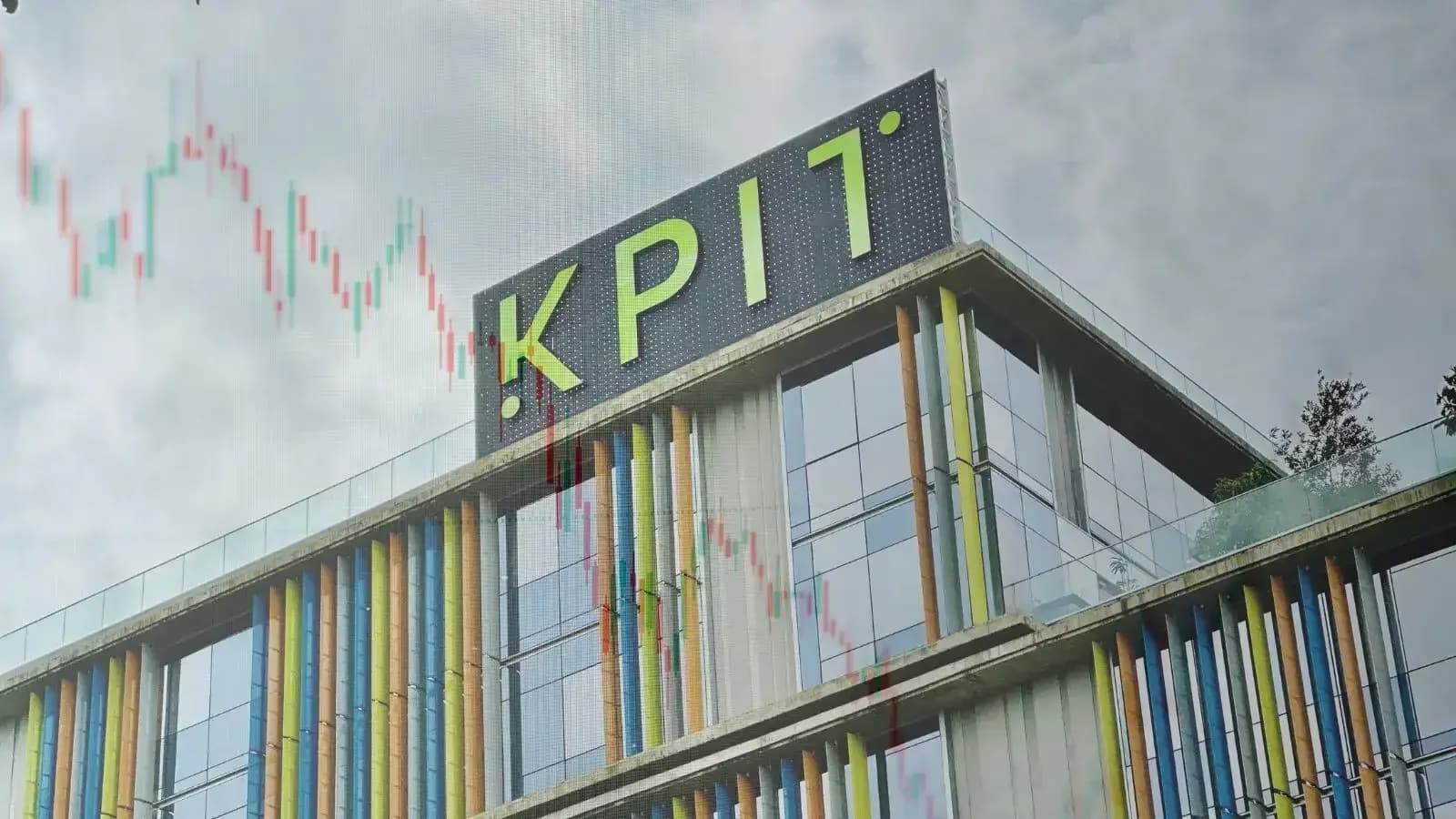
The current environment is revealing sector-specific vulnerabilities within the broader Indian IT landscape. KPIT Technologies unexpected 1% decline in US dollar-reported revenue, driven by European OEM profit warnings, highlights the risks of vertical concentration. The company expects Q1 FY27 revenues to decline about 1% year-on-year in USD terms, "primarily due to sudden actions by some European OEMs triggered by their recent profit warnings and adverse business outlook".
This impact "was not seen coming earlier and has been realised only in the recent weeks," indicating the sudden nature of such deteriorations.
The situation underscores how companies with high exposure to specific verticals face greater vulnerability to sector-specific downturns compared to diversified IT services companies.
The Path Forward
Despite near-term challenges, the long-term opportunity remains substantial. Indian IT services could see an incremental AI-led TAM of USD 300-400 billion by 2030. Companies that successfully navigate the current transition—demonstrating genuine AI capabilities, measurable ROI delivery, and agile response to changing client needs—will emerge as long-term winners.
The current divergence between large-cap and mid-cap performance may persist as prolonged decision cycles favor mid-cap agility. However, large-cap companies' scale and resources provide advantages in different scenarios, particularly as the industry evolves toward AI-led service models. For investors, the key is distinguishing between companies using forex tailwinds as a temporary cushion versus those building sustainable competitive advantages in the AI-driven future.