The AI Imperative: Why $152 Million Matters Now
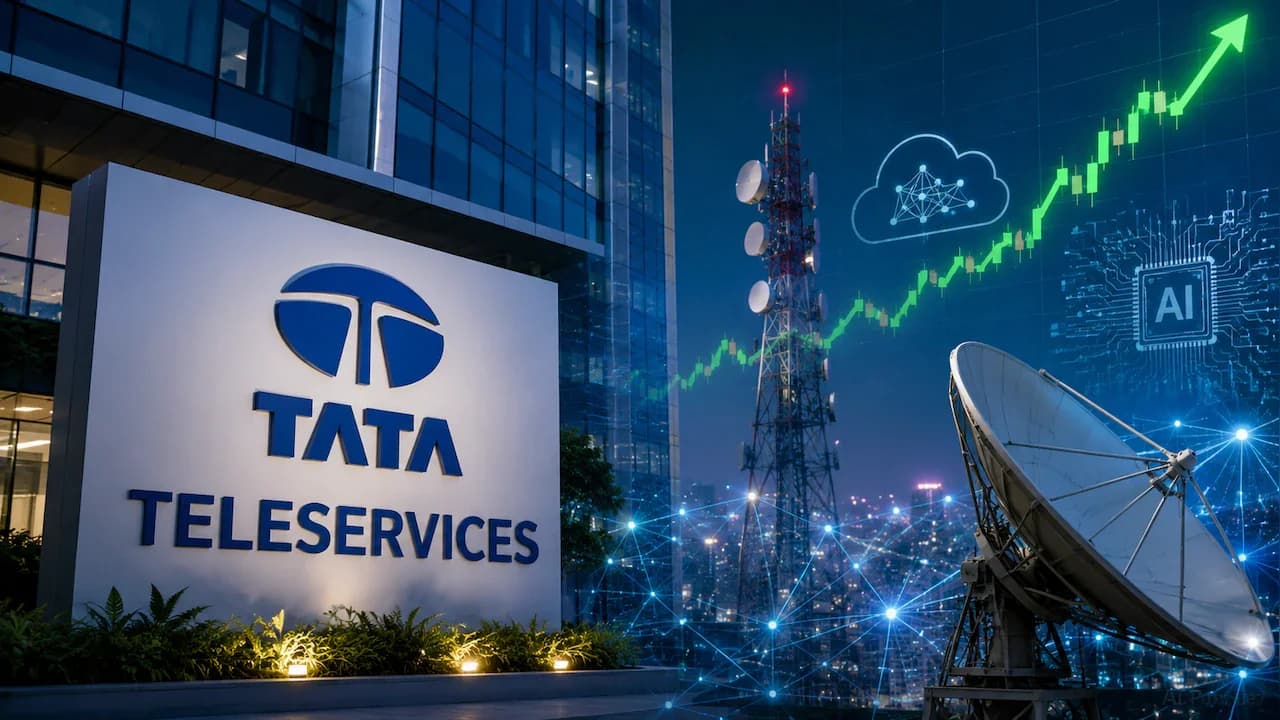
Tata Communications is investing $152 million (Rs. 1,442 crore) to strengthen its Tata Global Network (TGN) between India and Singapore. This isn't just about adding capacity; it is a strategic move to capture the surging demand from artificial intelligence (AI) and cloud computing. The investment adds approximately 98 terabits per second (Tbps) of capacity through two key initiatives: $63 million for the MIST cable system connecting Mumbai and Singapore (adding 20 Tbps), and $89 million for Project CS linking Chennai to Singapore (adding 78 Tbps).
The strategic objectives are clear. India is emerging as a premier AI hub, with data center capacity projected to double from 1.4 gigawatts by 2027 and potentially increase five-fold by 2030. Tata is positioning its infrastructure to serve this boom. The investment also addresses critical network diversity. By creating dual landing points on India's west (Mumbai) and east (Chennai) coasts, Tata reduces dependence on traditional west-coast hubs and mitigates risks associated with geopolitical tensions in the Red Sea and Strait of Hormuz. Furthermore, the enhanced infrastructure is designed to offer some of the lowest latency routes in Asia, a critical requirement for AI training and inference workloads that demand deterministic performance.
The Microsoft-Lightstorm Alliance: Building for AI
The AI data center boom is the primary driver behind Microsoft's decision to partner with Singapore-based Lightstorm rather than go it alone. The consortium, which also includes Singtel and Tata Communications, is building the I-2SEA (India-Southeast Asia) cable system—a 3,600-km, 12-fiber-pair cable linking Machilipatnam and Chennai in India to Singapore and Malaysia, operational by Q4 2029.
Microsoft's partnership choice is strategic.
Its SmartNet AI Fabric already delivers AI-ready transport across data centers and GPU clusters in India. By partnering with Lightstorm, Microsoft secures a purpose-built, end-to-end system engineered specifically for the performance and scale that AI infrastructure requires, rather than generic bandwidth. The cable features dual landings on India's east coast, providing the shortest subsea access to Hyderabad, where Microsoft has a significant data center presence. This geographic alignment is crucial for minimizing latency to AI clusters.
For Microsoft, the consortium model offers capital efficiency and risk mitigation. Building a subsea cable independently requires hundreds of millions of dollars and carries significant construction and demand risk. By sharing these burdens and costs with partners who bring complementary strengths—Lightstorm's terrestrial network, Singtel's regional landing infrastructure, and Tata's global network—Microsoft secures the capacity it needs while maintaining flexibility.
Consortium Dynamics: Shared Risk, Specialized Roles
The consortium structure fundamentally alters the project's economics and execution capabilities. Capital allocation is based on equity participation, where each member invests as a co-owner and receives capacity allocation proportional to their stake. This shared investment model distributes the substantial upfront capital requirements and mitigates individual exposure to construction, demand, and geopolitical risks.
Each partner plays a distinct, critical role. Lightstorm acts as the majority owner and system integrator, extending its terrestrial SmartNet AI Fabric into the subsea domain. Microsoft serves as the anchor tenant, providing immediate revenue visibility and creditworthiness that improves the project's financing terms. Singtel contributes vital landing station infrastructure and regulatory access in Singapore, a major cloud hub, while also bringing regional network integration capabilities. Tata Communications adds its global subsea operations expertise and extensive terrestrial fiber network for onward connectivity across India.
This specialization enhances execution capabilities. NEC Corporation has been appointed as the system supplier, and ASEAN Cableship Pte Ltd as the marine installation partner. The consortium leverages these established vendors while focusing on commercial and technical integration. The risk-sharing extends beyond construction; operational and maintenance expenses are distributed, and the collective bargaining power with suppliers improves terms.
Monetization and the Economics of AI Bandwidth
Monetizing these massive investments requires a multi-pronged approach. For Tata Communications, the new 98 Tbps of capacity strengthens its IZO™ platform, which connects to the world's top public cloud platforms across 190 countries. Revenue streams will come from wholesale capacity sales (IRUs and leasing), enterprise connectivity solutions (IPLC, VPNs), and higher-margin managed services like IZO DC Dynamic Connectivity and IZO Multi-cloud Connectivity.
The pricing power in this market is robust, driven by a supply-demand imbalance. India's data center capacity is exploding, yet there is limited existing subsea capacity on the country's east coast, creating scarcity for diverse landing points. Furthermore, the I-2SEA cable is engineered specifically for AI workloads, enabling premium pricing for lowest-latency routes and guaranteed performance characteristics. Lightstorm, for instance, guarantees 99.99% uptime in metro areas, compared to a 99.90% industry average, with latency up to 30% lower than competitors.
The consortium model influences revenue-sharing through capacity allocation. Members receive capacity proportional to their equity investment. Microsoft likely has secured dedicated capacity for its Hyderabad operations, while Tata and Lightstorm can wholesale or retail their allocations to other hyperscalers and enterprises. The structure allows for cross-consolidation benefits, such as shared O&M costs, while enabling each member to optimize revenue based on their strengths—Lightstorm through its carrier-neutral model, Microsoft via internal cost savings, and Tata through wholesale and enterprise market expansion.
The Traffic Threshold: When Do Investments Pay Off?
Achieving positive returns on subsea cable investments requires substantial traffic growth, and the AI boom is the primary accelerator. Modern AI training requires "scale-up" designs where thousands of GPUs function as a single unit, with interconnect bandwidth soon exceeding 1 Petabit per second—orders of magnitude above traditional data center traffic. Nokia Bell Labs projects global AI WAN traffic will add one Zettabyte per month of capacity by 2033, sustaining the approximately 30% annual bandwidth growth rate seen in subsea cables.
For the consortium partners, the path to positive returns hinges on achieving high utilization rates. While specific thresholds vary, successful cables typically require 60-80% capacity utilization within 3-5 years. Given Tata Communications' $152 million investment for 98 Tbps, the company would need to generate significant annual revenue from this capacity to achieve a 5-7 year payback period. At current market rates for AI-optimized, low-latency connectivity, this could require several hundred Gbps of average utilized capacity to break even.
The enterprise requirements addressed by the Microsoft-Lightstorm partnership are central to driving this utilization. The I-2SEA cable is designed to create Asia's lowest-latency AI connectivity corridor, with 10-15% lower latency than existing systems. It integrates with Lightstorm's 30,000+ km terrestrial network, providing seamless connectivity to over 80 data centers in India. This end-to-end, low-latency solution is precisely what enterprises deploying AI models and inference clusters require, creating a direct link between infrastructure investment and end-user demand.
Reshaping the Competitive Landscape
These investments significantly alter the competitive dynamics in the Asia-Pacific region. Tata Communications' expansion strengthens its position against global and regional operators by creating a dual-coast landing strategy and specializing in AI-ready infrastructure. This puts competitive pressure on other Indian carriers like Reliance Jio and Bharti Airtel to accelerate their own subsea AI-readiness investments.
For Lightstorm and the consortium partners, the market share opportunities are vast. The Asia-Pacific submarine cable market is projected to grow from $13.3 billion in 2025 to $25.7 billion by 2035. Lightstorm's carrier-neutral, AI-native model allows it to capture market share from traditional telcos that may prioritize their own services. Its ability to deliver instant provisioning through its Polarin NaaS platform further differentiates it in the enterprise market.
The entry of the Microsoft-led consortium represents a broader structural shift in the industry. The market is transitioning from consortium-led projects to private investments by tech giants. Hyperscalers like Microsoft, Google, and Amazon are increasingly funding and managing their own cables to ensure control over data traffic and service quality. This disrupts traditional telcos, forcing them to evolve from general connectivity providers to specialized infrastructure orchestrators or risk losing market influence to technology companies. The I-2SEA project, with its blend of hyperscaler demand, specialized infrastructure expertise, and regional telecom partnerships, sets a new competitive paradigm that will be difficult for traditional players to replicate.