The Security Firewall: Why China and Pakistan Are Out
BRBNMPL’s tender isn’t just about buying plastic; it’s about securing the supply chain. The mandate for integrity pacts, confidentiality contracts, and operational firewalls against China and Pakistan stems from critical national security concerns. The firewalls require bidders to completely ring-fence their Indian operations from any activities in those two countries, avoid sourcing raw materials from them, and ensure no personnel with work history in those nations are involved. This is a direct response to global evidence of state actors embedding vulnerabilities in manufacturing processes. China’s national security laws, which require companies to aid state intelligence, create systemic risks for any supply chain link to the country. By demanding these firewalls, BRBNMPL is mitigating the risk of prepositioned access points that could be activated during a geopolitical crisis, ensuring the integrity of India’s currency remains absolute.
The Tallow Trap: Learning from the UK’s Controversy
The requirement for animal tallow-free certification is a direct lesson learned from the United Kingdom’s painful experience. When the Bank of England introduced polymer £5 notes in 2016, it faced a massive public backlash after revealing the notes contained trace amounts of animal-derived tallow (less than 0.05%). This triggered outrage from vegans, Hindus, Sikhs, and Jains, leading to a public consultation where 88% of respondents objected to the use of animal products. Despite the opposition, the Bank of England stuck with tallow because switching to palm oil alternatives would have cost taxpayers an extra £16.5 million over a decade. BRBNMPL is determined to avoid a similar cultural and religious firestorm in India. By mandating upfront certification that substrates contain no animal tallow or DNA, the RBI is ensuring social acceptance doesn’t derail the project before it even begins.
The 68,000 Ream Rush: Why Rs 10 and Rs 20?
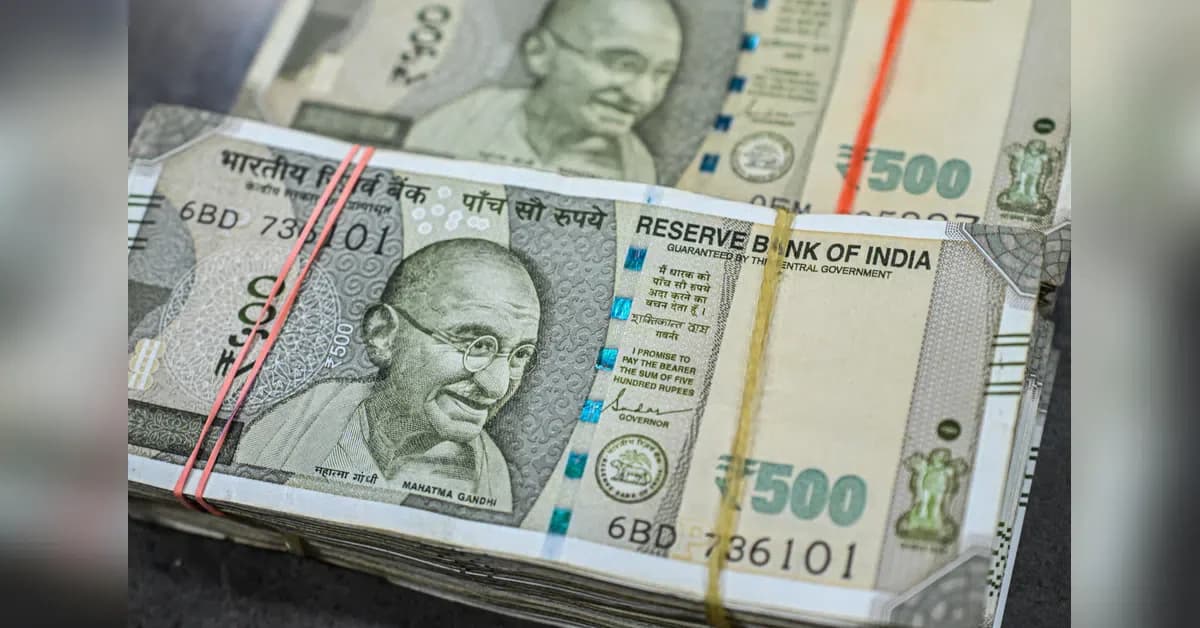
The immediate requirement for 68,000 reams (34,000 each for Rs 10 and Rs 20) is driven by a specific cost-benefit calculation. These low-denomination notes circulate the most frequently and wear out the fastest. India currently destroys 20–24 billion soiled notes annually, with lower denominations deteriorating rapidly due to heavy usage. Polymer notes last 2.5 to 4 times longer than cotton-paper notes, potentially reducing replacement frequency by over 80%. The RBI spends roughly ₹5,000 crore annually on printing and maintaining currency. By targeting the denominations with the highest turnover, BRBNMPL aims to validate the technology where the cost savings are most immediate and substantial. This is a cautious, phased approach—68,000 reams are just for initial field trials. Larger procurement across multiple denominations will follow only if the trials succeed.
The Cosmo First-De La Rue Alliance: A Technical Necessity
Cosmo First, India’s largest BOPP exporter, didn’t partner with UK-based De La Rue just for brand prestige. It was a technical necessity. BRBNMPL’s tender requires substrates with embedded security features like clear windows, metallic numerals, and magnetic threads. Cosmo First had the manufacturing capacity but lacked the specialized banknote security integration expertise. De La Rue, the world’s largest banknote supplier, brings that missing piece. As Cosmo First’s “technical partner,” De La Rue provides the advanced security features required by BRBNMPL while Cosmo First handles the substrate production. This structure allows Cosmo First to meet the “Make in India” procurement preferences and naturally comply with the strict security firewall requirements (since it has no China-Pakistan operations), while accessing world-class security technology.
De La Rue’s Global Edge: Proven Transition Expertise
De La Rue’s competitive positioning is heavily bolstered by its extensive track record. The company has successfully guided over 180 denominations to polymer substrate across multiple countries. Its SAFEGUARD® technology, launched in 2013, is now issued on over 100 banknote denominations globally. This experience is invaluable for BRBNMPL because transitioning to polymer isn’t just about swapping materials—it’s a complex operational shift involving printing processes, cash handling, and public education. De La Rue has done this before, from the Central Bank of Samoa’s complete conversion to the Bank of England’s full family of polymer notes. This proven methodology significantly reduces implementation risk for BRBNMPL. Furthermore, De La Rue is the only polymer substrate provider that also manufactures finished banknotes, ensuring unmatched integration between substrate, print design, and security features.
CCL Secure’s Central Bank Network: A Trust Advantage
CCL Secure brings a different kind of leverage to the table: relationships. The company supplies polymer solutions to 40 central banks, and its GUARDIAN™ polymer has a 30-year track record. This existing network provides CCL Secure with a massive trust advantage. Central banks are conservative institutions; they prefer proven technology with validated performance. CCL Secure’s substrate powers 100% of the £5 and £10 notes in circulation in England and Wales. The company also claims its polymer notes last six times longer than cotton-based paper—a claim backed by real-world data. For instance, the Central Bank of Costa Rica reported saving approximately US$15 million by switching to polymer, and the Bank of Canada saw polymer notes lasting 4.14 to 4.3 times longer than paper. This global validation means BRBNMPL isn’t betting on unproven tech.
The Cost Equation: Six Times Durability vs. Higher Upfront Costs
CCL Secure’s claim of six-times longer durability fundamentally alters the total cost of ownership equation. While polymer notes cost 30–60% more to manufacture than paper notes, the extended lifespan dramatically reduces lifecycle costs. India currently spends about ₹5,000 crore annually on replacing damaged and soiled currency. If polymer notes truly last six times longer, the replacement frequency could drop by over 83%, leading to potential annual savings of 60–70% in the long run. The math is compelling: higher unit costs are offset by drastically fewer reprints. However, this depends on the durability claim holding up in India’s harsh conditions. The “six times” figure is a best-case scenario; conservative estimates suggest 2.5 to 4 times longer life is more realistic. Even so, the economic case for polymer in high-turnover denominations like Rs 10 and Rs 20 remains strong.
Q&T’s Vietnam Model: Replicating 78% Savings?
The key drivers behind this success were domestic manufacturing and operational efficiency. Q&T sources over 90% of its materials domestically in Vietnam, shielding it from foreign exchange volatility and supply chain disruptions. Its purpose-built facility is designed for security printing from the ground up, and the company has achieved exceptionally low waste rates, reduced ink consumption, and faster delivery schedules. Crucially, Q&T’s substrate is engineered to match the exact thickness of existing banknotes, eliminating the need for expensive ATM recalibration. Replicating this for BRBNMPL is feasible but challenging. India has the scale and existing infrastructure to support domestic production, but the climatic diversity is far greater than Vietnam’s.
The Hybrid Strategy: A Pragmatic Path Forward
BRBNMPL’s proposal for a hybrid system—combining polymer and cotton-pulp notes—is a pragmatic acknowledgment of reality. A full-scale switch to polymer would require massive investments in new infrastructure and would render existing investments in paper currency manufacturing underutilized. India has already made substantial investments in domestic paper production and indigenous ink manufacturing. A sudden shift would waste these assets. The hybrid approach allows for a gradual transition, starting with low-denomination notes where the benefits are most pronounced. It also mitigates supply chain risks; relying solely on imported polymer substrates (which depend on petrochemicals and global crude oil prices) creates new vulnerabilities. By maintaining paper notes for higher denominations and using polymer for high-wear Rs 10 and Rs 20 notes, BRBNMPL optimizes the benefits of both technologies while managing the risks.
The Climatic Test: The Final Qualifying Hurdle
The requirement to test samples across various climatic zones is the final, critical hurdle that will determine the winner. India’s previous attempt at polymer notes in 2012 involved testing in Kochi, Mysuru, Jaipur, Shimla, and Bhubaneswar—cities chosen for their diverse climates ranging from tropical coastal to highland alpine. That project was shelved due to technological and operational challenges. This time, BRBNMPL is ensuring the technology is battle-tested before committing. Samples from all bidders will undergo rigorous testing in these zones for at least six months to capture seasonal variations. Only those passing these tests will be eligible for the final tender. This extends the qualification timeline to nearly a year (from August 2026 to mid-2027) but provides robust technical validation. For bidders like CCL Secure and Q&T, performance in similar global conditions is a competitive advantage. For Cosmo First, local knowledge and De La Rue’s global data are key assets. This testing phase is where theoretical claims meet Indian reality, and it will be the ultimate decider in who secures the contract to print India’s plastic future.