Hyundai's Middle East Shipping Crisis: Navigating Stormy Waters
The Middle East conflict has thrown a wrench into global shipping lanes, and Hyundai Motor India finds itself right in the thick of it. Here's the thing about modern car manufacturing — it's not just about building vehicles. It's about getting them across oceans to customers who are waiting. When those oceans become conflict zones, even the best-laid plans go sideways.
The Shipping Bottleneck
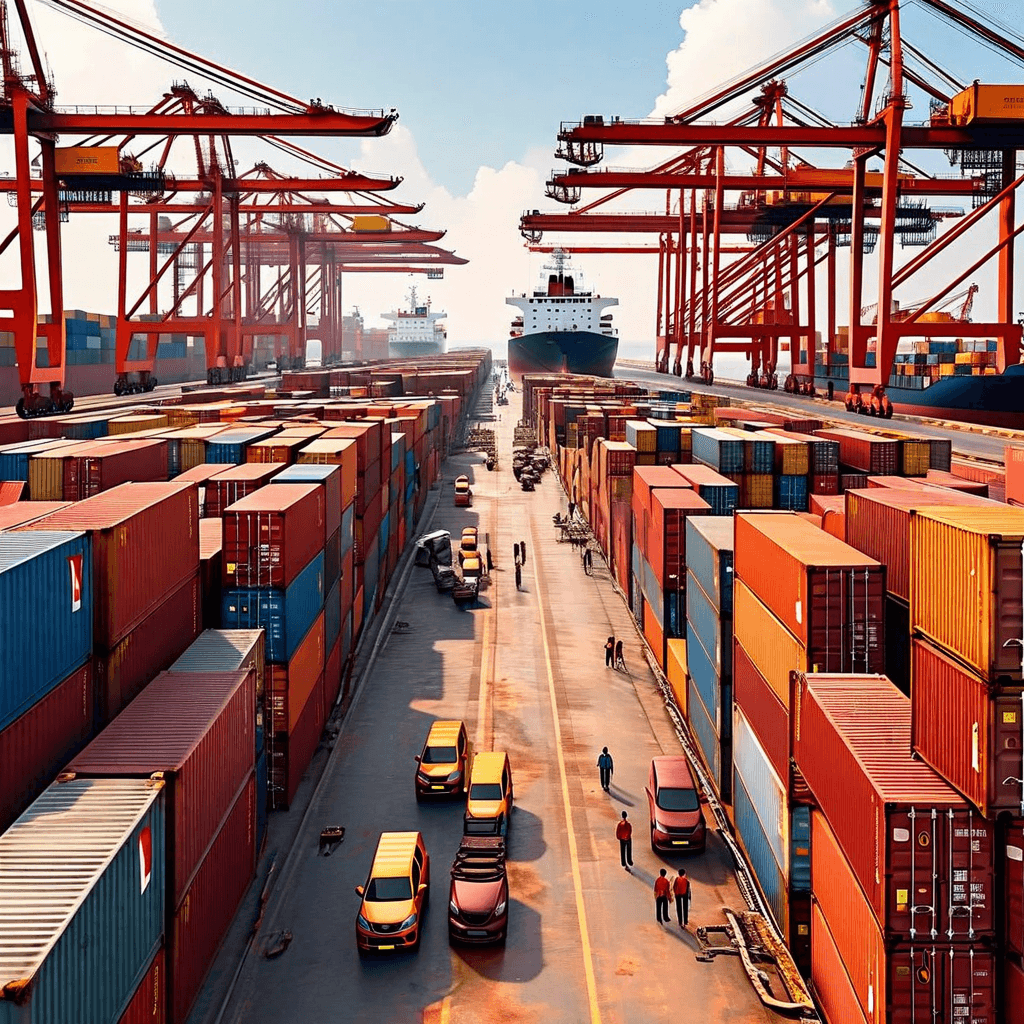
Let's talk numbers. Half of Hyundai's 2025 global shipments from India, worth about $1.8 billion, were headed straight for Gulf countries. That's not small change. The combined Middle East and Africa region accounts for 8% of Hyundai's total wholesale sales — roughly 317,000 vehicles annually. Now picture this: traffic through the Strait of Hormuz, a critical maritime corridor, has plummeted by 95%. We're talking about dropping from 130 ships daily to under 100 since the war outbreak. That's like shutting down a major highway during rush hour and expecting traffic to flow smoothly.
The impact is already showing up in the data. South Korea's Middle East exports crashed 49% in March 2026, even as overall exports posted their strongest growth in nearly four decades. Hyundai's global sales slipped 2.3% year-on-year that month to 358,759 vehicles, with overseas sales down 2.4%. The company's logistics arm, Hyundai Glovis, has been forced to reroute shipments through intermediate hubs like Sri Lanka, creating port congestion and temporary storage headaches.
The Cost of Rerouting
Here's where it gets expensive. Rerouting isn't free — far from it. Hyundai Motor India saw freight expenses jump by ₹1,097 million due to higher export freight costs. That's just the freight bill. Insurance premiums for cargo passing through high-risk zones have shot up substantially. Then there's fuel — vessels burn up to 200,000 gallons of diesel daily, and rerouting adds days or weeks to transit time. Every extra day at sea is money burning. AnnualReports +1
The company is also facing raw material constraints, which puts pressure on parts suppliers and production schedules. Automotive plants depend on synchronized deliveries of thousands of components. When one part is delayed, the entire production line can grind to a halt. It's a domino effect that starts in the Middle East and ripples through manufacturing facilities.
Margin Resilience Amid Chaos
Despite these headwinds, Hyundai's story isn't all doom and gloom. The company reported a 14.3% rise in consolidated profit to ₹15.72 billion (nearly $179 million) for the recent quarter, beating analyst estimates. How? Through some smart strategic moves.
For starters, the average export sales price runs about 6% higher than domestic sales. That makes exports highly beneficial to profitability. SUVs, which carry fatter margins, made up 71% of total sales volume, up from 69% a year earlier. The company has also leaned heavily on cost optimization efforts to minimize the impact of higher discounts on margins. Management has been clear that cost efficiencies and government incentives have helped sustain margins through this period. InvestorPresentations +1
Government Support Steps In
Speaking of government support, both South Korea and India have rolled out measures to help exporters weather this storm. South Korea's Korea Trade-Investment Promotion Agency (KOTRA) launched an emergency export voucher program with 8 billion won ($6 million) allocated specifically for Middle East shipping disruptions. Companies can receive up to 150 million won ($112,000) each, with fast-track reviews within three days. The Financial Services Commission also announced a comprehensive 13.3 trillion won (around $9.2 billion) financial support package for affected exporters.
India hasn't been sitting idle either. The government launched a ₹497 crore RELIEF scheme targeting West Asia logistics disruptions. This provides up to 100% credit insurance cover for existing shipments and up to 95% coverage for prospective exports, with premiums at pre-disruption rates. There's also the Credit Guarantee Scheme for Exporters (CGSE) offering up to ₹20,000 crore for direct and indirect exporter MSMEs. Within the first month, 716 applications were sanctioned amounting to ₹3,141 crore — showing rapid deployment when it's needed most.
Hyundai Motor India actively leverages these schemes. The company recognizes export benefits like duty drawback, RoDTEP, and MEIS in financial statements when there's no uncertainty in receiving them. Management has explicitly acknowledged that government incentives have played a role in sustaining margins during challenging periods. AnnualReports +5
The Road Ahead
Kim Dong-jo, Senior Vice President at Hyundai Motor's Global Policy Office, put it bluntly: "Even if the conflict ends, it will take a considerable amount of time to rebuild and restore existing supply chains." That's the reality check nobody wants to hear but everyone needs to understand.
The company is already working on structural fixes. Localization efforts have reached 81.7%, with over 1,200 components localized since 2019 in collaboration with nearly 200 suppliers. There's also a push toward dual-sourcing and supplier diversification to reduce dependency on single geographies. Hyundai Glovis is expanding its fleet from 92 PCTCs to 110 vessels by 2027 and 128 by 2030, investing in larger, eco-efficient carriers to lower operational costs. AnnualReports +1
The bigger picture here is about shifting from an efficiency-focused model to a resilience-focused approach. The days of just-in-time inventory with minimal buffer stocks are being reconsidered. Companies across the automotive industry are treating alternate ports, buffer inventories, and flexible contracts as standard operating assumptions rather than exceptions.
Bottom Line
The Middle East conflict has exposed structural vulnerabilities in global supply chains that were hiding in plain sight. For Hyundai, this means navigating through a perfect storm of shipping route disruptions, escalating costs, and delivery timeline pressures. Yet the company has demonstrated remarkable operational resilience through favorable export mix, strong SUV portfolio, and cost optimization measures.
Government support has provided meaningful but partial mitigation — excellent for insurance cost relief and moderate for liquidity support, but limited when it comes to covering the full scale of freight cost escalations. The temporary nature of most measures also raises questions about long-term sustainability if disruptions persist.
What's clear is that the automotive industry's supply chain playbook is being rewritten. The companies that emerge stronger will be those that balance efficiency with resilience, diversification with focus, and short-term fixes with long-term structural changes. For Hyundai, the immediate challenge is managing through the current crisis. The bigger test is building a supply chain that can weather whatever geopolitical storms the future throws its way.