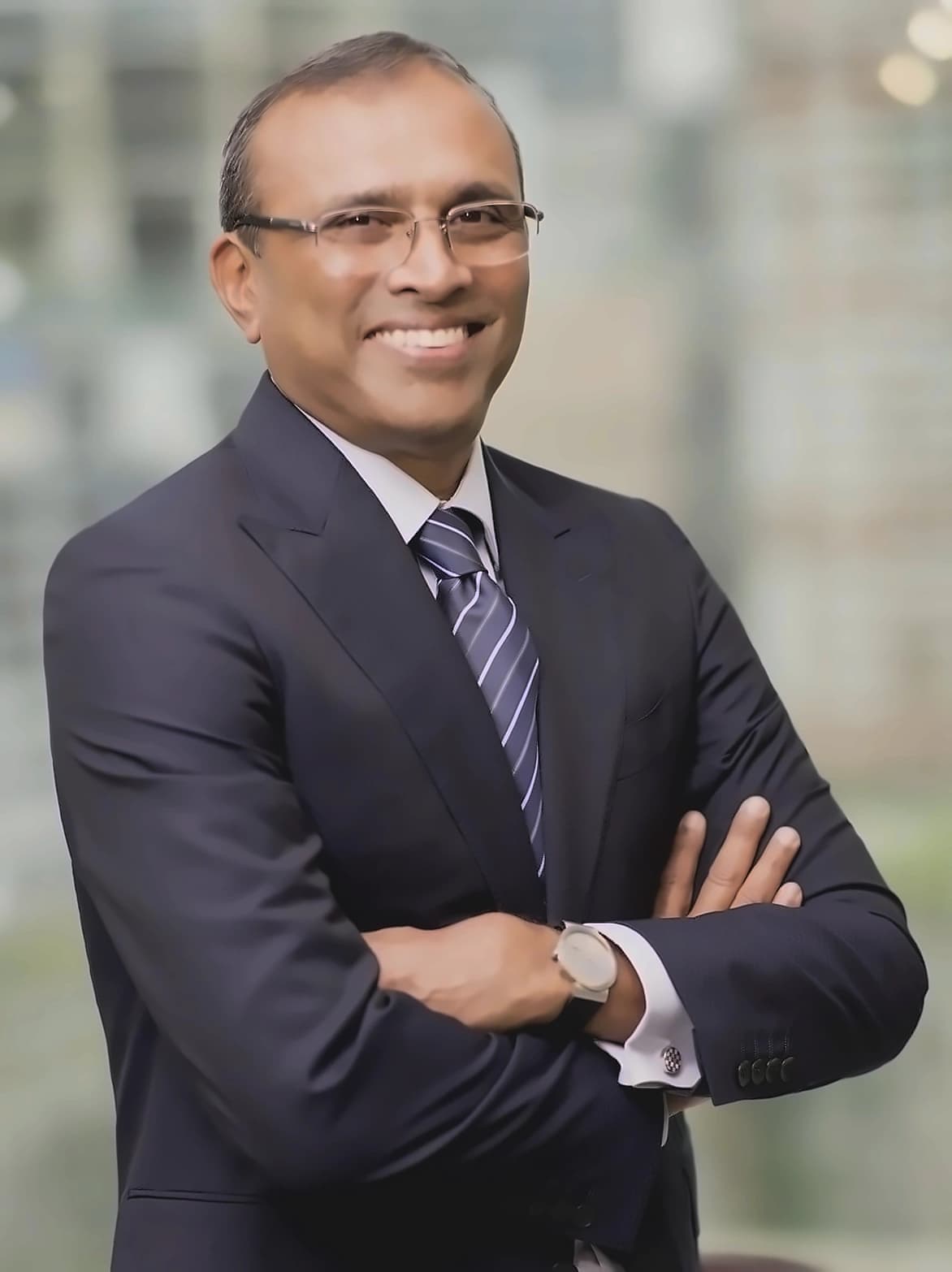
First, let's get the timeline straight. Satish Pai hasn't been reappointed "through January 2028." The Board approved his reappointment on November 23, 2026, for a one-year term running from January 1, 2028 to December 31, 2028. That's an extension, not a long-term renewal. If his current term ends around December 2027 (a reasonable inference), Pai would lead Hindalco Industries through about December 2028.
Concurrently, the Board appointed Hemant Sikka, formerly MD and CEO of Mahindra Logistics, as Deputy Managing Director effective January 4, 2027. Sikka will progressively take over responsibilities for the India business, while Pai continues to oversee operations of subsidiary Novelis Inc..
This is a phased succession plan, not a simple tenure extension. The question is whether these leadership moves materially change Hindalco's capital allocation, project execution, and cost management trajectory.
Capital Allocation: Continuity, Not a New Direction
Nothing in the filings or news suggests Pai's reappointment alters Hindalco's capital allocation framework. Management has not linked the two. What the data shows is a strategy already in motion:
Scale of spending:
That's over INR 1 lakh crore of growth investment over five years.
Capex ramp-up: India capex is expected at INR 12,000–13,000 crore in FY27. Management expects next year's capex to be "substantially higher," with FY28 and FY29 outflows also elevated.
Return and leverage guardrails:
The ratio stood at 1.80x in September 2026. Transcript +5
The heaviest spending falls in FY28–FY29, which overlaps with Pai's extended term. This timing ensures the leader who set these commitments remains in office during peak capital outflows. That's a plausible benefit—continuity during complex builds—but it's not a proven causal link. The binding constraints on phasing are execution capacity and the balance sheet, not leadership tenure. Transcript
Project Execution: Leadership Overlap During Critical Milestones
Several major projects will commission during the 2027–2028 window, precisely when the leadership transition occurs:
Project
Timeline
Aditya alumina refinery
Commissioning December 2027
Aditya smelter, first 180 KT line
December 2027
Aditya smelter, second line
December 2028
Novelis Bay Minette
Commercial shipments Q1 FY28
Pai's extended term provides continuity through these milestones. Sikka's phased entry, starting January 2027, creates a roughly two-year overlap where both leaders are present. This structure allows for knowledge transfer and organizational stability during critical project deliveries.
However, execution risks remain. Management cites sharing the same engineering, procurement and construction (EPC) contractor across projects and clearance delays at Mahan as constraints. Leadership tenure doesn't eliminate these operational challenges. The recent elevation of Kailash Pandey to CEO – Aluminium Upstream and Kapil Agrawal as CEO-Copper from March 2027 also indicates that project delivery depends on this layer of management, not just the top executive. Transcript +3
Operational Efficiency: Programs Already in Motion
Hindalco's operational efficiency and cost management initiatives are already running and are not tied to Pai's reappointment:
Novelis structural cost program: Over $240 million in run-rate savings achieved through Q2 FY27, targeting about $300 million by end-FY27 and $350–400 million in FY28 and beyond.
India cost pressures: Aluminium cost of production rose about 5% quarter-on-quarter in Q2 FY27 on coal and calcined petroleum (CP) coke prices. Management expects pressure to ease in Q4 as coal supply improves.
Captive coal timeline: Bandha mine is expected to start in H2 of next fiscal year and Chakla by mid-next year. Once operational, these mines should lock in the cost curve except for CP coke.
Digital transformation: Hindalco is integrating Industrial IoT, machine learning for raw material blending, computer vision, and digital twins. Over 400 critical assets are linked to AI/ML-based performance models. Investor Presentation +5
A consistent leader helps these programs run through to FY28. But the data cannot isolate how much efficiency comes from Pai's tenure versus mine-linkage timelines, commodity prices, or the wider management team.
Decision-Making Hierarchy: What Changes with Sikka?
The Board approved Sikka as Deputy Managing Director and Key Managerial Personnel (KMP) based on the Nomination and Remuneration Committee's recommendation. His stated mandate is to work closely with Pai and the leadership team, with India business responsibilities transitioning to him "progressively over time".
However, critical details are not publicly disclosed:
Specific responsibilities and performance metrics for the DMD role
Reporting lines (whether business CEOs report to Pai or Sikka)
Remuneration terms
Whether Sikka joins the Board as a director
Without these details, any description of the new decision-making hierarchy is speculative. What can be reasonably inferred:
MD's focus: If India day-to-day management moves to Sikka, Pai would have more bandwidth for Novelis, which is completing the Bay Minette ramp-up, and for group-level strategy. The filing does not state this.
Skill complement: Sikka's background in procurement, manufacturing, and supply chain (from Mahindra Group and Maruti Suzuki) fits India's large project and cost agenda. Pai's profile emphasizes long-term MD tenure with Novelis oversight and a sustainability focus. The "complement" is a reading of their backgrounds, not company guidance.
Governance and Succession Planning
The creation of a Deputy Managing Director position adds a layer to Hindalco's governance structure:
KMP status: The DMD is designated KMP, carrying legal accountability and feeding into Board and NRC oversight.
Approval route: Executive remuneration follows NRC recommendation, Board decision, and shareholder approval. Executive Directors' tenure is capped at five years from last appointment. If Sikka is appointed as a Board director, shareholder approval would likely be required.
Board structure: As of March 31, 2026, the Board had 12 members, including just 1 Executive Director, 6 Independent Directors, and 5 Non-Executive Directors. Adding an executive role changes that balance only if Sikka joins the Board. Annual Report +2
The Aditya Birla Group has a formal succession framework. For critical senior roles across the Group, 67% were filled by planned successors, 19% by other internal talent, and 14% externally in FY 2024-25. Sikka's external appointment fits the 14% external share. The Group's Gyanodaya Leadership and Learning Centre trained over 6,300 learners, indicating institutional support for leadership development. Annual Report
However, Hindalco has not named Sikka as Pai's successor. The filings describe an India-business transition only. His eventual role beyond December 2028 remains open.
The Transformation Layer: Pallav Chakraborty's Role
Trade media reports that Pallav Chakraborty joined as Senior Vice President and Head of Transformation, Hindalco Specialty Alumina, after 17+ years at SLB. This role is tied to the Specialty Alumina business, not obviously to all of Hindalco.
I found no Hindalco exchange filing, annual report, or earnings-call mention of him. The role is probably below the level requiring stock exchange disclosure. Without a published charter, KPIs, or budget, any mechanism linking his mandate to margin improvement is inference.
Existing transformation programs include:
Digital stack: Industrial IoT, machine learning models, computer vision, and digital twins
Capability building: Over 3,500 employees trained under the DISHA digital program; 86 plant engineers completed advanced analytics training
Continuous improvement: 35,954 Kaizens and 2,542 continuous-improvement projects in FY25 Annual Report +3
Specialty Alumina is a small part of consolidated earnings. Even at full effect, a segment-level transformation mandate is unlikely to move group margins significantly. The major cost-curve drivers—captive coal, CP coke, alumina index, and aluminium prices—are outside a transformation head's control. Transcript +1
Group Synergies: Real but Limited
Hindalco has measurable commercial links with Aditya Birla Group entities:
Aditya Birla Management Corporation (ABMC): Services received were INR 955 crore in FY25 (consolidated), up from INR 869 crore in FY24. ABMC is the largest group counterparty.
Renewable power: Purchases from Aditya Birla Renewables entities rose to INR 94 crore in FY25 from INR 60 crore. Hindalco holds 26% in Aditya Birla Renewables Solar and 26% in Aditya Birla Renewables Utkal.
Technology: Hindalco holds 49% in the Aditya Birla Science and Technology Company and paid INR 23 crore for services in both FY24 and FY25. Annual Report +2
Executives with Group experience likely help Hindalco navigate these channels. However, I found no evidence that executive movement between Group companies has produced measurable synergies for Hindalco. The material linking it to manufacturing sister companies is the UHG Holdings IFSC vehicle formed with UltraTech and Grasim in August 2026. Other
The Bottom Line
Hindalco's leadership moves are best understood as a structured succession plan with operational continuity, not as a strategic pivot. Pai's reappointment provides stability during peak capex and project commissioning. Sikka's appointment adds operational depth for India's complex expansion. Chakraborty's role, while focused on Specialty Alumina, aligns with existing digital and efficiency programs.
The causal links between leadership tenure and outcomes—capital allocation, project execution, cost management—are plausible but not proven by the data. The real story is about continuity during a critical growth phase, with governance structures evolving to support a phased transition.