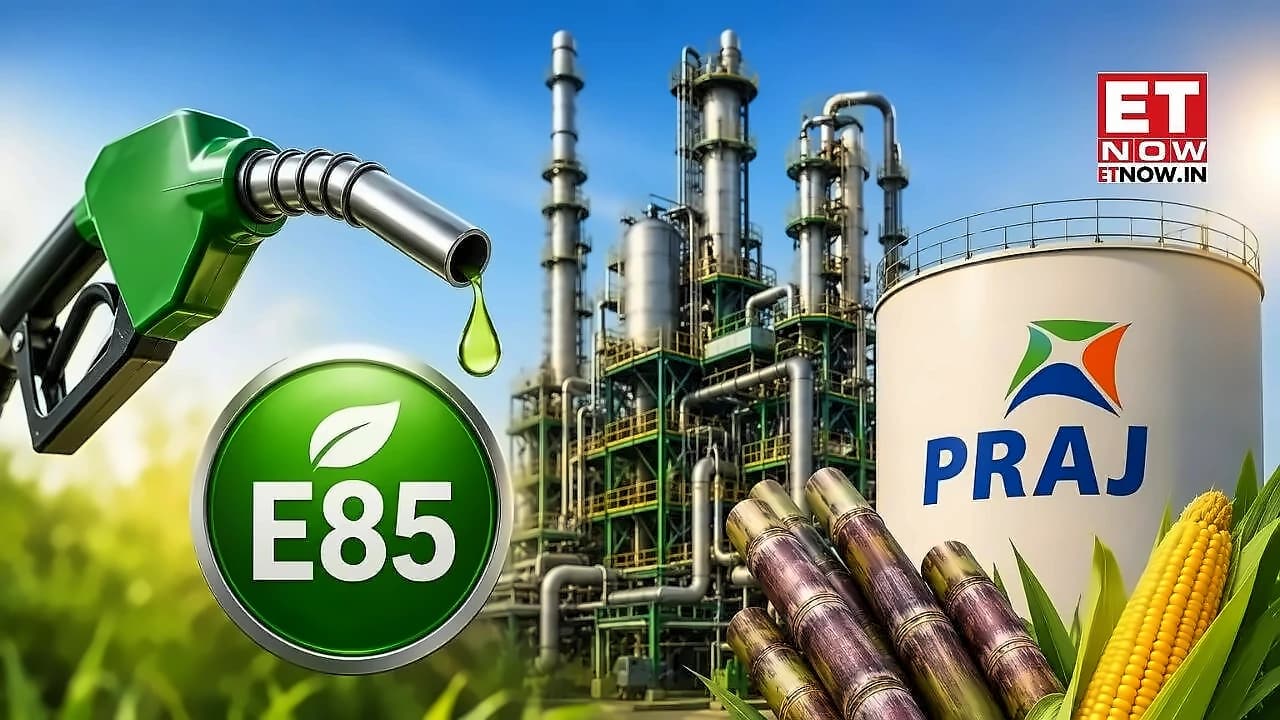
Hero MotoCorp is launching India's first E100-compatible flex-fuel motorcycle on June 3, 2026, in New Delhi, with Union Ministers Nitin Gadkari and Hardeep Singh Puri in attendance. This timing is strategic—preceding Maruti Suzuki's flex-fuel vehicle unveiling on June 5 (World Environment Day) by just two days. The coordinated launches reflect broader government-industry alignment on alternative fuel adoption, with both events occurring during a period when policymakers are actively encouraging manufacturers to develop vehicles capable of running on higher ethanol blends to reduce India's crude oil imports (currently at 87-91% of requirements) and lower vehicular emissions.
Hero's E100 motorcycle represents a significant technological advancement.
Currently, the flex-fuel motorcycle space remains limited—Suzuki Motorcycle India offers the Gixxer SF 250 (E85 compatible), while Honda had previously introduced the CB300F Flex Fuel before discontinuing it. TVS showcased a flex-fuel version of the Raider 125, and Royal Enfield is testing ethanol-compatible motorcycles, but none have matched Hero's E100 capability.
The strategic advantages of this first-mover position are substantial. Hero establishes itself as a pioneer in alternative fuel technology for two-wheelers, differentiating itself from competitors still at the prototype or E85 stage. The motorcycle is expected to be based on either the Splendor or HF Deluxe platforms—both among Hero's highest-selling products with strong presence across cities and rural areas. A flex-fuel version of the HF Deluxe was previously showcased at the Bharat Mobility Global Expo 2025, giving an early indication of Hero's plans. By launching on proven platforms, Hero can rapidly scale adoption across its existing dealer network, which serves over 60 lakh domestic customers annually.
Financial Impact and Technology Readiness
The development costs for Hero's ethanol-powered bike will have a moderate incremental impact on R&D expenditure in the near term.
The E100 technology was developed at Hero's Centre for Innovation and Technology in Jaipur, leveraging existing infrastructure rather than requiring entirely new facilities. Management has indicated an "uptrend on R&D expenses" as they continue building technology and brands, with flex-fuel being part of an existing strategic R&D allocation rather than an additional burden. Transcripts
Engineering modifications for E100 compatibility are significant but manageable. Converting conventional motorcycles to E100 requires upgrading fuel lines, hoses, pipes, gaskets, fuel tanks, fuel pumps, injectors, engine management systems, and adding ethanol sensors and heated fuel rails for cold starts. Going from E10 to E20 was manageable with minor material tweaks, but building something that handles E85 or E100 is described as "a much bigger engineering job." However, by basing the E100 motorcycle on established platforms, Hero avoids full development costs—the incremental cost is primarily the flex-fuel system modifications rather than complete vehicle development.
The technology readiness of Hero's flex-fuel platform significantly influences capital allocation decisions. The flex-fuel HF Deluxe was showcased in January 2025, with commercial launch scheduled for June 2026—a 17-month development cycle indicating mature technology. Regulatory approval has already been secured for flex-fuel versions of both HF Deluxe and Splendor motorcycles. This high technology readiness validates Hero's multi-powertrain strategy, allowing for more balanced capital allocation across technologies rather than massive EV infrastructure investments alone. It provides strategic flexibility, enabling Hero to serve diverse consumer preferences and market conditions while hedging against evolving regulatory scenarios.
Demand Dynamics and Revenue Projections
Demand elasticity for Hero's flex-fuel motorcycle will be heavily influenced by fuel price differentials. The most significant driver is the price gap between ethanol and petrol. E100 fuel could be ₹20 per litre cheaper than petrol due to VAT exemptions (E100 doesn't attract the 70% fossil fuel hydrocarbon VAT that states charge approximately ₹18-20 per litre). In Brazil, there's a 20% cost difference between E100 and base fuel, with consumers advised to use ethanol when prices are 30% or more lower than gasoline to offset the 27-30% mileage reduction from ethanol's lower energy density. Industry estimates suggest E85 could become ₹10-12 per litre cheaper than E20 once GST rationalization occurs, which would enhance customer acceptance.
Hero's pricing strategy will be critical. Industry estimates suggest flex-fuel commuter motorcycles could cost slightly more than standard petrol models due to additional hardware requirements. Given Hero's dominance in the mass-market segment (approximately 32.2% market share) and the volume strength of Splendor and HF Deluxe (Splendor alone accounts for 54-67% of Hero's domestic sales), a minimal premium of ₹2,000-3,000 could drive high adoption if fuel savings materialize. This could potentially add 2-4% market share in flex-fuel enabled regions. A moderate premium of ₹4,000-6,000 might see more moderate adoption with 1-2% market share impact, while a high premium above ₹7,000 would likely see limited adoption to early adopters only.
Revenue projections over the next 3-5 years are promising but dependent on infrastructure rollout. Using Hero's FY26 domestic volumes of 60.66 lakh units and assuming conservative growth of 5-8% annually, flex-fuel volumes could reach 1.9-3.3 lakh units by FY27 (3-5% mix), 5.4-8.5 lakh by FY28 (8-12% mix), 10.5-15.3 lakh by FY29 (15-20% mix), and 18.4-24.8 lakh by FY30 (25-30% mix). This could translate to revenue contributions of ₹1,500-1,800 crore in FY27, growing to ₹14,400-17,600 crore by FY30—representing 20-25% of total projected revenue by FY30. The mass-market two-wheeler segment is expected to see gradual flex-fuel adoption, with urban centers leading and rural regions following as infrastructure expands.
Regulatory Landscape and Infrastructure Challenges
India's ethanol blending mandates create a compelling regulatory environment. India successfully achieved its 20% ethanol blending target (E20) in 2025, five years ahead of the original 2030 deadline. As of April 2026, all petrol sold across India must contain 20% ethanol. The government is targeting 30% ethanol blending (E30) between 2028-2030. India's ethanol production capacity has expanded from under 2 billion liters in 2014 to nearly 20 billion liters, far exceeding the 11 billion liters required for the E20 mandate. This policy certainty provides Hero with a clear regulatory foundation for its flex-fuel strategy.
However, the incentive structure currently favors EVs over flex-fuel vehicles.
EV buyers receive Section 80EEB tax benefits (₹1.5 lakh deduction on loan interest), road tax exemptions in multiple states, and registration fee exemptions. Flex-fuel vehicles receive none of these benefits. The All India Distillers' Association has sought GST reductions for flex-fuel vehicles—proposing cutting the higher rate to 12% and lowering the 18% slab to 5%—along with state-level road tax exemptions. This incentive disparity creates a challenging competitive environment for flex-fuel against EVs.
Ethanol fueling infrastructure availability represents the most significant constraint on Hero's rollout strategy. Currently, there are no dedicated E100 dispensing stations in India. E20 petrol is available nationwide, but wider access to higher ethanol blends is necessary for flex-fuel motorcycles to reach their full potential. The government plans to establish 5,000 E100 dispensing stations over the next two years. As of 2023, only 1,500 ethanol fueling stations exist, concentrated mainly in urban centers, creating a disparity in access for rural consumers where Hero's core commuter segment has strongest presence. This necessitates a phased geographic rollout focused on urban centers and ethanol-producing states (Maharashtra, Uttar Pradesh, Karnataka) initially, with gradual expansion as infrastructure develops.
Supply Chain and Partnership Strategy
Hero has made significant supply chain adjustments to source ethanol-compatible components. The company implemented a comprehensive supplier development program with assessment frameworks covering financial strength, technology capabilities, manufacturing excellence, and quality systems. They plan to expand their partner pool by 50% in FY 2025-26. Strategic sourcing initiatives included supplier and design workshops, teardown cost benchmarking, and localization efforts for critical components like injector & fuel assembly.
The company achieved 96% local sourcing from India, reducing import dependency and supply chain risks. AnnualReports +2
Partnerships with ethanol suppliers and fuel distributors significantly enhance commercial viability. India's distillery sector has readiness of 1,776 crore litres of ethanol capacity with more than 390 distilleries. During first half of 2025-26, India recorded 515 crore litres of ethanol supply. The oversupply (offers of 1,776 crore litres against OMC demand of 1,050 crore litres) creates supply security. Hero has established strategic partnerships with major fuel distributors including HPCL, BPCL, and Jio BP for infrastructure expansion. These partnerships reduce Hero's infrastructure investment burden, provide market access advantages through OMC networks, and enable end-to-end supply chain integration. The India ethanol market is projected to reach USD 11.8 billion by 2034 (CAGR 13.95%), having attracted over ₹40,000 crore in investment. AnnualReports
Hero MotoCorp's strategic entry into the flex-fuel motorcycle market represents a calculated bet on India's alternative fuel transition. By leveraging first-mover advantage, government policy support, and its massive distribution network, Hero aims to establish leadership in the ethanol-powered mobility segment while maintaining flexibility across multiple powertrain technologies. The success of this strategy will depend on infrastructure rollout speed, fuel pricing economics, and the company's ability to execute supply chain adjustments at scale.