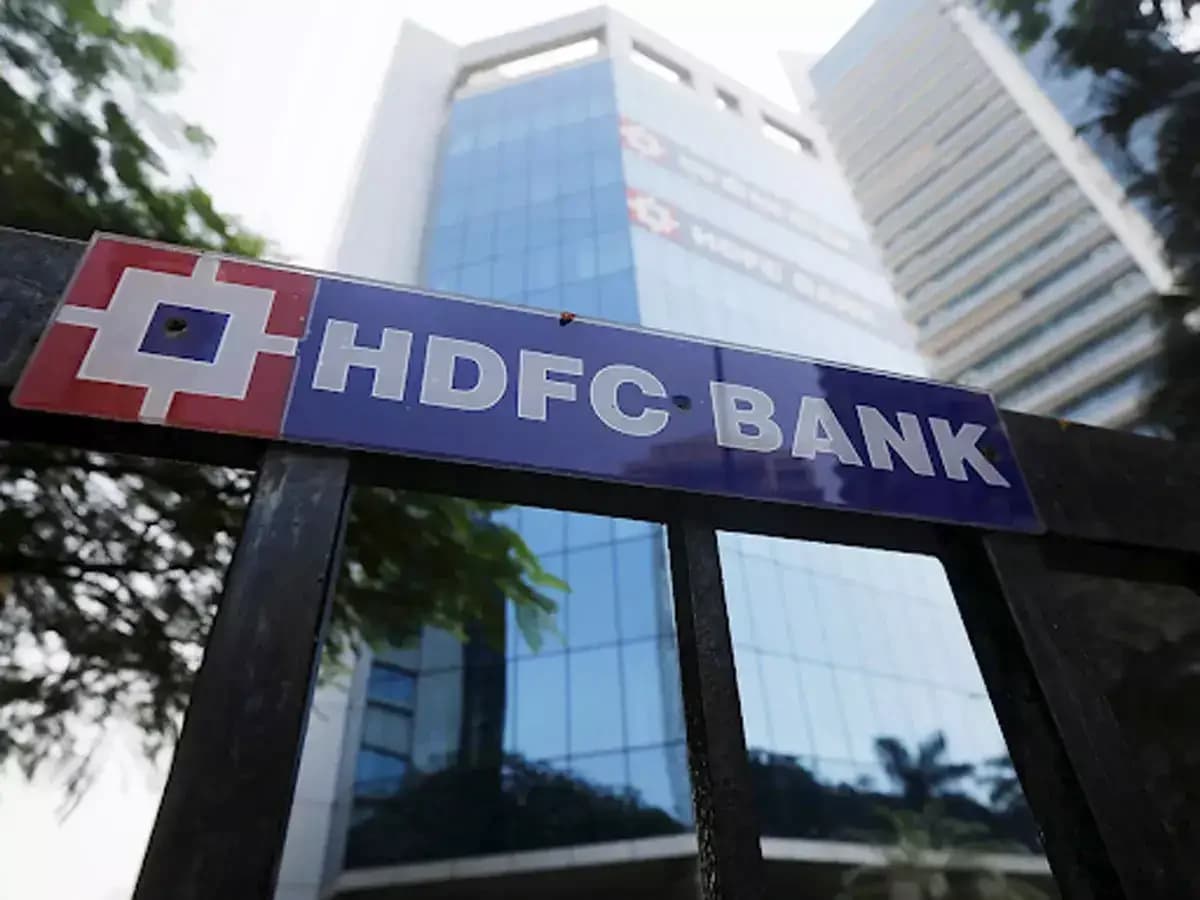
HDFC Bank finds itself in an uncomfortable spotlight. An internal investigation has found evidence that two senior executives shared confidential business strategies and potentially market-sensitive information with outsiders, according to a Bloomberg report. The executives, who oversee key businesses and functions, have been formally informed of the findings. Their identities remain undisclosed.
The bank confirmed that an internal review is underway but stopped short of confirming the specific allegations. "In line with our policies, an internal review into this matter is currently underway to gather and evaluate all relevant facts," a spokesperson said. "Appropriate action will be taken based on the findings, once the review is complete."
The investigation began after some senior officials raised concerns about possible information leaks. The findings were reportedly reported to senior management and some board members earlier this year. The bank is now examining whether the information was misused. No disciplinary action has been announced yet.
The Missing Pieces: What We Don't Know
Here's the uncomfortable truth: the specific control weaknesses that enabled this leak have not been made public. The bank has not disclosed how the information left the organisation, which systems or protocols were involved, or how the leak was detected. Reports describe the individuals as senior executives, which points to a human, access-based risk rather than an external breach. But this is an inference, not a finding.
Similarly, the detection method remains unclear. Reports say only that the probe followed concerns raised by leaders. It is not evident whether automated surveillance, a whistleblower complaint, or a manager's observation flagged the issue. The bank's stated framework includes board-approved Information Security and Cyber Security policies, a round-the-clock Cyber Security Operations Centre, and a Zero-Trust model. These technical controls are designed to stop external attacks and data loss. They do little against authorised senior insiders who share information verbally or on personal channels. Annual Report +2
Governance Under the Microscope
The timing could hardly be worse.
Deputy Managing Director Kaizad Bharucha, one of the bank's longest-serving executives, is also due to step down at the end of December.
This isn't the first governance headline this year.
An independent legal review commissioned by the lender subsequently found his concerns were not substantiated. In July, the bank concluded an internal review of its arrangement with Maharashtra State Road Development Corporation for garnering deposits. The Board found the conduct was "business overreach rather than any mala fide action, personal enrichment, or improper motive." Warning letters and a ₹1 lakh penalty were imposed on three senior employees, including the Managing Director & CEO and the CFO. Other +1
The board was reportedly informed about the current leak probe earlier this year. Investors may ask how long the process took and whether it was handled promptly. The bank has not said.
Market Impact and Competitive Risks
The stock market's reaction has been muted so far.
It hit a 52-week low of ₹710 in August after a US securities fraud lawsuit was filed against the bank and two executives over the MSRDC payments.
The competitive risks are harder to quantify but real. If plans on products, pricing, deposit mobilisation, or the HDFC merger integration reached outsiders, rivals or counterparties could pre-empt them. The report does not say which strategies were shared. Two senior executives oversee key businesses and functions. Exits or reassignments could disrupt those units. Brokerages have already flagged that the leadership transition could affect deposit mobilisation and fee income.
Regulatory Exposure
No regulator has announced any action on this matter yet. My search found no SEBI or RBI statement or order tied to the Bloomberg report. However, the regulatory framework could come into play depending on what the review finds.
If the information qualifies as Unpublished Price Sensitive Information (UPSI) and was misused, SEBI's insider trading rules could apply. The bank has a Share Dealing Code and a code on fair disclosure of UPSI designed to implement these rules.
Annual Report
RBI could also review governance, risk management, and the "fit and proper" suitability of the executives involved. The bank's Whistle Blower Policy explicitly covers leaks of UPSI in violation of insider trading rules and wilful unauthorised disclosure of customer data. The Audit Committee reviews how the mechanism works. Annual Report +2
Disciplinary Process and Future Prevention
No disciplinary or legal action against the two executives has been announced. The probe is ongoing, and the bank says it does not comment on active internal reviews. The executives are unnamed, and the findings come from Bloomberg's reporting based on unnamed sources. The bank has not confirmed the allegations.
The bank's disciplinary process in earlier cases shows a structured, committee-led approach. In the Dubai branch matter, the Governance, Nomination and Remuneration Committee directed an investigation that led to the removal of three employees. In the MSRDC matter, a Special Disciplinary Committee of Independent Directors reviewed the issue, leading to warning letters and penalties. Other +1
Nothing has been announced specifically in response to this probe regarding structural or policy changes. The bank's existing framework includes an amended Code of Conduct for directors and senior management, a Share Dealing Code, and extensive information security controls. These measures mostly address external threats and routine compliance. Whether they would catch deliberate sharing by senior staff is not known. Annual Report +2
The Horizon
The immediate focus is on the probe's outcome. Will the bank announce disciplinary action? Will it make a formal disclosure under listing regulations? Will SEBI or RBI step in? The incoming CEO, Anup Bagchi, takes charge on October 27. His first statements and any management changes will be closely watched.
The bank's market value stands at about $115 billion. The question now is whether this incident is a temporary governance stumble or a symptom of deeper cultural issues that need addressing.
The review is not complete. The facts are not fully out. But one thing is clear: at HDFC Bank, the spotlight is now on the inside.