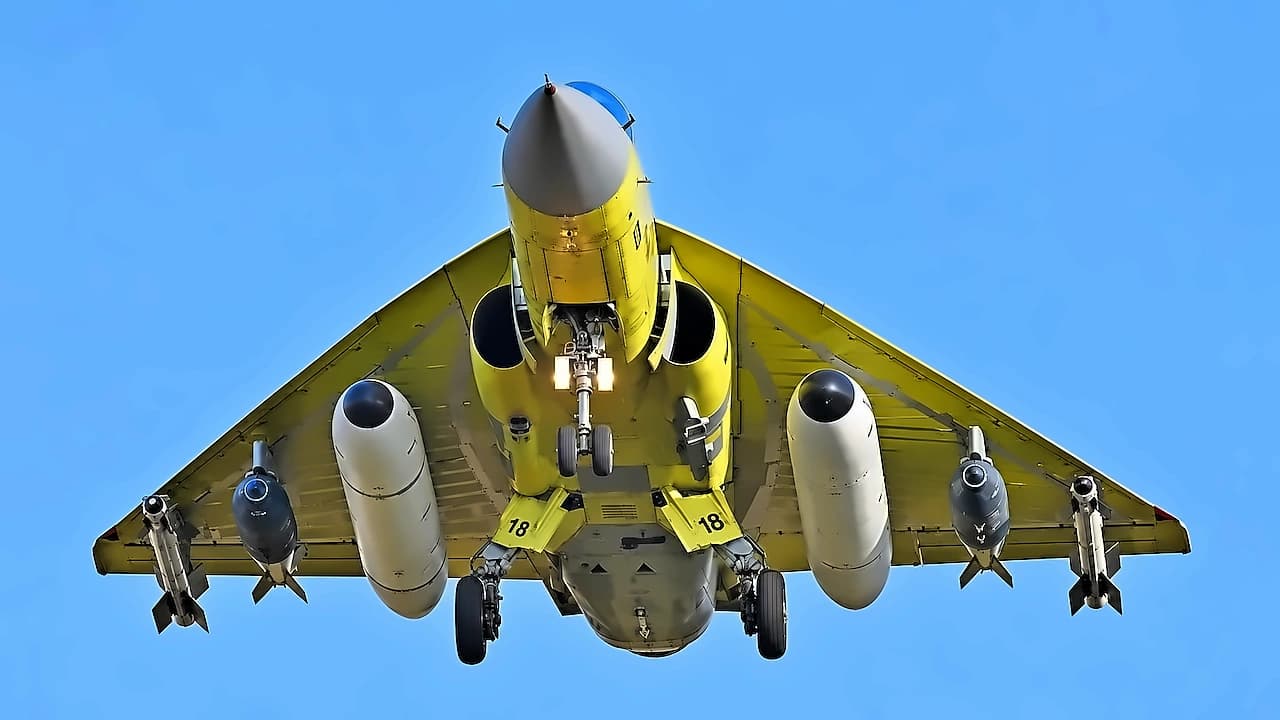
Hindustan Aeronautics Limited stands at a critical juncture where delivering 10 Tejas Mk1A aircraft this fiscal year versus Jefferies' earlier estimate of 5 represents more than just a numbers game—it's a credibility test. Each Tejas Mk1A aircraft generates approximately Rs 580 crore in revenue. Delivering 10 aircraft instead of 5 adds Rs 2,900 crore to FY27 revenue and Rs 870 crore to EBITDA at 30% margins. This 100% beat on delivery targets could drive Rs 1.21 per share in positive earnings surprise.
The causal mechanism linking first delivery to stock re-rating is straightforward.
The Indian Air Force accepting even one aircraft "will give confidence on the company's abilities and be a key upside driver," according to Jefferies. This binary event—delivery validation versus continued delays—directly impacts investor sentiment and valuation multiples.
Order Book Concentration: Risk or Strength?
Tejas Mk1A accounts for 43% of HAL's Rs 2.55 lakh crore order book, creating significant concentration risk. If the program faces 12-month delays, roughly Rs 1.10 lakh crore in revenue gets deferred. However, HAL's current revenue mix reveals a more nuanced picture. While Tejas Mk1A dominates the order book, Repair & Overhaul (ROH) services contribute 62% of current revenue at approximately 62% margins, providing natural diversification and recurring revenue stability. Transcripts
The order book stands at 7.7 times FY26 revenue, providing 7-8 years of visibility. To sustain 15% revenue CAGR through FY30, HAL needs to convert roughly Rs 2.23 lakh crore from this order book. The mathematics shows the order book would be nearly exhausted by FY30 at this growth rate, making pipeline conversion critical. The Rs 1.8 lakh crore pipeline extending beyond FY30 provides essential cushion, with major programs including the Rs 60,000 crore Su-30MKI upgrade and Rs 35,000 crore ALH expansion offering high-probability conversion opportunities. Transcripts
Margin Expansion Through Operational Efficiency
HAL's expected 17% EBITDA CAGR outpacing 15% revenue CAGR between FY26 and FY30 reflects operational leverage and margin improvement. EBITDA margins are projected to expand from 29.6% to 32.7% over this period. The company maintains ROE above 22% while keeping a debt-free balance sheet—a remarkable feat in capital-intensive defense manufacturing. This efficiency stems from strong working capital management, with current ratio at 2.29x and zero debt providing financial flexibility.
The program mix significantly influences overall margins. Manufacturing margins run around 30%, while ROH services deliver approximately 62% of revenue at higher margins. As HAL's revenue composition evolves from the current 30:70 manufacturing-to-ROH ratio toward a more balanced 50:50 split, margin expansion should accelerate. The Tejas Mk1A program, despite execution challenges, offers superior manufacturing margins compared to legacy licensed production, supporting overall profitability improvement. Transcripts
Valuation Justification and Re-Rating Potential
Jefferies' Rs 6,800 target price implies 43% upside from current levels around Rs 4,670. The brokerage values HAL at 35 times September 2028 earnings, supported by 16% EPS CAGR visibility through FY30. This multiple represents a reasonable premium to HAL's growth rate with a PEG ratio of 2.19x, especially considering superior order book visibility at 7.7x FY26 revenue compared to peers like BEL at 2.6x.
HAL's current P/E of 33.51x trades at a discount to the aerospace and defense sector average of 40.3x, despite having stronger fundamentals. Historical context shows HAL's P/E expanded from 10.3x in March 2021 to 25.6x in March 2026, reflecting the defense sector re-rating. The current valuation still discounts execution concerns that successful Tejas Mk1A delivery could address, creating multiple expansion potential from roughly 24x on forward earnings to 35x.
The discrepancy between HAL's internal delivery targets (10 aircraft) and external brokerage estimates (5 aircraft) creates significant potential for positive earnings surprises. Even a 100% beat on delivery targets translates to approximately 1% additional upside at 35x multiples, but the sentiment impact could drive multiple expansion to 38-40x, creating 10-15% additional upside.
The Engine Constraint: Production Bottleneck
GE F404-IN20 engine availability remains the binding constraint on Tejas Mk1A production. HAL has received only 10 of 99 contracted engines as of September 2026, representing just 10% fulfillment. GE has committed to delivering 12 more engines by December 2026 at four engines per month, which would enable HAL to achieve its 10-aircraft delivery target. The timeline from engine receipt to aircraft delivery spans 30-45 days, covering installation, integration, ground checks, flight testing, and IAF acceptance. Transcripts
This foreign supplier dependency significantly impacts HAL's working capital. Days Inventory Outstanding stands at 201.7 days, and the Cash Conversion Cycle reaches 199.3 days—both significantly above defense PSU benchmarks. Engine-related working capital ties up an estimated Rs 3,656-5,231 crore, with annual carrying costs of Rs 366-628 crore. GE's agreement to establish an in-country engine depot could reduce the CCC by 30-45 days, releasing Rs 2,500-3,500 crore in working capital.
The Path Forward
HAL's Tejas Mk1A execution represents both a near-term constraint and long-term opportunity. Successful delivery of 10 aircraft this fiscal year would validate production capabilities, address credibility concerns accumulated since 2024, and potentially trigger significant stock re-rating. The Rs 1.8 lakh crore pipeline provides growth visibility beyond Tejas, while operational efficiency improvements support margin expansion.
The investment case rests on execution. With 24-27 airframes ready, 90-95% radar and missile integration complete, and GE engine supply accelerating, HAL has the pieces in place. The market awaits the first delivery—the single event that could restore investor confidence and justify the 43% upside to Jefferies' target price.