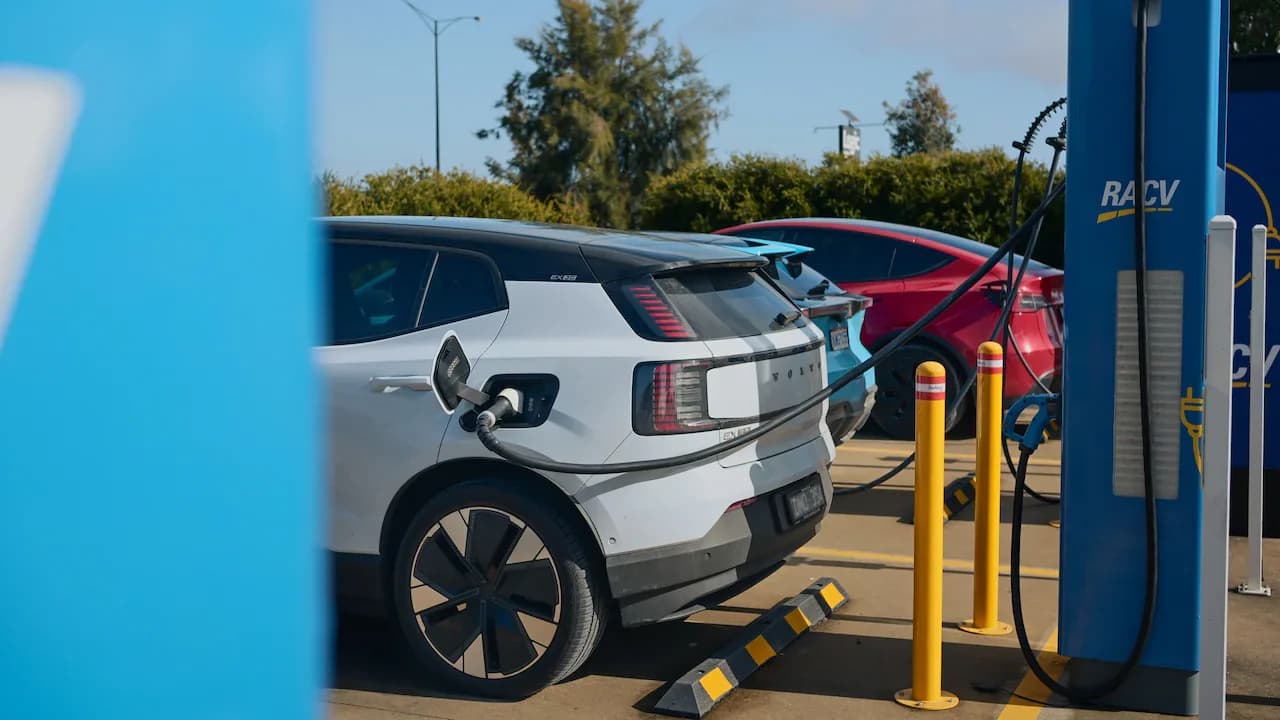
The Department of Expenditure's November 10 memorandum fundamentally changes how the government buys cars. Electric vehicles are now the "default and preferred choice" when ministries replace or condemn their existing internal combustion engine (ICE) staff cars.
Both ceilings are significantly higher than the Rs 6 lakh limit set in 2022 guidelines.
The policy isn't an absolute ban on ICE vehicles. Ministries can still buy conventional cars if they can justify that EVs are impractical for their needs, but they need approval from the Secretary of the Administrative Ministry and concurrence of the Financial Adviser on a case-by-case basis. The instructions took effect immediately, but crucially, the reports don't specify the number of government staff cars covered, expected procurement volumes, or implementation timelines.
Direct Impact on Order Books
For passenger vehicle makers, the policy creates potential incremental demand, but the immediate impact on order books is likely limited. Mahindra & Mahindra and Tata Motors Passenger Vehicles are the most exposed because they have established EV portfolios. However, both companies are currently supply-constrained rather than demand-constrained.
M&M's EV capacity is about 8,000 units, expected to rise to 12,000 by February-March. Cumulative EV sales have crossed 1 lakh vehicles, with EV penetration at about 12-12.7% of SUV sales. Tata Motors Passenger Vehicles delivered over 34,000 EV units in Q1 FY27, the highest ever, with EVs accounting for about 20% of sales and rising to 24% in July. The Punch.ev has an 8-10 month waiting period. Transcript +3
The reality is that retail demand already absorbs most available EV capacity. Any government volumes would compete with retail orders that typically carry higher realizations. The NDP ceiling is a cap, not a guaranteed price, and government procurement typically involves competitive tendering that can pressure margins. Until specific tenders emerge with volumes and pricing, the order book impact remains more sentiment than substance.
The Price Ceiling Game
Doubling the EV ceiling to Rs 20 lakh from Rs 10 lakh for ICE vehicles significantly expands the range of electric models that government departments can consider. This is particularly relevant for Hyundai Motor India, which plans to launch its first mass-market dedicated EV in India during the festive season in H2 FY27. The company is targeting day-one PLI eligibility, which requires 50% domestic value addition, and is localizing battery packs and power electronics. Transcript +1
For Tata Motors Passenger Vehicles, whose EV range runs from about Rs 7 lakh to Rs 30 lakh, a good portion of its portfolio sits under the Rs 20 lakh ceiling. However, the company's India EBITDA margin was flat at about 4% in Q1 FY27, with commodity inflation offsetting scale gains. The company has taken only about 1% cumulative price increases despite strong raw material headwinds, suggesting limited pricing power that could be further tested in government tenders. Transcript +2
Why M&M Led the Rally
The market reaction on November 11 revealed clear investor preferences. Mahindra & Mahindra led the gains with a 4.81% intraday rise, while Bajaj Auto registered the lowest gain at 1.28%. This differential makes sense when you consider product fit.
M&M is a four-wheeler SUV maker with an established EV range (BE 6, XEV 9e, XEV 9S, and XUV 3XO EV) and EV revenue market share leadership in the first half. These are precisely the type of vehicles the policy targets. Bajaj Auto's core business is two- and three-wheelers, which fall outside the staff-car procurement scope. The company's electric business is profitable with double-digit EBITDA, but EVs contribute over 20% of enterprise revenue, and the policy doesn't directly create demand for this segment. Transcript +1
The market appears to have priced M&M as the biggest beneficiary of EV demand, while Tata Motors Passenger Vehicles, despite its larger EV share, rose less. This may reflect Tata's longer waiting periods and intensifying competition in the EV space.
Pure-Play vs. Diversified Dynamics
The policy creates different risk-reward dynamics for pure-play EV companies versus diversified incumbents. Ola Electric Mobility and Ather Energy saw gains of 3.53% and 2.40% respectively, but their exposure to government staff-car procurement is effectively nil since they don't manufacture cars.
Ola Electric's Q1 FY27 adjusted operating EBITDA was negative Rs 195 crore, with free cash flow of negative Rs 351 crore. The company completed a Rs 780 crore QIP during the quarter to strengthen its balance sheet. Ather Energy, in contrast, reported its first positive EBITDA of about 4.9% in Q2 FY27, with working capital days at negative 36. Transcript +4
Diversified players like TVS Motor Company and Maruti Suzuki India can fund EV expansion from ICE cash flows. TVS's iQube crossed 1 million units during Q2, and management says EV margins are improving quarter after quarter. Maruti's e VITARA has launched domestically, but the company declined to commit to specific EV share targets, emphasizing a "balanced multi-powertrain" approach. Transcript +3
Margin and Operating Leverage Implications
Government procurement contracts are typically volume-driven but can come with pricing pressure that impacts margins. For M&M, per-vehicle EV profitability is already close to ICE and should align soon, though depreciation on new EV investments will remain a drag for a while. PLI incentives currently take EV margins to about 9%, but management expects operating leverage and pricing power to replace PLI over time. Transcript +1
For Tata Motors Passenger Vehicles, the key EV metric management watches is cannibalization of ICE volumes rather than variable margins. Minimal cannibalization would flow through to the bottom line via operating leverage. However, the company's thin 4% EBITDA margin leaves less cushion for pricing pressure. Transcript
Pure-play EV companies have higher sensitivity to volume. Ola's auto factory is already scaled to 1 million units annually, and management expects to convert incremental revenue into operating leverage as it moves toward breakeven. Ather's manufacturing output rose to 33,000 units per month in Q2, but Hosur is near its 35,000-unit limit until new capacity comes online. Transcript +3
Execution Risks and Historical Precedent
History suggests policy preference doesn't guarantee volumes. In 2017, Energy Efficiency Services Ltd (EESL) tendered for 10,000 EVs for government use, with Tata Motors and M&M as suppliers. By October 2019, only about 1,500 had been sourced, and EESL planned to cut the final order to about 3,000. Reasons included failure to aggregate demand, state government changes, and complaints about EV performance and range.
Current execution risks remain. M&M faces commodity and supply chain constraints, with 7XO waiting periods of 5-7 months. Tata Motors' Sierra output was hit by engine casting shortages and press capacity constraints. Hyundai's June supplier production disruption constrained domestic volumes. Transcript +3
The provision for case-specific ICE relaxation creates uncertainty. While it adds friction to ICE buying, it doesn't bar conventional vehicles. How often relaxations are granted will show how binding the EV default really is. For EV-focused companies like Ola and Ather, which can't supply staff cars anyway, this provision doesn't directly affect their government order volumes.
The International Competition Factor
International EV makers like Tesla, BYD, and VinFast face steep import duties and local value addition requirements. Tesla's reduced 15% duty route covers only limited imports under a scheme tied to local investment, with minimum local value addition targets. BYD's investment plan was reported as rejected, and Chinese investment in Indian EV manufacturing was described as almost nonexistent.
Imported premium EVs would likely exceed the Rs 20 lakh NDP ceiling, though model prices weren't specified in retrieved sources. For domestic players like TVS, Maruti, and Bajaj, foreign competition is more of a retail and export issue than a procurement one. Maruti's e VITARA is locally made, positioning it well for any government preference for domestic manufacturing.
Strategic Shifts Ahead
The policy will influence capital expenditure priorities. TVS Motor has a "big capacity expansion" underway, with EV operating capacity at 60,000-65,000 units per month heading to 80,000. Hyundai's Pune plant (Phase 1 capacity 170,000 units) and 72% utilization at Chennai Plant 1 mean there's spare capacity to absorb ICE and EV volumes without immediate new capacity spending. Transcript +3
For working capital intensive players like Ola Electric, which had operating cash flow of negative Rs 215 crore in Q1 FY27, scaling for government demand would require careful cash management. Established players like M&M and Tata Motors Passenger Vehicles fund EV growth from larger ICE cash flows, giving them more stability. Investor Presentation
The bottom line? The government's EV staff-car push is a significant signal that creates option value for EV-ready manufacturers. But the real impact will depend on execution, tender specifics, and how companies balance government volumes against higher-margin retail demand. The market has already voted with its feet—M&M as the primary beneficiary, Bajaj as least exposed—but the fundamentals will play out over quarters, not days.