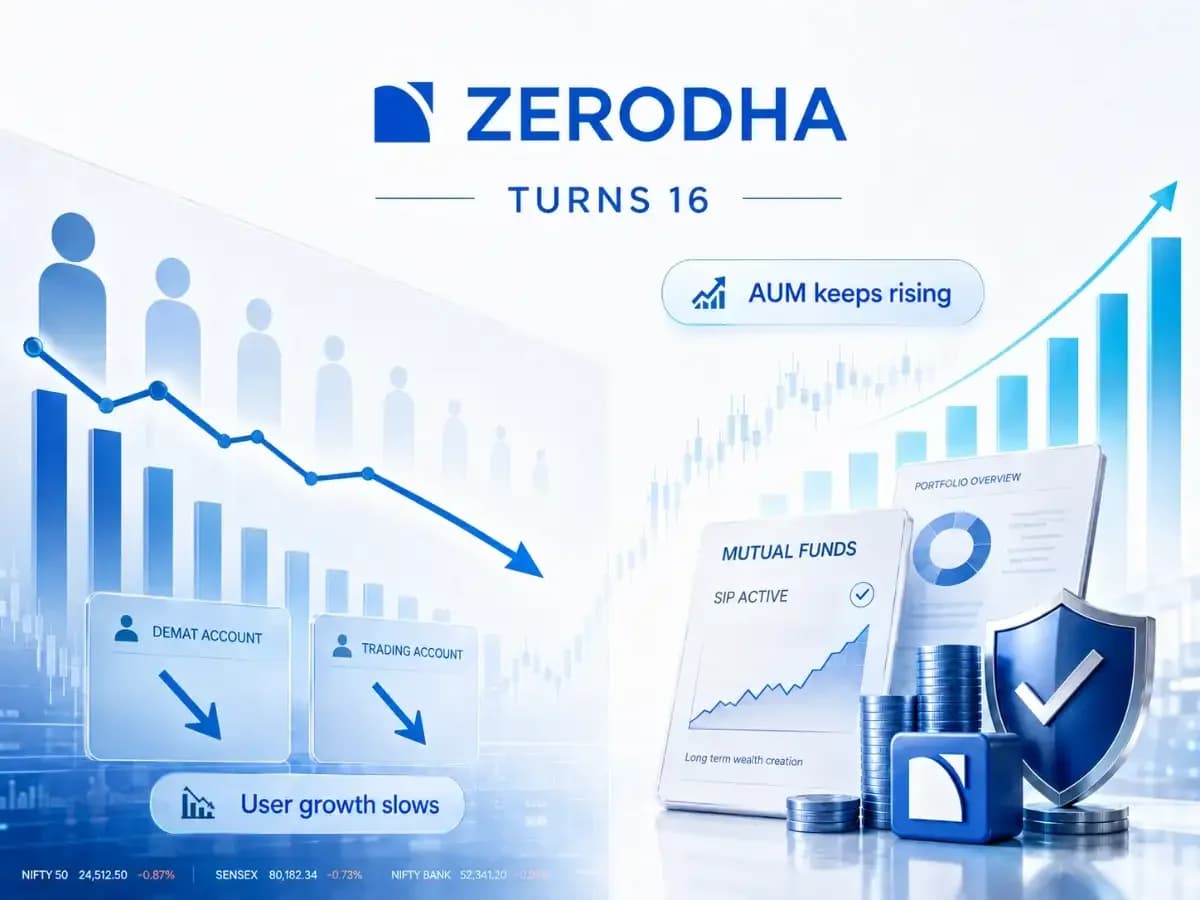
In June 2026, four of India's leading discount brokers—Zerodha, Groww, Angel One, and Upstox—received regulatory approval from the International Financial Services Centres Authority (IFSCA) to offer US stock investing through GIFT City. This development marks a significant shift in the competitive landscape, enabling these brokers to tap into surging demand for international exposure while operating within a unified Indian regulatory framework. The services are expected to launch within 2-3 months after completing technology, testing, and compliance requirements.
The approval comes at a critical time for these brokers. Zerodha reported an 11.5% decline in revenue to ₹8,847 crore in FY25, with net profit falling 22.9% to ₹4,237 crore. Angel One faces even steeper margin compression, with profit after tax declining 66.3% quarter-over-quarter in Q1 FY26. Upstox, while growing profit 21.5% to ₹215 crore in FY25, operates with razor-thin EBITDA margins of just 0.98%. For these players, international investing represents both a new revenue stream and a strategic imperative for diversification.
Revenue Mix and Margin Implications
For Zerodha, international trading commissions are likely to contribute 2-5% of total revenue in the first 1-2 years post-launch. Given its substantial revenue base of ₹8,847 crore, this translates to approximately ₹175-440 crore annually. While modest relative to domestic operations, the higher-margin nature of international trading could improve Zerodha's already impressive EBITDA margin of 63.78% by 50-100 basis points. The broker-dealer model allows Zerodha to capture multiple revenue streams including commissions, spreads, and premium services.
Angel One's margin compression story is more pressing. With total income declining 15.9% quarter-over-quarter to ₹1,143.09 crore in Q1 FY26, international investing offers a potential hedge against domestic pressures. As a Global Access Provider (GAP), Angel One benefits from lower infrastructure costs and zero withdrawal fees when bringing funds back to India. Realistic projections suggest international investing could contribute 3-5% of total income in the first year, potentially scaling to 8-12% over 3-5 years. However, given the nascent stage of GIFT City UDRs (currently only 50 US stocks with annual trading value of ~₹40 crore), meaningful offset of domestic compression will take time.
Upstox faces the most challenging revenue equation. With domestic brokerage income of ₹767 crore representing 81% of total operating income, even capturing 20-30% of the GIFT City UDR market would generate only ₹8-12 crore initially—roughly 1-1.5% of existing domestic brokerage income. However, as the market grows and Upstox scales, this could reach 5-10% over 3-5 years. The broker-dealer model provides direct control over execution and operations, enabling differentiated offerings that could command premium pricing.
Technology and Compliance Infrastructure
The technology investments required are substantial. Zerodha will need to invest an estimated ₹150-200 crore over 18-24 months to build international trading capabilities. This includes ₹40-60 crore for trading platform integration, ₹25-35 crore for connectivity infrastructure with foreign clearing partners (ViewTrade International, Interactive Brokers, and Alpaca Securities), and ₹30-45 crore for compliance and risk management systems. Zerodha's strong cash position of ₹22,679 crore provides ample flexibility to fund these investments without impacting domestic operations.
Groww has strategically allocated ₹152.50 crore from its November 2025 IPO proceeds specifically for cloud infrastructure, which will support both domestic and international operations. As a GAP provider, Groww requires lower technology investment than broker-dealers, estimated at ₹80-120 crore over 18-24 months. The partnership-based model reduces capital expenditure while maintaining flexibility to scale. Groww's super-app ecosystem, with 1.4 crore+ active customers, provides a significant cross-selling advantage.
Angel One and Upstox face incremental operational costs of ₹25-40 crore and ₹30-40 crore respectively to establish GIFT City connectivity. Angel One's GAP model provides cost advantages, requiring investment in API integration with GAP partners, platform modifications, and compliance systems. Upstox, operating as a broker-dealer, faces stricter requirements including dedicated compliance officers, physical infrastructure in GIFT City, and direct exchange connectivity.
Regulatory Compliance Landscape
The regulatory framework under IFSCA is comprehensive and evolving. All brokers must submit Annual Compliance Audit Reports (ACAR) and Annual Compliance Audit Checklists (ACAC) to IFSCA by September 30 each year. Broker-dealers like Zerodha and Upstox face higher compliance obligations, including minimum net worth requirements of USD 100,000 for investment bankers and tiered structures based on operational scale. GAP providers like Angel One and Groww benefit from reduced net worth requirements, lowered from USD 1,000,000 to USD 500,000, with an entry threshold of USD 100,000.
These represent 6-21% of projected international trading revenue in early years for Zerodha, but a staggering 250-450% for Upstox, highlighting the profitability pressure on smaller players. IFSCA has increased regulatory scrutiny, issuing show cause notices to nearly 10 entities for compliance lapses including unattended offices, absence of key personnel, and inadequate infrastructure.
Competitive Positioning Shifts
The GIFT City approval fundamentally alters competitive dynamics. Zerodha transitions from a laggard to a serious contender in international investing, leveraging regulatory legitimacy and platform integration. The unified IFSCA regulator provides credibility advantages over platforms using complex offshore structures. Zerodha's strong domestic reputation (4.5/5 rating) combined with IFSCA oversight creates trust advantages.
Upstox and Angel One gain significant first-mover advantages. Early entry establishes category leadership and creates customer education benefits. Upstox's broker-dealer model provides direct control over execution, while Angel One's GAP model offers lower costs and partnership flexibility. Both can capture 8-15% market share in the international segment over 3-5 years.
Groww faces the challenge of rebuilding trust after discontinuing its US stocks service in February 2024 due to complications with USD funds, high withdrawal fees, and frequent downtimes. However, its super-app ecosystem with 6.98 crore total users and 3.61 crore active customers provides a significant cross-selling advantage. Groww's differentiation strategy focuses on simplicity, accessibility, and its beginner-friendly interface that appeals to its core demographic of 18-35 year-olds.
Customer Acquisition and Retention Dynamics
The availability of US stocks will significantly influence customer acquisition. Groww is positioned to capture the highest acquisition rate improvement (35-40%) due to demographic alignment with younger, mobile-first users seeking global exposure. Zerodha will see more modest acquisition gains (25-30%) but higher AUM growth per customer due to its sophisticated, high-value client base.
For retention and AUM, Angel One and Upstox stand to benefit most. Angel One can leverage international investing to offset domestic margin compression, potentially improving retention rates from 85-88% to 90-92% and driving 8-12% AUM growth from the international segment in 2-3 years. Upstox, facing a 27.64% YoY decline in active clients, could see retention improvements of 20-25% as international investing provides critical differentiation.
Pricing strategies will play a decisive role in customer migration. The GAP model's zero withdrawal fees creates competitive advantages for Angel One and Groww. Current international platforms like Winvesta charge ~1% forex markup with $10 withdrawal fees, while Vested charges ~1.5-2% forex markup with $11 withdrawal fees. GIFT City's regulatory benefits, including no STT/CTT and no stamp duty, enable competitive pricing while maintaining healthy margins.
The Path Forward
The GIFT City international investing opportunity represents a strategic inflection point for India's discount brokers. While immediate revenue contributions will be modest given the nascent stage of GIFT City UDRs, the long-term potential is significant. The brokers that successfully combine competitive pricing, superior user experience, and effective cross-selling will capture this opportunity.
Zerodha's strong financial position and technology infrastructure position it well for sustainable growth. Groww's massive user base and product-led growth model provide significant cross-selling advantages. Angel One's GAP model offers cost efficiencies that could drive profitability. Upstox's first-mover advantage and technology focus could help it recover from recent client declines.
The true value lies not just in immediate revenue generation, but in customer retention, platform stickiness, and positioning for future growth as the GIFT City ecosystem matures and expands beyond the current 50 US stocks to include ETFs, bonds, and derivatives.