The Big Picture: Why GE Vernova Is Betting $9 Billion on Grid Equipment
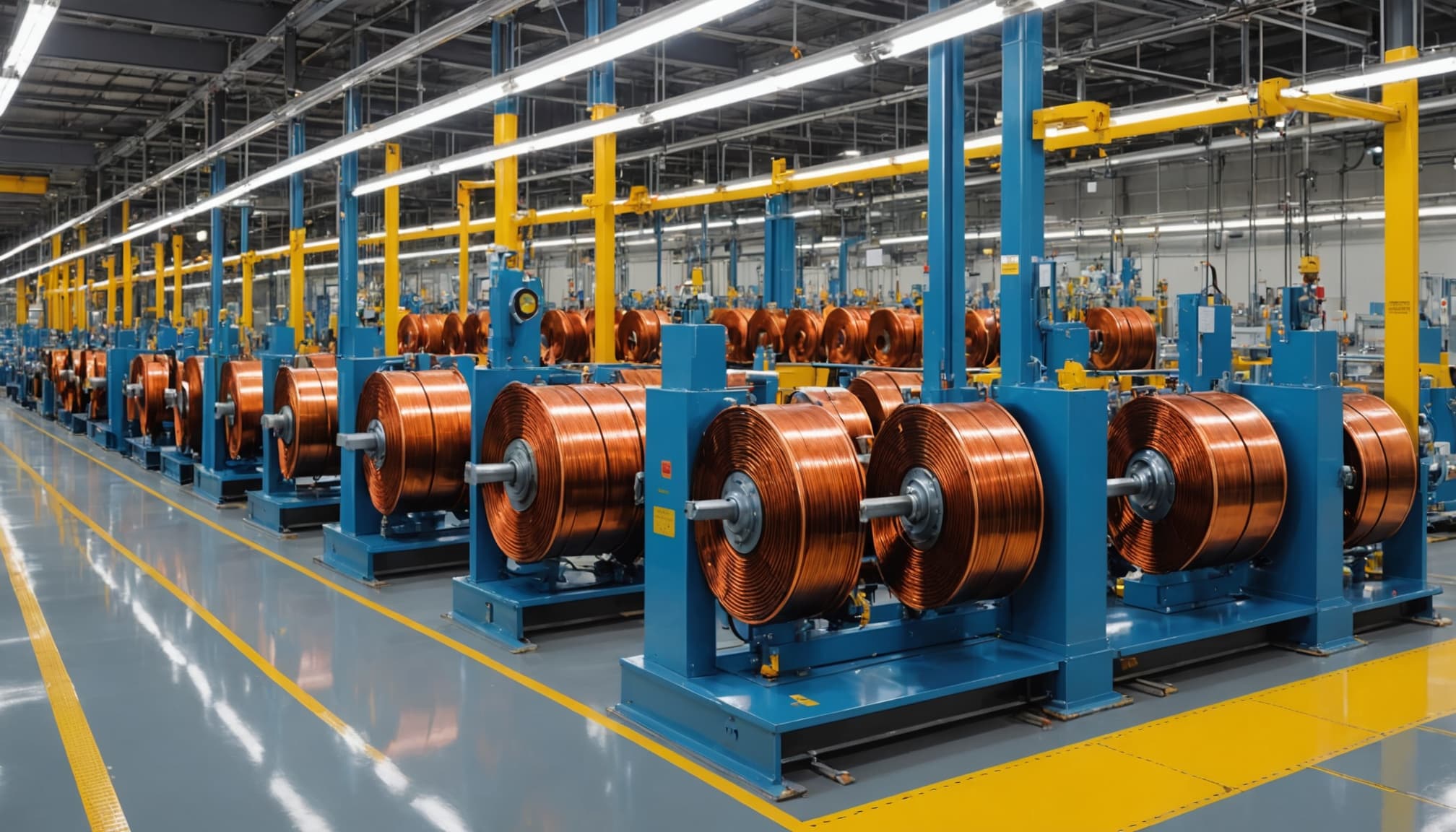
Here’s the thing about the energy transition—it’s not just about generating power anymore. It’s about moving it. On October 28, 2026, GE Vernova Inc. announced it signed an agreement to acquire Trench Group from private equity firm Triton Partners for a staggering $9 billion equivalent. This isn’t just another bolt-on purchase. Trench makes the specialized high-voltage components—bushings, instrument transformers, coils—that sit inside substations and along transmission lines, acting as the critical plumbing for the grid.
The deal comes at a time when electricity demand is surging, driven by electrification, industrial growth, and the massive build-out of data centers to support artificial intelligence. GE Vernova expects the high-voltage equipment market to reach approximately $130 billion by 2030. By bringing Trench in-house, GE Vernova is vertically integrating a key supplier, aiming to shorten coordination loops and capture more value from the transmission boom.
Strengthening the Grid Portfolio and Diversifying Revenue
So, what exactly does GE Vernova get for its money? Trench brings over 130 years of engineering heritage, more than 3,000 employees, and 11 manufacturing sites spread across Europe, North America, and Asia. The company serves over 800 utilities and hyperscalers globally. Perhaps most importantly, GE Vernova claims Trench’s components are used in the majority of high-voltage direct-current (HVDC) lines built globally. That’s a strategic choke point in the grid value chain.
The acquisition directly strengthens GE Vernova’s Electrification segment, specifically its Grid Systems Integration and Power Transmission businesses. This is crucial because Electrification is currently the company’s fastest-growing segment. In the third quarter of 2026, Electrification revenue jumped 51% year-over-year to $3.86 billion, with segment EBITDA margins reaching 19.1%. Equipment backlog in this segment soared 60% to $42.2 billion. Adding Trench’s roughly $5 billion in backlog and framework agreements—some extending into the next decade—provides significant earnings visibility.
From a diversification standpoint, this move reduces GE Vernova’s reliance on its Power segment (gas turbines) and its loss-making Wind business. While Power delivered strong Q3 results with a 21.4% margin, Wind remains a drag with guided losses of $400–500 million for 2026. Trench offers a pure-play exposure to grid infrastructure spending, which is arguably more sustainable over the long term as the world modernizes its electrical networks.
The Price Tag: Rich Valuation or Strategic Necessity?
Let’s talk numbers. The $9 billion price tag represents about 13 times Trench’s projected 2028 adjusted EBITDA before synergies. That’s a premium multiple, no doubt about it. To put it in perspective, GE Vernova forecasts Trench’s revenue will grow from $1.4 billion in 2026 to $1.9 billion in 2028, with adjusted EBITDA margins expanding from roughly 33% to 36%. Applying that 36% margin to $1.9 billion in revenue gives about $684 million in EBITDA, making the 13x multiple math check out.
The deal is expected to be funded equally through cash and debt, implying about $4.5 billion from each source. GE Vernova anticipates annual interest costs of around $0.2 billion from the debt portion. However, the company ended Q3 2026 with a cash balance of approximately $17 billion, up $4 billion sequentially. This strong cash position gives it the firepower to absorb the acquisition without derailing other priorities.
Management expects the transaction to be immediately accretive to earnings after closing, citing Trench’s margin-accretive financial profile. They also project approximately $50–100 million in annualized cost synergies by 2030, driven by combining sourcing operations, optimizing factory flow, and leveraging best-cost locations. While these synergies aren’t massive relative to the purchase price, they provide a margin cushion.
The Stock Market’s Curious Reaction: Sell the News?
Here’s where it gets interesting. You’d think a company beating earnings expectations, raising guidance, and announcing a strategic acquisition would see its stock soar. Instead, GE Vernova shares fell about 6% in early trading following the announcement. Why the disconnect?
Part of it is simply expectations. GE Vernova stock was already up roughly 30–36% year-to-date before the announcement, meaning a lot of good news was already priced in. This is a classic “sell the news” reaction. Investors looked at the raised 2026 guidance—revenue of $46.5–47.5 billion and free cash flow of $16–17 billion—and saw only incremental improvements over consensus estimates.
Then there’s the timing. The Trench deal isn’t expected to close until late 2027, subject to regulatory approvals. That means none of the benefits flow into the 2026 numbers, and investors have to wait over a year to see the integration play out. In the meantime, the company is taking on debt and navigating integration risks while its Wind segment continues to struggle.
Some analysts also questioned the valuation. At 13x 2028 EBITDA, the price looks rich, especially for a deal that doesn’t move the needle immediately. Without public financials for Trench (it’s privately held), investors can’t independently verify the growth forecasts, adding a layer of uncertainty.
Integration Challenges: Easier Said Than Done
Integrating a 3,000-person, 11-site global operation is never straightforward. GE Vernova management points to its successful integration of Prolec GE—which it expects to be substantially complete before Trench closes—as proof of its capability. But Trench presents its own set of challenges.
The company is headquartered in Berlin, with significant manufacturing footprints in Europe. Closing the deal requires legally mandated consultations with employee representatives, which could complicate efforts to rationalize the footprint or shift production to lower-cost locations. Management has discussed evaluating manufacturing of Trench products in India to leverage GE Vernova’s existing presence there, but that’s a long-term play.
There’s also the accounting nuance. Trench’s financials were prepared by GE Vernova based on data provided by Trench, reflecting Trench’s own accounting policies which may differ from GE Vernova’s. This means reported numbers could be restated post-closing, adding another variable for investors to track.
What to Watch: Metrics That Matter
If you’re tracking this story, here are the key metrics to keep an eye on. First, watch Trench’s revenue and margin trajectory against the forecast path to $1.9 billion in revenue and 36% margins by 2028. Any miss here would be a red flag given the premium valuation.
Second, monitor the realization of synergies. Management has targeted $50–100 million in annual cost synergies by 2030. Progress updates on this front will be crucial for assessing whether the deal is truly accretive.
Third, keep an eye on Electrification segment margins and backlog. Q3 margins of 19.1% and equipment backlog of $42.2 billion set a high bar. Investors will want to see Trench contribute to expanding these figures post-closing.
Finally, watch the balance sheet. GE Vernova has committed to maintaining an investment-grade balance sheet with debt-to-adjusted-EBITDA remaining below 1x after the transaction. With the company also doubling its share buyback authorization to $20 billion, capital allocation discipline will be under the microscope.
The Verdict: A Long-Term Bet on the Grid
At its core, the Trench acquisition is a statement of conviction from GE Vernova about the durability of the grid infrastructure boom. It’s a bet that the world’s electrical networks need massive upgrading over the next decade, and that owning the critical components inside those networks is a lucrative place to be.
The near-term stock volatility reflects the tension between this long-term vision and short-term execution risks. Investors are essentially being asked to trust management’s integration track record, pay a premium for future growth, and wait patiently for the payoff. If GE Vernova pulls it off, the company will be uniquely positioned to serve the electrification supercycle. If not, the $9 billion price tag will loom large. For now, the story is just beginning.