GAIL (India) Limited faced a brutal quarter. Standalone net profit crashed 21% sequentially to ₹1,262 crore in Q4 FY26, down from ₹1,602 crore in Q3 FY26. The real story lies in the margins—EBITDA collapsed from 7.79% to just 3.31%, a staggering 448 basis point implosion. Yet revenue still managed to inch up 2.1% to ₹34,797 crore. How does revenue grow while profits evaporate? That's the puzzle GAIL's numbers present. AnnualReports +2
The culprit wasn't hard to find. The West Asian crisis in March 2026 triggered a force majeure declaration by Petronet LNG on March 3, effectively cutting off GAIL's RLNG allocation to zero from March 4. Four LNG cargoes were impacted. Natural gas sales dropped 21 MMSCMD and transmission volumes fell 30 MMSCMD compared to February. When you're forced to buy spot LNG at $25/MMBtu—nearly double long-term contract prices—something's got to give. That something was profitability.
The Margin Meltdown Explained
The 56.5% EBITDA decline to ₹1,153 crore despite revenue growth tells you everything about GAIL's business model. The company recognizes gas revenue on a gross basis—the full value of gas sold—but earns primarily through marketing margins and trading spreads. When LNG spreads compress and input costs spike, revenue can hold up while margins get crushed. AnnualReports +2
Other expenses surged 56% QoQ, adding ₹1,210 crore of pressure. Changes in inventories turned less favorable, and finance costs crept higher. The petrochemical segment, already struggling with operating losses, faced higher feedstock costs as Henry Hub prices nearly doubled year-on-year. Even a 12% pipeline tariff hike effective January 1, 2026, couldn't offset the damage—especially since GAIL had requested implementation from January 2025 but got it a year late. AnnualReports
The ₹9,594 Crore Growth Bet
Despite the Q4 pain, GAIL pushed forward with an ambitious capex program. Pipeline infrastructure and petrochemical projects got the lion's share. The company added roughly 2,000 km of pipeline network during the year and achieved record LPG transmission of 4.6 MMTPA. The board also approved doubling the Jamnagar-Loni LPG pipeline capacity from 3.25 MMTPA to 6.5 MMTPA at a cost of ₹5,364 crore, with completion expected by July 2028.
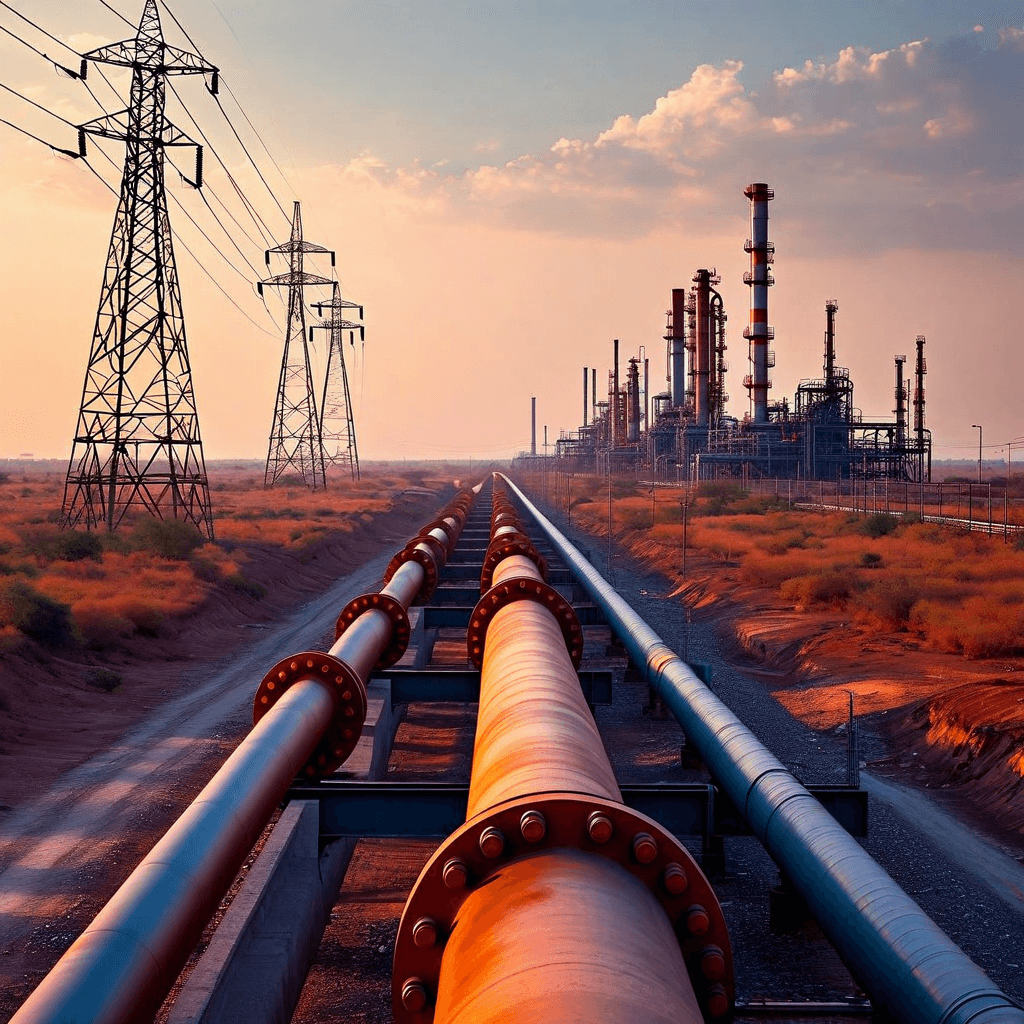
The return timeline is straightforward. Major pipeline projects like Mumbai-Nagpur-Jharsuguda (1,702 km) and Kochi-Koottanad-Bengaluru-Mangaluru (901 km) are commissioning progressively from late 2025 through 2026. The Gurdaspur-Jammu pipeline (152 km) follows by July 2026. These projects will enhance transmission capacity and support the national gas grid expansion, with revenue contributions beginning as sections come online. AnnualReports +1
Renewable Energy: The Strategic Pivot
GAIL's capital allocation tells an interesting story. Net Zero/Renewables capex jumped from ₹77 crore in FY25 (1% of total) to ₹1,200 crore in FY26 (11%)—a nearly 15-fold increase. The board approved ~700 MW of solar projects with integrated storage and ~178 MW of wind capacity, plus 6 CBG plants totaling ~95 TPD. InvestorPresentations +1
The financial impact plays out over 3-5 years. The ₹5,536 crore renewable investment (₹3,800 crore solar + ₹1,736 crore wind) represents about 5.7% of GAIL's capital employed. With a conservative debt-equity mix, the leverage impact remains manageable. The real benefit comes from captive power generation for petrochemical plants—solar costs have fallen to ₹2-3 per unit versus grid power at ₹5-7, suggesting potential annual savings of ₹800-1,200 crore once fully operational. The CBG plants complement the traditional gas business through the CBG-CGD Synchronization Scheme, creating synergies with existing pipeline infrastructure. Others +1
The JV Balancing Act
GAIL invested ₹1,593.73 crore in equity contributions to joint ventures and subsidiaries during FY26. The portfolio spans 8 subsidiaries, 9 JVs, and 13 major associates, including heavyweights like Petronet LNG, Indraprastha Gas, and Mahanagar Gas. These investments generated ₹1,504.21 crore in share of profit and ₹1,218.33 crore in dividends. AnnualReports +4
The strategic alignment is clear—CGD JVs support geographic penetration and last-mile connectivity, while petrochemical subsidiaries enable downstream value addition. But there are risks. The ₹1,593 crore outflow reduces liquidity, and some entities like Talcher Fertilizers and petrochemical projects are in development phases with near-term losses. The fertilizer JV alone requires a ₹10,675 crore investment through rights issue. These investments can strain working capital and require additional funding, potentially increasing leverage. AnnualReports
Geopolitical Volatility and Policy Support
The Russia-Ukraine conflict, ongoing since 2022, continued to impact GAIL through disrupted LNG supplies and elevated spot prices. But the West Asian crisis in March 2026 was the acute shock. Petronet's force majeure declaration and the effective closure of the Strait of Hormuz disrupted 55% of India's LNG imports, creating a supply deficit of 28-29% of domestic consumption.
Here's where government policy proved crucial. The Natural Gas (Supply Regulation) Order dated March 9, 2026, provided a clear framework for priority sector allocation—100% for domestic PNG, CNG, and LPG production; 70% for fertilizers; 80% for other industrial consumers. This enabled GAIL to implement mitigation measures including spot market procurement and alternative sourcing while maintaining supply to priority sectors. The domestic gas pricing framework, with APM prices set at 10% of Indian Crude Basket and capped at $6.5/MMBTU, insulated consumers from extreme global volatility. AnnualReports +3
The Dividend Decision
Despite the 21% sequential profit decline, GAIL's board recommended a final dividend of ₹0.50 per share, taking total FY26 dividend to ₹5.50 per share and a payout ratio of 51.90%. This wasn't just about shareholder returns—it was about compliance.
GAIL's 51.90% comfortably exceeds this requirement.
The balancing act is delicate. The 51.90% payout ratio leaves approximately ₹3,351 crore in retained earnings (48.1% of PAT) to fund growth initiatives. With strong debt service coverage ratios (2.47 times) and interest coverage (10.14 times), GAIL has the financial flexibility to maintain dividends while funding its capex program. The interim dividend of ₹5 per share, paid in February, provided shareholder relief amid earnings pressure, while the final dividend signals confidence in long-term prospects. AnnualReports
Consolidated vs Standalone: The Divergence
The divergence tells an important story. Consolidated EBITDA of ₹2,703 crore was ₹528 crore higher than standalone's ₹2,175 crore, improving the margin by 132 basis points to 7.57% versus 6.25%.
This cushioning came from joint ventures and subsidiaries. CGD entities like Central UP Gas, Green Gas Limited, and Maharashtra Natural Gas generally maintained stable performance with resilient demand. Petronet LNG, despite force majeure challenges, continued operations and contributed dividend income. However, some entities created drag—petrochemical subsidiaries faced margin pressure similar to standalone operations, and fertilizer JVs like Talcher Fertilizers are in heavy investment phases with near-term losses. AnnualReports +1
The consolidated resilience reflects the strategic value of diversification. While standalone operations faced direct exposure to LNG supply disruptions, the consolidated entity benefited from geographic spread, business mix variety, and risk distribution across multiple entities.
Looking Ahead
GAIL's Q4 FY26 performance was a stress test, and the results show both vulnerability and resilience. The geopolitical shocks exposed the sensitivity of GAIL's business to global energy markets, particularly LNG pricing and supply security. The margin compression was severe, but the operational response—maintaining supply to priority sectors, executing capex, and continuing strategic investments—demonstrated management discipline.
The ₹9,594 crore capex program and renewable energy investments position GAIL for long-term growth, but the near-term path remains challenging. Petrochemical margins need recovery, LNG spreads need stabilization, and geopolitical risks require careful navigation. The 51.90% dividend payout balances immediate shareholder returns with growth funding, but sustaining this balance will require improved operational performance.
The divergence between consolidated and standalone results highlights the value of GAIL's diversified portfolio. As the company executes its pipeline expansion, renewable energy transition, and JV growth strategy, the ability to leverage this diversification while managing core business volatility will determine whether Q4 FY26 was an aberration or a sign of things to come.