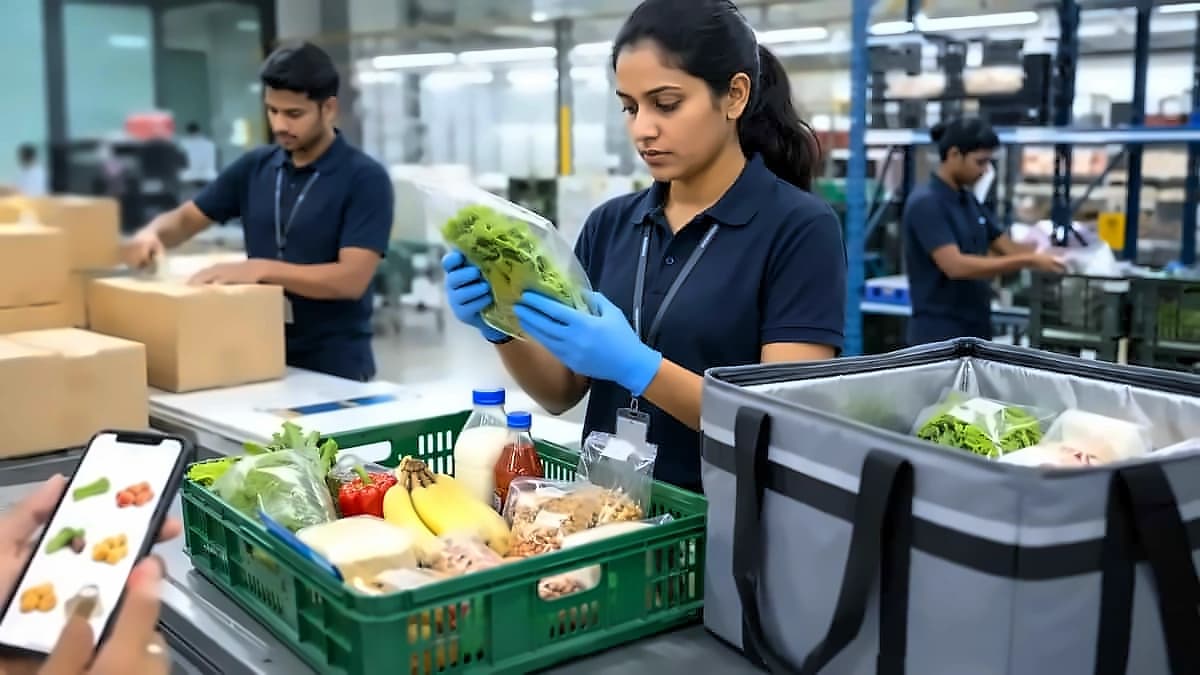
India's food safety landscape is undergoing a dramatic transformation.
Maharashtra alone has seen more than 3,000 spot checks, resulting in 165 licence suspensions, 764 improvement notices, and the seizure of 28.66 lakh kg of food worth approximately ₹55.72 crore. High-profile establishments including JW Marriott, Andaz Delhi, Domino's, Pizza Hut, and KFC outlets have faced action, while quick-commerce giants like Blinkit, Zepto, and Swiggy Instamart have had 14 food-business licences suspended following inspections of 86 online food storage establishments.
This intensified scrutiny is not merely bureaucratic. Social media outrage has become a primary catalyst, creating a powerful feedback loop between digital platforms and regulatory authorities. Viral posts exposing filthy kitchens, pest infestations, and questionable food practices pile pressure on authorities to act. The result is a new dynamic where shocking videos or posts trigger public outrage, which prompts complaints, leading directly to regulatory inspections. FSSAI has registered 21,042 consumer grievances against online food delivery apps over the past five years, with issues ranging from adulterated food and labelling defects to service deficiencies and pricing discrepancies.
The Compliance Cost Squeeze
The financial impact on businesses is immediate and substantial. For restaurants, direct licensing costs vary by turnover: ₹100 annually for basic registration (turnover below ₹1.5 crore), ₹5,000 for state licences (₹1.5-50 crore), and ₹7,500 for central licences (above ₹50 crore). However, the true burden lies in hidden compliance costs: NABL water testing, staff training programs, pest control systems, temperature monitoring equipment, and external audit fees. One Gurugram restaurateur reported that food-safety compliance costs had risen by approximately 1.5 times over the past month alone.
Quick-commerce firms face even steeper infrastructure costs due to their distributed dark store model. The All India Consumer Products Distributors Federation has proposed an SKU-to-space ratio of 0.35-0.40 sq ft per SKU. Under this framework, a dark store handling 65,000 SKUs would require 23,000-26,000 sq ft, plus additional space for refrigeration, product segregation, movement areas, and dedicated zones for damaged or expired products. Beyond floor area, platforms must invest in temperature-controlled storage, enhanced pest control and sanitation systems, real-time inventory tracking with FIFO/FEFO enforcement, and product traceability systems across their entire networks.
Operational Disruptions and Strategic Responses
The crackdown has caused significant operational disruptions. License suspensions and temporary closures halt revenue completely. Four Domino's outlets and one Pizza Hut outlet were shut in Maharashtra over hygiene violations, while a KFC outlet in Mangaluru was sealed after a complaint about foul-smelling chicken. Beyond closures, businesses face forced inventory write-offs of expired products discovered during raids, supplier relationship strain as verification processes tighten, and menu modifications when non-compliant ingredients are identified. Management time is diverted from operations to compliance management, while staff retraining requirements add further pressure.
Restaurants are responding by implementing internal audit systems, engaging external compliance agencies for objective assessment, enhancing inventory management with strict FIFO/FEFO implementation, and developing supplier verification programs with regular audits. Technology adoption is accelerating: POS systems with integrated compliance tracking, digital temperature monitoring for refrigeration equipment, automated expiry date tracking with alert systems, and cloud-based documentation for inspection readiness are becoming standard.
Quick-commerce firms are undertaking more profound adaptations. Partner onboarding has become a multi-layered verification process. Platforms now require valid FSSAI licenses with 6-12 months of remaining validity, GS1-registered barcodes on every product unit, and character-for-character entity name consistency across all documents. Mismatches between "PQR Foods Private Limited" and "PQR Foods Pvt. Ltd." can add 5-7 working days per exception, potentially stalling onboarding by 3-4 weeks for multi-state applications.
The Competitive Landscape Shift
FSSAI's regulatory stance is fundamentally reshaping market share dynamics between organized and unorganized players.
The overall market is expected to grow from US$57.2 billion in 2023 to US$78.8 billion by 2026.
This structural shift is driven by compliance cost disparities that create barriers to entry for unorganized players. Food-safety compliance costs rising by 1.5x, capital requirements for infrastructure upgrades, technology investments for compliance monitoring, staff training costs (one certified Food Safety Supervisor per 25 food handlers is required), and ongoing operational costs for maintenance systems all favor organized players with superior resources and scale advantages.
Technology-enabled compliance leadership is emerging as a key strategy: ERP-integrated systems that generate inspection-ready audit trails as byproducts of normal operations, batch and lot traceability with expiry enforcement, automatic FSSAI number printing on invoices, quality inspection templates, and recall data models producing complete distribution reports in seconds. Advanced certifications like ISO 22000 (which holds 33% share in food certification programs), HACCP, and Global GAP demonstrate systematic food safety management.
The Road Ahead
FSSAI's recent reforms are adding complexity to this competitive landscape. From April 1, 2026, licences and registrations no longer expire, turnover thresholds have been raised substantially (registration up to ₹1.5 crore, state licence up to ₹50 crore), inspections have moved from calendar-based to risk-based, and street vendors registered under the Street Vendors Act are deemed registered under FSSAI. These reforms reduce administrative burden but shift focus to operational compliance, favoring sophisticated compliance systems.
The risk-based inspection framework will create competitive advantages for consistently compliant operators through reduced inspection frequency, while high-risk operators face intensified scrutiny. This incentive structure rewards proactive compliance investment and creates a data-driven enforcement environment that favors technology adoption. For organized players with the resources to invest in compliance infrastructure, this represents an opportunity to build sustainable competitive advantages that drive market share gains and premium pricing power.
The FSSAI crackdown is not a temporary enforcement surge but a fundamental competitive realignment. Brands that view compliance as a strategic investment rather than a regulatory burden are positioning themselves for long-term success. As the organized sector captures disproportionate benefits from the regulatory environment, India's food service market is accelerating its formalization, creating new competitive dynamics that reward compliance excellence and penalize those unable or unwilling to adapt.