First Abu Dhabi Bank (FAB) is reportedly scouting for a 51% majority stake in an Indian mid-sized private bank, according to sources cited by Moneycontrol. This comes roughly a year after Emirates NBD completed its acquisition of a 60% controlling interest in RBL Bank for approximately $2.75 billion (₹26,016 crore).
Emirates NBD's move provides a clear template for FAB, demonstrating that the Reserve Bank of India (RBI) will approve foreign ownership up to 74% under specific conditions, with a minimum holding requirement of 51%. The RBL deal also established a structural roadmap: a preferential share issuance followed by a mandatory open offer to public shareholders, and the eventual amalgamation of the foreign bank's Indian branches into the domestic entity. For FAB, this precedent validates the feasibility of a control-based entry strategy rather than the slower, branch-by-branch organic expansion it has historically pursued in India. Other
Why 51% Instead of Organic Growth?
The strategic logic for a 51% stake is rooted in speed and scale. Emirates NBD operated in India for years with just three branches in Mumbai, Gurugram, and Chennai. Organic expansion under the branch mode is capital-intensive and slow, requiring regulatory approvals for each new outlet. By acquiring a controlling stake, FAB would instantly gain access to an established pan-India distribution network, a licensed deposit franchise, and an existing customer base. This is particularly compelling given India's position as one of the world's fastest-growing major economies and its role as a key pillar in the India-Middle East-Europe Economic Corridor (IMEC). The IMEC initiative aims to enhance trade connectivity, and a banking subsidiary would position FAB to facilitate cross-border trade finance and capital flows between the Gulf and India. Furthermore, FAB's own international operations already contribute significantly to group income, and India represents a logical next step in its diversification beyond the Middle East and North Africa region.
Target Evaluation: Bandhan, CSB, and South Indian Bank
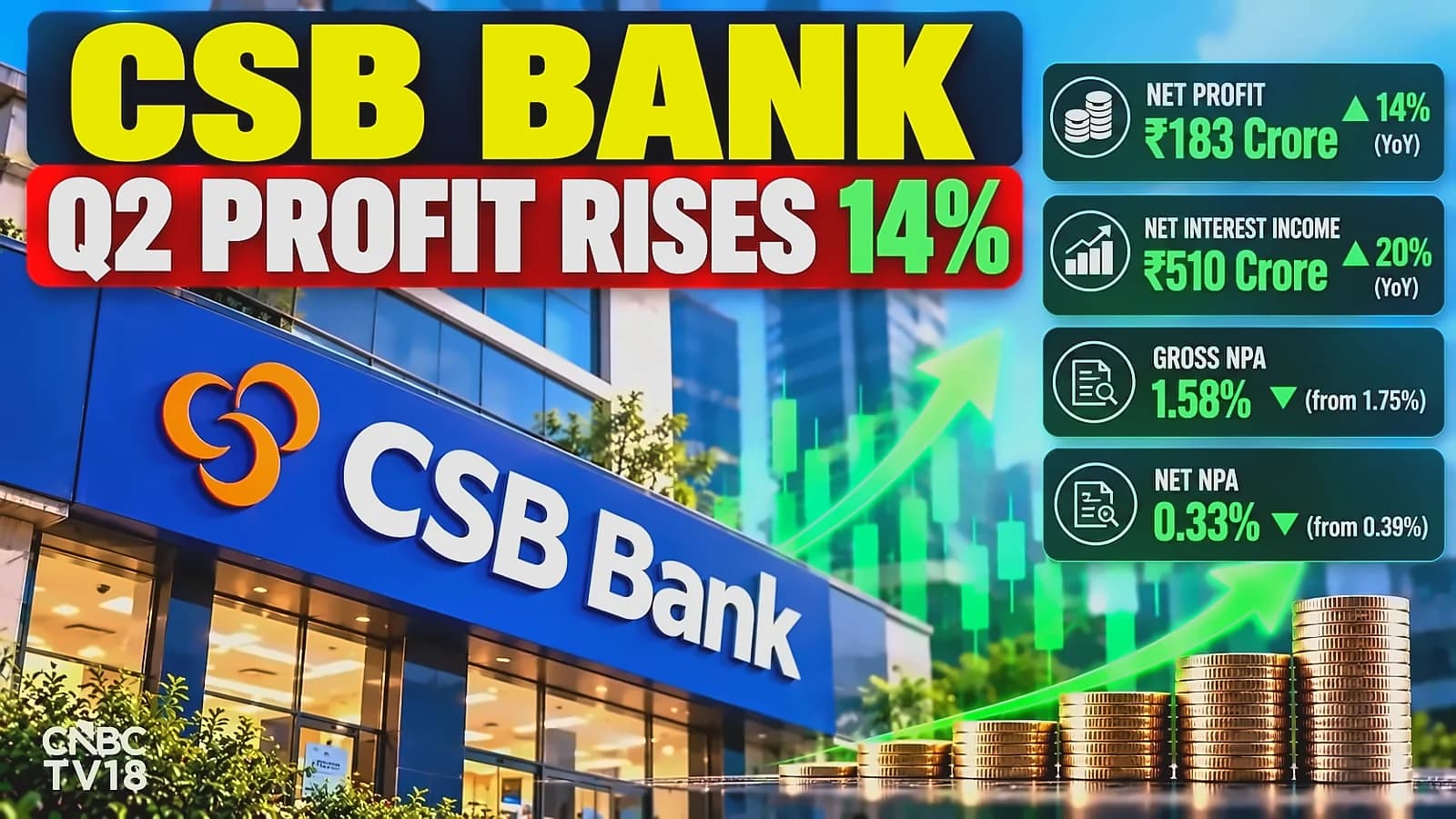
Reports suggest FAB has evaluated options including Bandhan Bank, CSB Bank, and South Indian Bank. The primary financial criterion appears to be valuation: these banks are trading at or near book value, offering a potential entry point without paying a steep premium.
However, the operational profiles differ sharply. Bandhan Bank has a heavy microfinance exposure, accounting for roughly 34% of its loan book, and its geographic concentration is high with 52% of deposits originating from the Eastern region (including 41% from West Bengal alone). Its return on equity (ROE) stands at a modest 4.93%, and gross non-performing assets (GNPA) are at 3.15%. In contrast, South Indian Bank offers a cleaner profile with an ROE of 13.53% and a GNPA of 1.24%. It also boasts a large Non-Resident Indian (NRI) deposit base of approximately ₹38,203 crore, which could align well with FAB's Gulf-based customer network. CSB Bank, with a market cap of around ₹5,337 crore, presents a smaller but potentially more manageable acquisition target. FAB is reportedly weighing the trade-off between a "clean" holding structure with fewer legacy issues versus a target offering greater operational freedom and geographic scale. Investor Presentation +1
The Regulatory Gauntlet
Securing a 51% stake requires navigating a complex regulatory framework. The aggregate foreign investment limit in Indian private sector banks is capped at 74%, with at least 26% required to be held by resident Indians. Any acquisition crossing the 5% threshold needs prior RBI approval, and the central bank assesses the "fit and proper" status of the investor. For stakes above 49% up to 74%, government approval is mandatory under the Foreign Direct Investment (FDI) policy. Additionally, crossing the 25% voting rights threshold triggers a mandatory open offer to public shareholders under SEBI takeover regulations. Emirates NBD's experience shows that the RBI can grant exemptions from standard norms, such as waiving the requirement for 50% independent directors and temporarily allowing a "dual mode of presence" during the transition. FAB would likely seek similar concessions. A critical structural requirement would be the amalgamation of FAB's existing Mumbai and GIFT City branches into the acquired bank, as foreign banks are generally permitted only one mode of presence in India. This amalgamation, sanctioned under Section 44A of the Banking Regulation Act, would require separate RBI approval and typically takes over a year to implement, as seen in the RBL case where the branch merger became effective in December 2026. Other
Funding, Synergies, and Capital Impact
FAB's reported $1.5 billion exposure to India's FCNR(B) deposit scheme adds another layer to the strategic calculus. This facility, which offers leveraged financing to NRIs investing in foreign-currency deposits, could theoretically help mobilize cheaper funding for an Indian subsidiary. FCNR(B) deposits are exempt from Cash Reserve Ratio (CRR) and Statutory Liquidity Ratio (SLR) requirements, making them an efficient funding source. However, the scheme's window for new deposits closed in August 2026, limiting immediate new inflows. On the synergy front, Emirates NBD's acquisition of RBL Bank offers a benchmark.
FAB could aim for similar efficiency gains, particularly if it targets a bank with a bloated cost structure like Bandhan Bank, where the cost-to-income ratio is 61.5%. Cross-selling opportunities would focus on trade finance, NRI banking services, and corporate lending between the Gulf and India. However, capital integration presents challenges. FAB's group Common Equity Tier 1 (CET1) ratio is a robust 13.7%, but acquiring an Indian bank would add its risk-weighted assets to the consolidated balance sheet. The target's risk profile—whether retail microfinance or gold loans—would influence the incremental capital consumption and the eventual return on equity for the combined entity. Investor Presentation
Timing, Valuation, and Execution Risks
The optimal timing for a deal remains uncertain. Reports suggest nothing is imminent, and FAB has not publicly commented on its plans. Market conditions are currently volatile.
Higher interest rates could compress net interest margins for Indian banks, potentially depressing valuations and creating a more favorable entry point for FAB. Conversely, a rising market could increase the cost of the mandatory open offer. The Nifty Private Bank Index has traded within a 52-week range, reflecting broader market sentiment. Execution risks are substantial, particularly for a target like Bandhan Bank. Its microfinance portfolio is sensitive to economic shocks and local events, such as state elections, which have historically impacted collection efficiency. Integrating a bank with a distinct regional focus and a different corporate culture would require careful management. Furthermore, the promoter holding structure in some targets, like Bandhan Bank's requirement to dilute to 26% by 2030, adds a layer of complexity to negotiations. For Kerala-based banks like South Indian Bank, the heavy reliance on NRI deposits and gold loans introduces concentration risks that FAB would need to mitigate. Ultimately, while the strategic rationale for FAB's entry into India is strong, the success of any acquisition will hinge on rigorous due diligence, precise valuation, and the ability to navigate a multifaceted regulatory landscape while delivering tangible operational synergies. Transcript